Agreement expands joint missile production and defence cooperation as Washington and Tokyo strengthen military readiness amid growing Indo-Pacific security concerns…reports Asian Lite News Desk
The proposed Japanese facility will support AMRAAM production as Washington and Tokyo expand defence cooperation amid growing regional security concerns.
The United States and Japan have agreed to establish a facility in Japan for the final assembly and testing of advanced medium-range air-to-air missiles (AMRAAMs), marking a further expansion of their defence industrial partnership.
The agreement forms part of a joint defence production initiative called ‘Operation Supercharge’, according to a statement shared by the US House of Representatives Select Committee on China on social media platform X on Thursday.
Committee chairman and US Representative John Moolenaar welcomed the development, saying Washington and its allies in the Pacific needed to deepen defence cooperation to maintain regional security and protect freedom of navigation.
He credited US Secretary of War Pete Hegseth and the Trump administration with helping secure the agreement.
Moolenaar also stressed the importance of strengthening defence supply chains and rebuilding industrial production capabilities to ensure that the US and its allies could meet growing military requirements.
“Expanding our defence alliance with Japan sends a clear message on where US policy stands to protect our interests and our national security,” he said.
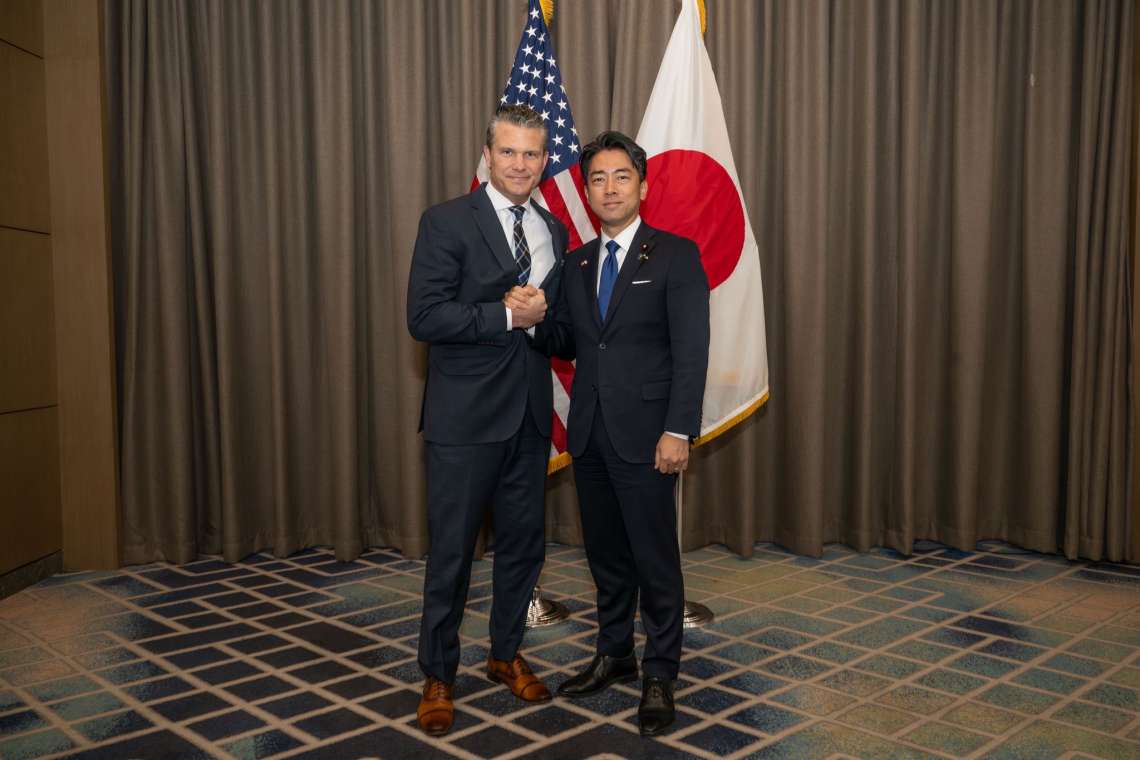
The agreement was discussed during a meeting between Japanese Defence Minister Shinjiro Koizumi and Hegseth on the sidelines of the Association of Southeast Asian Nations (ASEAN) defence chiefs’ summit on Wednesday in Cebu, the Philippines.
According to The Japan Times, the two defence ministers also agreed to expand cooperation on the production of SM-3 Block IIA missiles, which are designed to intercept ballistic missile threats.
The developments come as the United States faces pressure on its missile inventories amid military operations against Iran and increasing international demand for advanced weapons. Analysts have also raised concerns about declining stocks of SM-3 interceptors.
Hegseth described the US-Japan alliance as indispensable, highlighting the importance of increased defence investment, improved access to military facilities and expanded joint training.
In a post on X, he said both countries were working towards a shared vision of peace through strength.
He added that stronger missile production capabilities and more realistic military exercises were essential to establishing a credible defence posture in the region.
The discussions also focused on strengthening deterrence along the First Island Chain, a strategic geographical line extending from Japan towards Taiwan, the Philippines and Borneo.
The meeting took place shortly before the conclusion of Keen Sword, a large-scale joint military exercise involving American and Japanese forces. The drills focused on Japan’s southwestern islands near Okinawa.
Both countries agreed to increase the urgency of joint training, including more advanced exercises and additional live-fire drills. They also discussed using airports and seaports more flexibly to practise military operations across multiple locations.
The agreements come amid growing concerns over China’s expanding military activities in the Indo-Pacific, particularly around Taiwan, which Beijing claims as part of its territory.
Koizumi and Hegseth also agreed to coordinate closely in responding to potential regional security developments, taking into account the increasing scale and sophistication of military capabilities in neighbouring countries.
Cybersecurity was another issue discussed during the meeting. The Japanese Defence Ministry said both sides had agreed to strengthen cooperation against malicious cyber activities, including large-scale data breaches and the theft of personal information.
The latest missile production agreement reflects broader efforts by Washington and Tokyo to strengthen their defence industrial capabilities and reduce pressure on existing weapons supply chains.