The parallel aid efforts underscore the broader competition for influence between the United States and China in Southeast Asia…reports Asian Lite News
The United States has announced $45 million (€38 million) in aid for Thailand and Cambodia to support border stabilisation, humanitarian recovery and regional security following deadly clashes last year that displaced hundreds of thousands of people and killed about 100 soldiers and civilians.
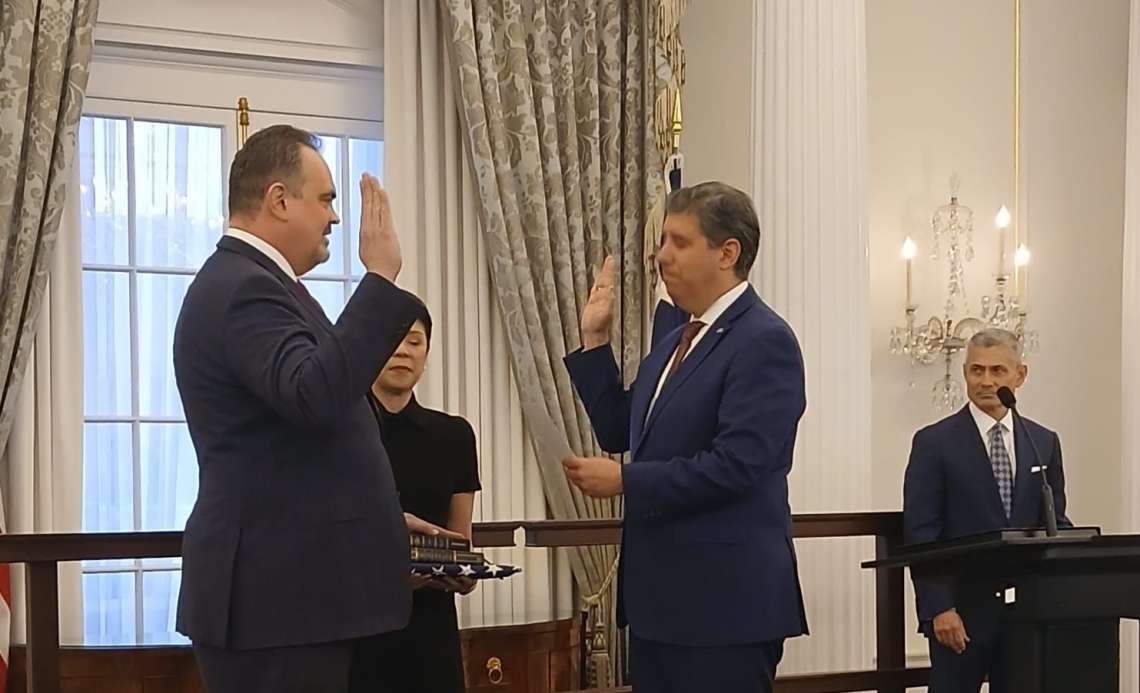
The announcement was made on Friday by US Assistant Secretary of State for East Asian and Pacific Affairs Michael DeSombre during an online media briefing in Bangkok, where he met senior Thai officials to review the implementation of last October’s ceasefire agreement, known as the Kuala Lumpur Peace Accord.
“The restoration of peace at the Thai-Cambodian border opens new opportunities for the United States to deepen our work with both countries to promote regional stability and advance our interests in a safer, stronger and more prosperous Indo-Pacific,” DeSombre said.
The aid package will be divided across several priority areas, reflecting the complex fallout from the fighting in July and December along the disputed border. According to DeSombre, Washington plans to allocate $15 million (€12 million) for border stabilisation initiatives aimed at helping affected communities recover and supporting people displaced by the violence. A further $10 million (€8 million) will go towards demining and clearing unexploded ordnance, while $20 million (€17 million) will fund programmes to combat transnational crimes such as online scams and drug trafficking.
Details of how the funds will be disbursed are still under discussion, DeSombre said.
He is scheduled to travel to Phnom Penh on Saturday for talks with senior Cambodian officials, signalling Washington’s intent to remain closely engaged with both sides as they work to sustain the fragile peace.
China has also stepped in with assistance, announcing it has provided around $2.8 million (€2.4 million) in emergency humanitarian aid to help Cambodians displaced by the fighting. Thai Prime Minister Anutin Charnvirakul said Beijing had made a similar offer of assistance to Thailand, which remains under consideration by his government.
The parallel aid efforts underscore the broader competition for influence between the United States and China in Southeast Asia, a region where strategic rivalry has intensified over the past decade. Cambodia is widely regarded as one of Beijing’s closest allies in the region, while Thailand has traditionally maintained strong ties with Washington, though analysts say those relations have shown signs of strain in recent years.
The violence stemmed from long-running and overlapping territorial claims along the Thai-Cambodian border, an area that has seen periodic tensions for decades. The clashes in late July initially lasted five days before the two sides agreed to a preliminary ceasefire. However, sporadic violence continued, culminating in renewed fighting early last month.
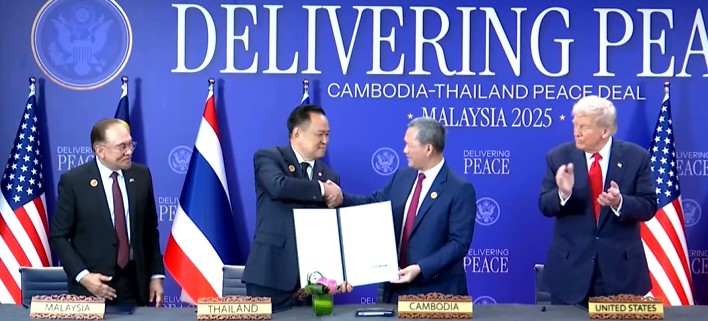
Malaysian Prime Minister Anwar Ibrahim, whose country played a mediating role, pushed for an unconditional ceasefire during the July clashes, but progress was limited until US President Donald Trump intervened directly. Trump later said he warned leaders in both Thailand and Cambodia that the United States would not proceed with trade agreements if hostilities persisted.
The ceasefire was formalised in greater detail in October during a regional meeting in Malaysia attended by Trump. Despite that, fresh fighting broke out in December, prompting renewed diplomatic efforts. On December 27, the defence ministers of Thailand and Cambodia signed a new pact, reaffirming their commitment to the October agreement and pledging to prevent further escalation.
Beyond the immediate humanitarian toll, the conflict highlighted deeper security challenges in the border region. Land mines left over from decades of civil war in Cambodia continue to pose serious risks, while Thailand has alleged that newly laid mines were responsible for wounding its patrol soldiers in about a dozen incidents last year.
Transnational crime has also become a growing concern. Online scam operations originating in parts of Southeast Asia, particularly Cambodia and Myanmar, have siphoned billions of dollars from victims worldwide. Both Washington and regional governments see tackling these networks as critical to long-term stability.
US engagement comes after a period of sharply reduced American assistance. Humanitarian and development funding for Southeast Asia and other regions was severely cut last year following the Trump administration’s decision to shut down the US Agency for International Development (USAID).
“We are very focused on pursuing peace in and around the world,” DeSombre said. “President Trump is a president of peace and really believes that peace is critical to economic growth and prosperity.”
As Thailand and Cambodia move cautiously forward, the success of the ceasefire — and the competing influence of major powers — will shape the region’s security landscape in the months ahead.