EU-China trade relations have effectively reached a “standstill”, with longstanding disputes over market access…reports Asian Lite News
The European Union is set to deepen trade tensions with China in 2026 as Brussels presses ahead with efforts to diversify its trading relationships and strengthen its trade defence mechanisms, even as Beijing shows little inclination to alter its economic course, according to a new report.
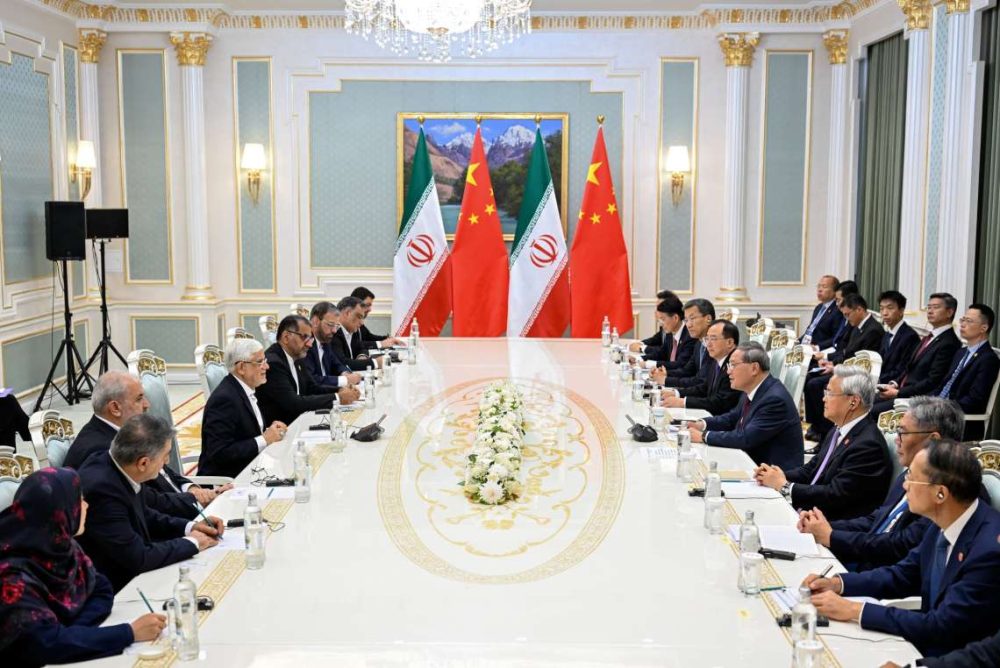
A Politico report says EU-China trade relations have effectively reached a “standstill”, with longstanding disputes over market access, state subsidies and trade imbalances showing no signs of resolution. The assessment comes as German Chancellor Friedrich Merz is expected to make his first official visit to China next month, a trip that analysts say is unlikely to yield major breakthroughs on trade.
At the heart of the dispute lies a widening trade imbalance. EU officials and economists argue that hopes of a significant improvement remain unrealistic. “The trade deficit is not going to improve anytime; China is not going to consume our products. All of that is wishful thinking,” Alicia Garcia-Herrero, chief economist for Asia-Pacific at French investment bank Natixis and a senior fellow at the Bruegel think tank, was quoted as saying.
Tensions escalated further in December last year when Beijing announced what was described as its latest countermeasure in response to EU duties on Chinese-made electric vehicles imposed in 2024. China moved to set punitive provisional duties on certain dairy products from the EU, signalling its willingness to retaliate against Brussels’ trade defence actions.
Beijing has also expressed clear displeasure over attempts by major European firms to seek exemptions from EU measures. According to the report, Chinese authorities were unhappy with German auto giant Volkswagen’s efforts to secure an exception to the electric vehicle duties, viewing such moves as undermining the EU’s stated rationale for imposing them.
Complicating matters further is the shifting global trade landscape, particularly the United States’ renewed tilt towards protectionism under President Donald Trump. Analysts say Washington’s approach is displacing trade flows worldwide, intensifying competition in third markets and making it harder for the EU and China to resolve sensitive issues such as industrial subsidies and fair competition.
As a result, Chinese exports to Europe are once again rising, while European exports to China continue to decline. Data cited in the report show that China’s exports to the EU are now more than double the value of Europe’s exports to China, reinforcing concerns in Brussels that existing trade arrangements are increasingly skewed in Beijing’s favour.
European leaders have publicly warned of the consequences of failing to rebalance economic ties. In a recent op-ed for the Financial Times, French President Emmanuel Macron argued that cooperation remains the preferred option but warned that alternatives are narrowing. “Either we rebalance economic relations co-operatively — engaging China, the U.S. and the EU in a genuine partnership — or Europe will have no choice but to adopt more protectionist measures,” he wrote.
So far, however, there has been little indication that Chinese President Xi Jinping is prepared to heed European calls for meaningful trade rebalancing. Analysts say Beijing continues to prioritise export-led growth and domestic industrial policy, even as tensions with major trading partners mount.
Experts caution that the situation is likely to worsen rather than stabilise. Francesca Ghiretti, director of the China Europe Initiative at the Rand think tank, was quoted in the report as saying that “2026 will intensify the dynamics and tensions already visible in 2025”, suggesting that both sides are bracing for a more confrontational phase in their economic relationship.
With diplomacy struggling to gain traction and structural issues unresolved, EU-China trade ties appear poised for a period of heightened friction, with significant implications for global commerce in the year ahead.