US and Iranian officials have reported “significant progress” in nuclear negotiations held in Geneva, with further talks planned in Vienna. However, uncertainty remains over whether a deal can be reached to prevent potential military action
US and Iranian officials have made what were described as “significant progress” in nuclear talks in Geneva, according to Oman’s foreign minister, though it remains unclear whether a final agreement can be reached to avert further conflict.
Badr Albusaidi, who acted as mediator during the high-stakes negotiations, said the two sides would resume discussions “soon” following consultations in their respective capitals. He added that technical-level talks were scheduled to take place next week in Vienna.
Iran’s Foreign Minister Abbas Araghchi, who led Tehran’s delegation, said “good progress” had been achieved. He noted that agreement had been reached on some issues, while differences remained on others. The next round of negotiations, he said, would occur in less than a week.
The prospect of continued diplomacy could lower the likelihood of President Donald Trump carrying out previous threats to strike Iran. The United States has ordered a major military build-up in the Middle East, described as the largest since the US-led invasion of Iraq in 2003. Iran has said it would respond with force to any attack.
For decades, the United States and Israel have accused Iran of seeking to develop a nuclear weapon. Iran has consistently denied pursuing a bomb, maintaining that its nuclear programme is for peaceful purposes. However, it remains the only non-nuclear-armed state to have enriched uranium to near weapons-grade levels.
Iranian state media reported that negotiators reaffirmed the country’s right to peaceful nuclear energy and rejected US demands to halt uranium enrichment entirely within Iran and to transfer its stockpile of 400kg of enriched uranium abroad. At the same time, officials are believed to have offered concessions, although details have not been made public. One reported option would allow Iran to resume minimal enrichment after a three-to-five-year suspension, subject to international monitoring.
In exchange for a deal, Araghchi told Iranian television that sanctions relief was a central demand. The sanctions have severely affected Iran’s economy. Critics of the Iranian leadership argue that easing restrictions would strengthen the clerical establishment.
The indirect talks in Geneva were held in two sessions, one lasting three hours in the morning and a shorter meeting in the evening. There was no immediate reaction from US officials.
As in previous rounds, the United States was represented by special envoy Steve Witkoff and Jared Kushner. Rafael Grossi, head of the International Atomic Energy Agency, also participated.
Uncertainty remains over what terms President Trump would accept. He has not fully explained why military action might now be necessary, eight months after US forces bombed Iranian nuclear facilities during a conflict between Israel and Iran. Iran has rejected discussions on limiting its ballistic missile programme or ending support for regional allies, including Hamas in Gaza, Hezbollah in Lebanon, militias in Iraq and the Houthis in Yemen.
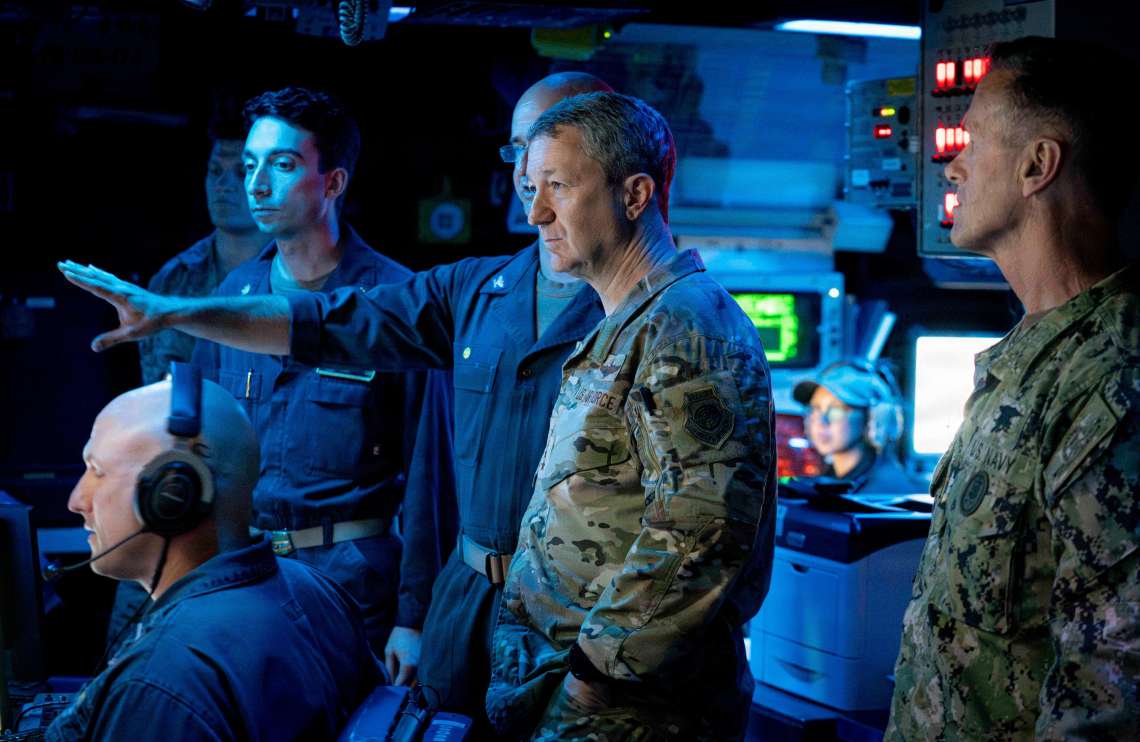
In recent weeks, the United States has deployed thousands of additional troops to the region, along with two aircraft carriers, other warships, fighter jets and refuelling aircraft. In a recent address to Congress, Mr Trump said Iran was developing missiles that would “soon” be capable of reaching the US and accused it of attempting to revive its nuclear weapons programme following last year’s strikes. He said he could not allow the “world’s number one sponsor of terror… to have a nuclear weapon”.
Hours before that speech, Iran’s foreign minister wrote on social media that Iran would “under no circumstances ever develop a nuclear weapon”.
The United States struck three Iranian nuclear sites last June, joining Israel in a bombing campaign. Mr Trump said at the time the facilities had been “obliterated”. Iran has stated that enrichment activity stopped after the attacks, though it has not permitted inspectors from the International Atomic Energy Agency to access the damaged locations.
US media reports, citing unnamed administration officials, have suggested that Mr Trump has considered further strikes against Iran’s Revolutionary Guards or nuclear sites if negotiations collapse. Iran has warned it would target American military assets in the Middle East and Israel in response to any attack.