US embassies across the Middle East have urged American citizens to consider leaving the region or be prepared to depart if tensions escalate further. …reports Asian Lite News Desk
The United States has advised its citizens across parts of the Middle East to consider leaving the region or be prepared to depart if the security situation deteriorates further, citing the risk of renewed escalation.
US embassies in around 10 countries, including Israel, Jordan, Iraq, Egypt, Bahrain, the United Arab Emirates, Qatar and Saudi Arabia, issued similar security alerts on Saturday, warning that the regional security environment remains unpredictable.
“Due to heightened tensions in the Middle East, the security environment remains complex with the potential for unforeseen escalation,” the embassies said in identical advisories published on their official websites.
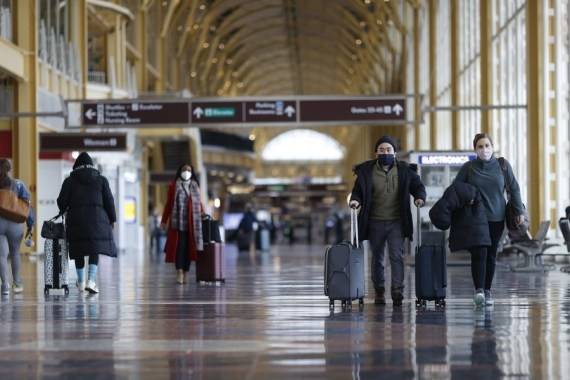
The alerts urged American citizens in the region to exercise increased caution and remain vigilant. They also warned travellers to prepare for possible flight cancellations, temporary airspace closures and other travel disruptions should the situation worsen.
US citizens currently in the Middle East were advised to consider departing while commercial travel options remain available or to be prepared to leave at short notice if conditions deteriorate.
The embassies also urged Americans outside the region to “seriously reconsider travel to and through the Middle East” until the security situation becomes clearer.
The travel warnings come amid renewed tensions involving the United States, Iran and Israel following a brief lull in hostilities.
Earlier on Saturday, Iran’s semi-official Tasnim news agency reported that Tehran had prepared an “extensive” contingency plan in response to reports in US media suggesting possible American and Israeli strikes on Iranian infrastructure.
Citing a senior security official, the report said the proposed response would include targeting key Israeli infrastructure as well as US energy facilities across the Middle East if Iran came under attack.
The latest warnings also coincide with renewed military exchanges between the United States and Iran after several days of relative calm. Regional tensions have also been heightened by developments in the Red Sea, where Yemen’s Houthi movement has emerged as another flashpoint involving Saudi Arabia.
The broader conflict escalated earlier this year after the United States and Israel launched coordinated strikes on Tehran and other Iranian cities on February 28. According to Iranian authorities, the attacks killed then Supreme Leader Ali Khamenei, senior military commanders and civilians.
Iran subsequently responded with waves of missile and drone attacks targeting US and Israeli military bases and assets across the region, while tightening its control over the Strait of Hormuz, one of the world’s most strategically important shipping routes.
The US travel advisories reflect growing concern that any further escalation could quickly disrupt commercial aviation, regional transport networks and security conditions across multiple countries in the Middle East.