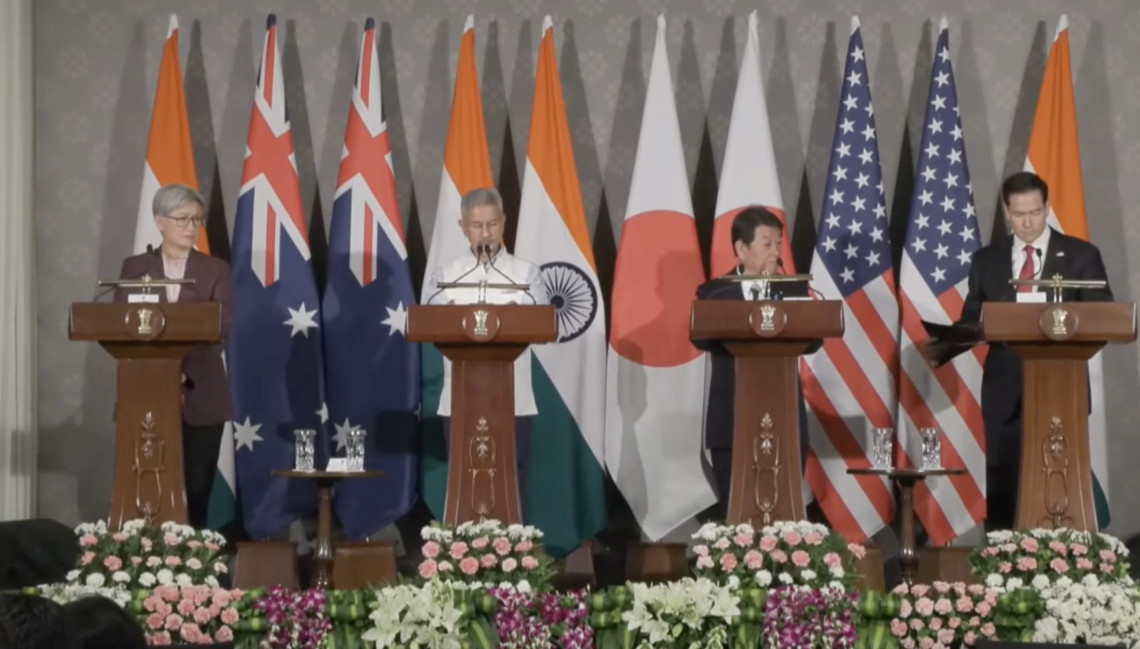
Quad Leaders stressed the need for a stronger, action-oriented Quad amid rising geopolitical and economic pressures in the region….reports Asian Lite News Desk
US Secretary of State Marco Rubio on Tuesday highlighted the growing strategic and economic significance of the Quad, describing the grouping as a coalition of powerful democracies committed to strengthening cooperation across the Indo-Pacific.
Addressing a joint press statement after the Quad Foreign Ministers’ Meeting in New Delhi, Rubio said the four member nations collectively represented nearly one third of the global economy and around two billion people.
“The stage today represented countries that collectively are about a third of the world’s GDP, over almost 2 billion people,” Rubio said, adding that the nations also shared democratic values and aligned interests in economic development and regional stability.
Rubio announced a series of initiatives focused on maritime security, supply chain resilience and critical minerals as part of efforts to operationalise the Quad partnership.
Among the key announcements was the launch of the Indo-Pacific Maritime Surveillance Cooperation Initiative, aimed at improving coordination and information sharing among Quad members using their maritime surveillance capabilities.
He also confirmed the expansion of the Indo-Pacific Maritime Domain Awareness Initiative, which provides near real time maritime data to countries across the Indo-Pacific region.
Rubio said maritime security remained critical because nearly 60 per cent of global maritime trade passed through the Indo-Pacific.
“The fact that 60 per cent of global maritime trade passes through the Indo-Pacific makes it a vital national interest not just for the four countries represented here today, but for countries around the world,” he said.
The US Secretary of State also announced a new Quad partnership on port infrastructure development in Pacific Island nations, beginning with a project in Fiji.
According to Rubio, the initiative would address inadequate port capacity in the Pacific region and would mark the first time Quad nations worked together on a port infrastructure project.
India was also praised for agreeing to host the next edition of the Quad at Sea mission, a joint exercise involving the coast guards of the four member countries.
On economic security, Rubio announced the launch of the Quad Critical Minerals Framework, which aims to strengthen critical mineral supply chains through coordinated investment and economic policy cooperation.
The framework will focus on mining, processing and recycling critical minerals, sectors increasingly viewed as strategically important amid global supply chain disruptions.
Earlier in the day, Rubio said the Quad was evolving from a discussion platform into a more action-oriented strategic partnership.
“Our goal collectively over the last year has been to turn this from a forum in which we meet and talk about problems to one where we actually do something about it,” he said.
Rubio added that recent global developments had made Quad cooperation even more relevant in areas such as energy security, humanitarian response and resilient supply chains.
The Quad comprises India, the United States, Australia and Japan and focuses on strengthening cooperation in maritime security, critical technologies, infrastructure, disaster relief and economic resilience.

Jaishankar Stresses Indo-Pacific Stability
External Affairs Minister S. Jaishankar said the Indo-Pacific must remain a driver of global growth and stability as Quad nations strengthen cooperation across strategic sectors.
Addressing the meeting, Jaishankar said the grouping shared a responsibility towards maintaining a free and open Indo-Pacific as maritime democracies and market economies.
He highlighted the need to address global vulnerabilities linked to supply chains, connectivity bottlenecks, manufacturing concentration and gaps in critical infrastructure.
“The Indo-Pacific has its own particular concerns. This will require enhancing strategic confidence, ensuring maritime security, promoting economic choices, and fostering a deeper collaborative ethos,” Jaishankar said.
He also pointed to progress made by Quad officials in recent months across maritime security, economic resilience, critical technologies and Humanitarian Assistance and Disaster Relief initiatives.
The Indian minister said the ministers’ discussions would focus on ensuring trusted and transparent partnerships in the Indo-Pacific region.

Australia Calls For Stronger Quad Momentum
Australian Foreign Minister Penny Wong said Quad nations were determined to make the grouping stronger and more effective amid increasing strategic and economic pressures in the Indo-Pacific.
Wong said the four countries shared a common vision of a region that is free, open, peaceful and prosperous despite having different histories and national interests.
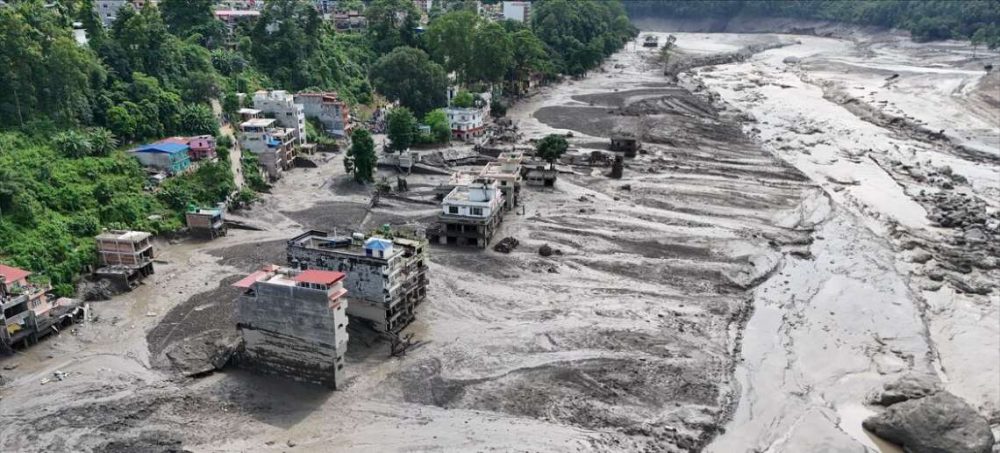
She highlighted the Quad’s cooperation in disaster response, maritime security, critical infrastructure and critical minerals, citing support for countries affected by the Myanmar earthquake and the Papua New Guinea landslide.
“We all want the Quad to be as strong and as effective as we can make it, focused on delivering, and we are determined to continue its momentum,” Wong said.
The Australian minister also praised India’s growing role in shaping the Indo-Pacific and described the country as a major democratic power central to regional stability.
Referring to previous Quad discussions, Wong underlined the importance of ensuring countries in the Indo-Pacific retain freedom of choice over their security, development and sovereign interests.

Japan Backs Free And Open Indo-Pacific
Japanese Foreign Minister Toshimitsu Motegi said on Tuesday that the Quad Foreign Ministers’ Meeting showcases “an unshakable and firm message” to the world that the grouping will promote practical cooperation to realise a free and open Indo-Pacific.
In his opening remarks at the Quad Foreign Ministers’ Meeting in New Delhi on Tuesday, Motegi mentioned his special fondness for the Quad meeting.
“I want to thank Jai for hosting this meeting. Back in 2019 September, when I was a Foreign Minister for the last time, the inaugural Foreign Ministers’ Meeting was held. So, I have special fondness for the Quad Meeting. This is the 11th meeting of the Quad Foreign Ministerial, and this meeting signifies an unshakable and firm message to the world that the Quad will strongly promote practical cooperation to realise free and open Indo-Pacific….and there have been structural changes happening in the international order.”
“It has been just 10 years since the FOIP (Free and Open Indo-Pacific) was advocated, and there have been structural changes happening in the international order. In order to respond to those changes of time, Prime Minister Takaichi has stated that the point of the update of FOIP is that the Indo-Pacific nations should strengthen resilience and the necessary capacity to determine their own future, including their economic security. Today I hope to have a frank discussion, including her perspective, to accelerate the Quad cooperation,” he added.
The Quad comprises Australia, India, Japan and the United States, and focuses on strengthening cooperation across key sectors including maritime security, resilient supply chains, critical minerals, infrastructure development, disaster relief and emerging technologies.
In his opening remarks at the Quad Foreign Ministers’ Meeting, EAM Jaishankar stated, “Meeting for the third time in less than 18 months, we will be discussing and deciding our shared activities. Obviously, that will take into account the many challenges and opportunities in the world. Our focus will clearly be on the Indo-Pacific, which is the specific limit of the Quad.”
EAM Jaishankar said that the ministers need to address supply chain resilience, connectivity choke points, manufacturing and resource concentrations and gaps in critical infrastructure.
He stated that officials of the Quad in the past several months have advanced collaboration across key core priorities, including maritime security, critical technologies, economic resilience and Humanitarian Assistance and Disaster Relief (HADR).
“At the global level, we have to address supply chain resilience, connectivity choke points, manufacturing and resource concentrations and gaps in critical infrastructure. Each one of them offers a new argument for more partnerships, stronger growth and realising the promise of technologies. The Indo-Pacific has, in addition, its own particular concerns. This will require enhancing strategic confidence, ensuring maritime security, promoting economic choices, and fostering a deeper collaborative ethos, and that is best done by promoting trusted and transparent partnerships,” EAM Jaishankar said.
“Over the past several months, our officials have advanced collaboration across key core priorities, including maritime security, critical technologies, economic resilience and HADR. We have seen encouraging progress on many initiatives. As maritime democracies, pluralistic societies and market economies, we share the responsibility towards a free and open Indo-Pacific. The region must remain a driver for global growth and stability. We will be underlining that today, through our deliberations, which I am confident will be useful and productive,” he added.