Britain could face a sixth heatwave next month as long-range forecasts point to above-average temperatures continuing into September…reports Asian Lite News Desk
Britain could be gripped by a sixth heatwave next month, with the Met Office warning that the record-breaking temperatures seen this summer may continue into September.
The forecaster’s long-range outlook for 31 August to 14 September says there is “a chance that late-season hot spells or heatwaves develop, especially in the south”.
The forecast said there was likely to be “a broad north-west-southeast split in conditions, with the high pressure becoming centred close to the south of the UK and more changeable conditions developing towards the north and north west” as autumn began.
“Meanwhile, drier, more settled weather is slightly more likely towards the south and east. Temperatures are likely to be above average overall,” the Met Office added.
The outlook suggests the start of autumn may bring contrasting conditions across the country rather than uniform heat. Southern and eastern areas are expected to have the greatest chance of settled weather, while northern and north-western regions may become more changeable.
The warning follows the fifth heatwave of the summer, which peaked last Thursday when the temperature reached 38.1C at Kew Gardens in London, the highest recorded in the UK this year. Last week, the Met Office said Britain was on course for its hottest summer on record, surpassing 1976, when the average daily maximum temperature was 21C.
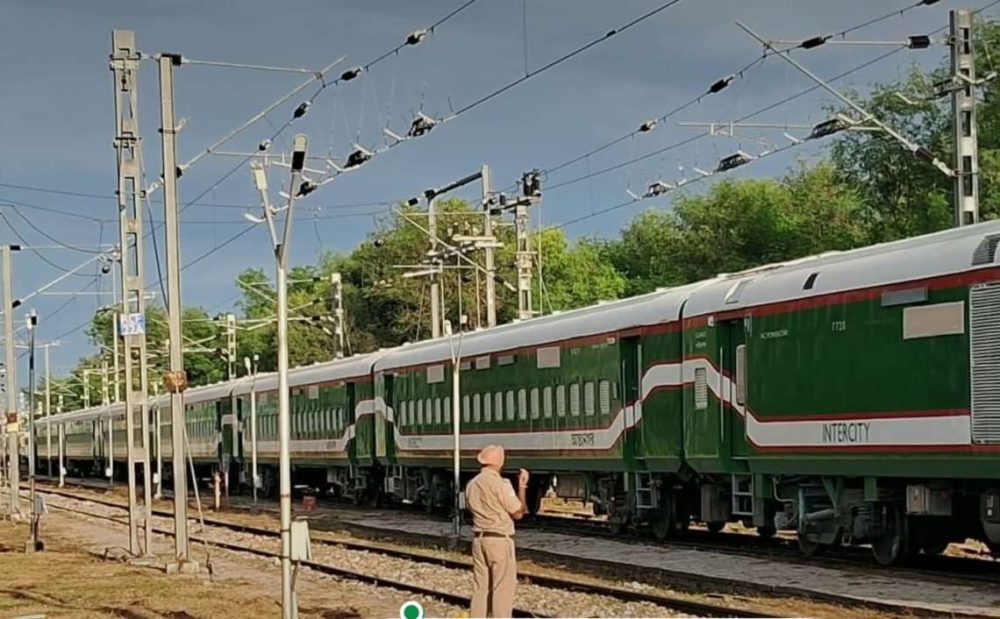
This summer has already brought the highest number of days above 30C and 36C on record, as well as new records for the hottest days in May and June. The prolonged heat and dry weather have also caused disruption on the railways. Two trains derailed in the South East during last week’s heatwave. The first incident happened at Lewes in East Sussex on Thursday and left two people seriously injured. Another train came off the tracks at Wickford in Essex less than 24 hours later.
Network Rail chiefs said the heat may have been responsible, although investigations were continuing. The section of line between Haywards Heath and Lewes where the first train derailed was expected to remain shut for another 10 days.
Network Rail said: “Customers travelling next week, and in the weeks ahead, are advised to check before they travel and, where possible, use alternative train services via Brighton. Rail replacement buses will run between Lewes and Haywards Heath, serving Cooksbridge and Plumpton. These buses have limited capacity, so customers travelling to other stations should travel via Brighton instead.”
Tickets would be accepted on alternative Southern, Thameslink and Southeastern services, as well as Brighton and Hove buses and London Underground services between London terminal stations, Network Rail said. Britain has experienced its driest July since records began in 1836, while all of Wales and nearly three-quarters of England are officially in drought. Widespread hosepipe bans are in force across southern England.
High temperatures and unprecedented drought have fuelled wildfires, with 1,017 recorded in England and Wales so far this year, the same number as in the whole of last year, according to the National Fire Chiefs Council. The 2025 total was the highest ever recorded.
Fires destroyed 19 homes in Stourbridge in the West Midlands, while 100 military personnel were deployed across South Wales to help tackle blazes. The fires also prompted the Government’s “most extensive use” yet of Britain’s emergency alert system. The warning said barbecues and fireworks could spark wildfires, although some criticised the decision to issue it as unnecessary.
The effects have also been felt by the health service. The NHS said the heat had contributed to the busiest summer on record for accident and emergency departments, with 2.5 million patients seen in July.