UK announces ban on goods from illegal settlements, sanctions firms facilitating expansion and restrictions on settlement advertising as Britain joins France and Canada in a tougher international response … writes Kaliph Anaz
Britain has dramatically toughened its stance towards Israel, announcing a package of measures targeting Israeli settlements in the occupied West Bank and declaring that it will no longer stand by as settlement expansion threatens to destroy the possibility of a two-state solution.
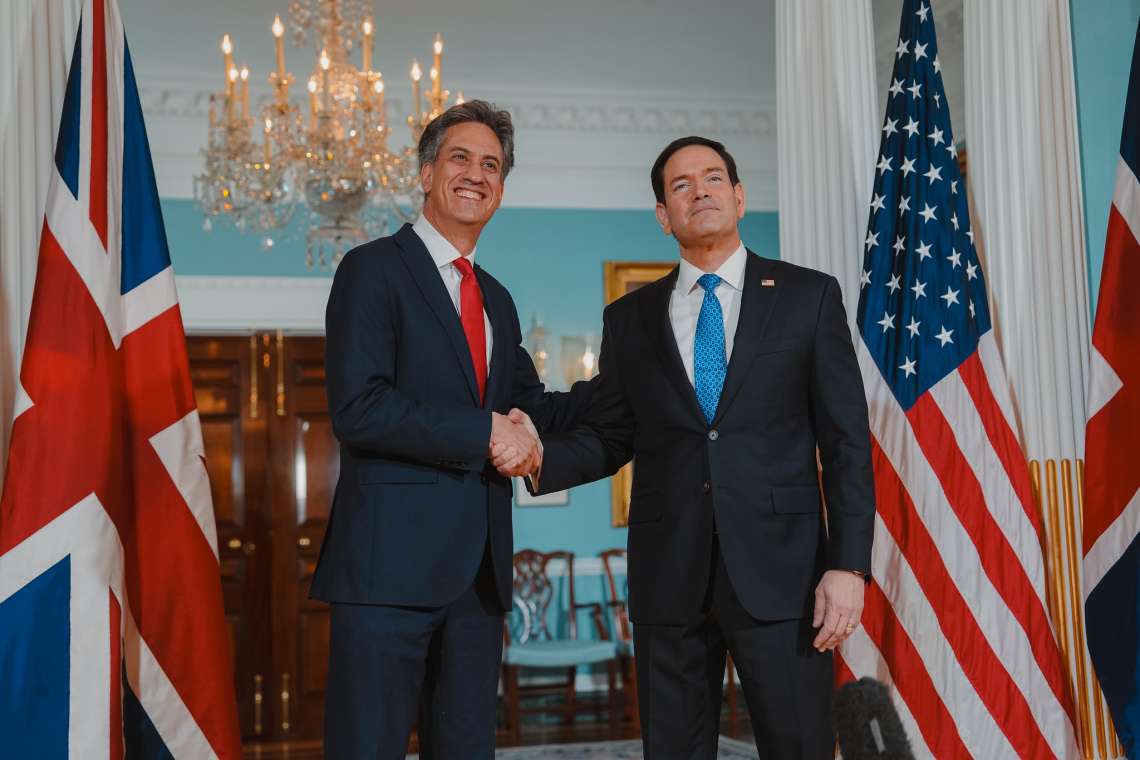
Foreign Secretary Ed Miliband told the House of Commons that Britain would ban imports of goods produced in illegal Israeli settlements, prohibit the advertising in Britain of settlement properties and take action against companies and individuals providing construction, infrastructure, financing and real-estate services that facilitate settlement expansion.
Britain will also impose further sanctions on extremist settlers accused of supporting or inciting violence against Palestinian communities.
The measures represent one of the clearest shifts in British policy towards Israel in recent years. They are being introduced alongside France and Canada, with a wider group of European countries signalling support for further action.
“Today we refuse to be bystanders to further suffering and to the destruction of the two-state solution,” Miliband told MPs.
“We call out what is unlawful. We act on the import of goods from illegal settlements. We ban advertising of illegal settlements. We act on services to prevent new settlement expansion. We act on settler violence.”
The announcement comes amid growing international concern over settlement expansion in the West Bank, particularly the proposed E1 development east of Jerusalem. Britain and its partners argue that continued expansion risks making the creation of a viable Palestinian state increasingly difficult.
The significance of the announcement is heightened by its international dimension.
France and Canada announced that they would also move to ban imports from Israeli settlements, creating a three-country front involving three major Western allies of Israel.
They are joining countries that have already taken action or begun the process of doing so, including Ireland, Spain, the Netherlands, Norway and Belgium.
A joint statement involving 12 countries – Britain, France, Canada, Denmark, Finland, Iceland, Ireland, Norway, Poland, Portugal, Spain and Sweden – said Israel’s actions in the West Bank were undermining the possibility of a two-state solution.
The countries cited unprecedented levels of settler violence and settlement expansion, including the decision to publish tenders for the E1 project.
The group said it intended either to introduce national restrictions or support European restrictions on trade in goods from settlements deemed illegal under international law.
The coordinated approach is important because Britain’s influence is not simply measured by the size of the trade affected.

Settlement exports represent only a small proportion of Israel’s overall trade. The immediate economic impact of the import restrictions is therefore expected to be limited.
The political message, however, is much larger.
Britain is attempting to demonstrate that the settlement issue is no longer simply a matter of diplomatic criticism. It is becoming a matter for concrete economic and legal action.
The British Government’s position is that the measures are directed at settlements and settlement expansion, rather than at Israel as a whole.
Miliband was explicit on that distinction.
“We will continue to support important and valued trade with green line Israel precisely because we support the two-state solution, including security and prosperity for Israel,” he said.
“For this reason, I wholeheartedly oppose the Boycott, Divestment, Sanctions or BDS campaign.”
The decision marks a further stage in Britain’s increasingly critical approach to the Israeli government’s policies in Gaza and the West Bank.
Britain recognised a Palestinian state in 2025, arguing that recognition was intended to strengthen the prospects of a negotiated two-state settlement. The Government has also previously imposed sanctions connected with settler violence. Today’s announcement goes further by attempting to address the economic mechanisms that support settlement expansion.
Miliband said the Government did not believe British consumers should effectively support the occupation by buying products originating from illegal settlements.
“I do not believe that the British people want us supporting the occupation by accepting products from settlements in our shops and supermarkets,” he told MPs.
The Government will introduce a comprehensive sanctions regime, with legislation expected to come into force within six to nine months.
The new regime will also target businesses and individuals involved in construction, infrastructure financing and real estate where those services contribute to settlement expansion.
Britain is also moving against the promotion of settlements.
Miliband referred to an exhibition held in Britain earlier this year at which land in illegal settlements was advertised.
“Settlements are illegal. They should not be promoted in our country,” he said.
The Government will therefore prohibit the advertising in Britain of illegal settlements.
At the centre of the dispute is E1, an area of the West Bank east of Jerusalem where Israel has advanced plans for thousands of homes.
Britain and other governments regard the development as particularly serious because of its potential impact on the geographical continuity of a future Palestinian state.
Miliband warned earlier this month that the project represented a red line because it could cut through the heart of the West Bank and make a Palestinian state unviable.
The joint statement from Britain, France and Canada described systematic settlement expansion, including the E1 project, as a direct and urgent threat to the two-state solution.
The three governments stressed that they continued to support Israel’s security and wanted a close and productive relationship with Israel.
Their argument is that supporting Israel’s long-term security and supporting a Palestinian state are not contradictory objectives.
Instead, they see them as inseparable.
The joint statement said the three countries supported “a safe and secure Israel, living alongside a safe and secure Palestine”.
The British measures also place new emphasis on violence by extremist settlers.
Miliband announced immediate sanctions against additional settlers accused of supporting or inciting violence against Palestinian communities.
The Government is also extending its global human-rights sanctions regime to enable faster action against individuals involved in violations of international humanitarian law.
The issue of settler violence has become increasingly important in Western diplomatic discussions about the West Bank.
The joint international statement said the Israeli Government must halt settlement expansion, ensure accountability for settler violence and investigate allegations concerning Israeli forces.
For Britain, the argument is increasingly that diplomatic condemnation alone has failed to change behaviour.
The Government is therefore attempting to connect its political position with economic consequences.
Although today’s announcement is heavily focused on the West Bank, Gaza remains at the heart of Britain’s wider policy.
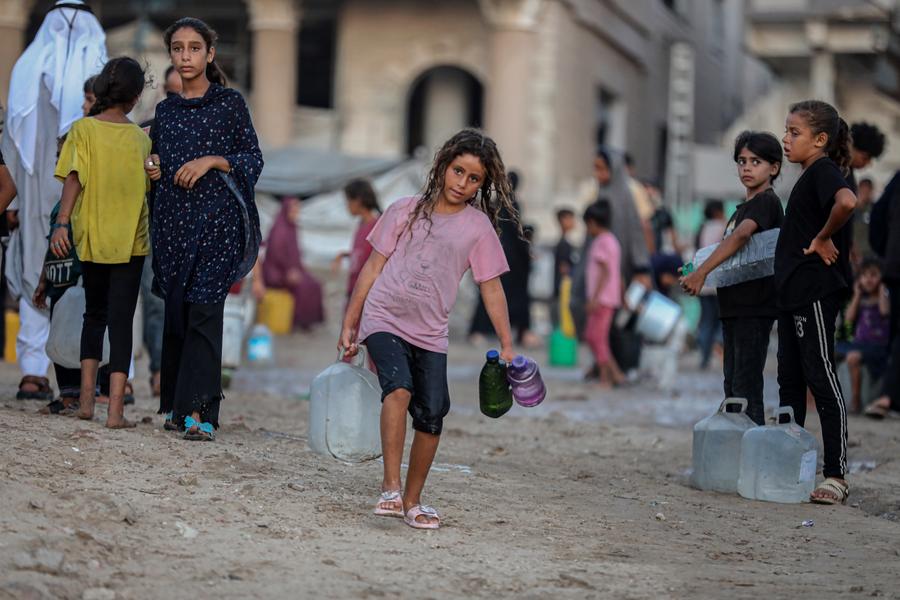
Miliband said Britain would continue to provide humanitarian support and highlighted British-backed healthcare programmes in Gaza.
He also said Britain had already suspended more than 30 arms licences used by the Israeli Defence Forces in Gaza.
Under the new approach, Britain will refuse licences for arms and other exports that materially contribute to the occupation.
Miliband described this as a “double lock” on arms sales, with the restriction remaining for as long as the occupation persists.
The Government is also seeking greater international accountability for alleged violations of international humanitarian law.
Britain plans to use the United Nations General Assembly later this month to put further pressure on the international community.
Together with Jordan, Britain will convene countries to press for greater humanitarian and health access.
The Government also intends to support the growing international alliance calling for implementation of a US-led 20-point plan and an end to cycles of violence.
xxx
Israel Raps Sanctions
The Israeli Government announced that it would close Britain’s consulate in East Jerusalem and impose restrictions on a number of British officials.
Foreign Minister Gideon Saar accused Britain of interfering in Israeli affairs and condemned Miliband’s comments about Israeli conduct in the West Bank.
Israel has also criticised the wider international campaign against settlements as politically motivated.
The dispute therefore risks pushing relations between London and Jerusalem into a new and potentially more difficult phase.
The United States has also indicated that it will not follow Britain, France and Canada in banning imports from Israeli settlements. US Secretary of State Marco Rubio warned that such measures could destabilise the West Bank.
The divergence between Washington and several European allies highlights the growing international disagreement over how to respond to Israel’s policies.
Britain’s move comes as European governments struggle to formulate a common policy towards Israel.
Some European countries have already introduced measures against settlement products, while others are considering national action or seeking broader European restrictions. The inability of the European Union to agree on a single policy has encouraged individual governments to act independently.
Britain’s decision to work with France and Canada may therefore represent an attempt to build a wider coalition outside the traditional EU framework.
The 12-country statement suggests that pressure is spreading across Europe.
Denmark, Finland, Iceland, Poland, Portugal and Sweden have indicated that they are considering further action, while Ireland, Spain, the Netherlands, Norway and Belgium have already taken steps or begun processes involving settlement goods.
The political calculation is straightforward: collective action carries greater weight than isolated criticism.
For the British Government, today’s measures are ultimately about more than trade.
Miliband framed the decision as a test of Britain’s credibility in the international system.
“Above all, we say: Britain is not silent in the face of deep injustice and nor is it powerless,” he told MPs.
The argument reflects a broader foreign-policy ambition: that Britain should use its diplomatic influence, economic leverage and international alliances to shape outcomes rather than simply comment on them.
Miliband said Britain was acting “in concert with others in a broad international coalition”.
He described the two-state solution not merely as a diplomatic aspiration but as a fundamental British national interest.
“If there is one lesson of recent decades,” he said, “it is that we will never have stability in the Middle East without a two state solution.”
That argument lies at the heart of Britain’s new approach.
London is increasingly presenting the Israeli-Palestinian conflict not simply as a regional dispute but as an issue directly connected to Britain’s international credibility, the rules-based order and long-term Middle Eastern stability.
The Government’s challenge now is implementation.
The legislation will take months to come into force. Its economic impact may initially be limited. Israel is strongly opposed to the measures, while Washington has chosen not to follow Britain’s lead. But the political signal is unmistakable.
For decades, Britain has combined support for Israel’s security with calls for restraint on settlements and a negotiated Palestinian state. Today, London has moved from warning to action.
The Government’s message is that settlement expansion, settler violence and the erosion of Palestinian territory can no longer be met simply with diplomatic language.
Britain wants to demonstrate that it still has the ability to influence events – and that it is prepared to use that influence. As Miliband put it: “This is what Britain can achieve leading with others.”