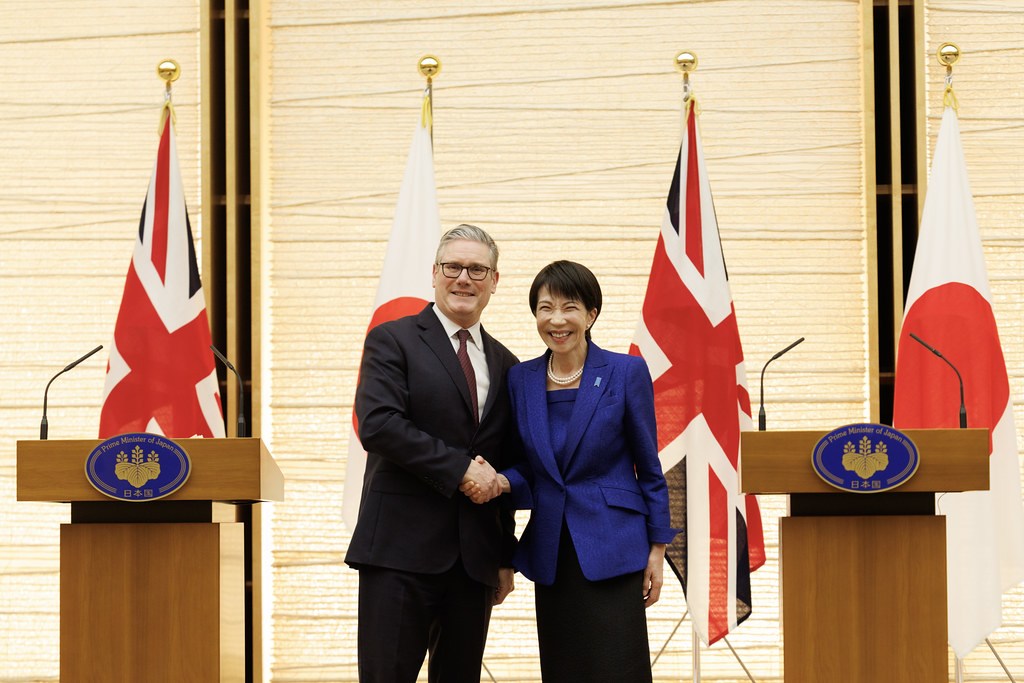
Britain and Japan have agreed to deepen defence and economic cooperation following talks in Tokyo between Prime Minister Keir Starmer and his Japanese counterpart, amid growing geopolitical uncertainty…reports Asian Lite News
Britain and Japan have agreed to strengthen defence and economic ties, Prime Minister Keir Starmer said on Saturday, as he sought to reinforce alliances in the Indo-Pacific following a visit to China that drew criticism from the United States.
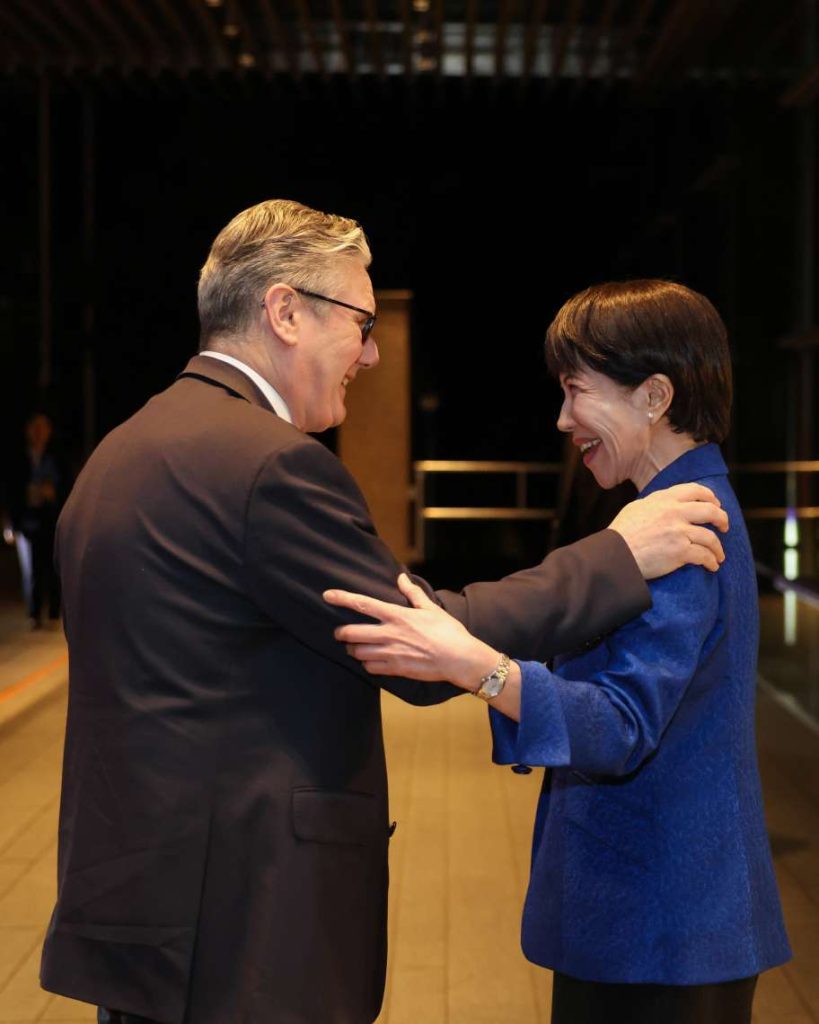
Speaking in Tokyo after bilateral talks with Japan’s Prime Minister Sanae Takaichi, Starmer said the two countries were committed to building a closer partnership across trade, security and diplomacy. “We set out a clear priority to build an even deeper partnership in the years to come,” he said. “That includes working together to strengthen our collective security, across the Euro-Atlantic and in the Indo-Pacific.”
Takaichi said the two governments had agreed to hold a meeting of their foreign and defence ministers later this year, signalling an intention to institutionalise closer cooperation. She added that she hoped to discuss “cooperation toward realising a free and open Indo-Pacific, the Middle East situation and Ukraine situation” at a dinner with Starmer on Saturday evening.
Starmer’s one-day visit to Japan followed a four-day trip to China, where he met President Xi Jinping and Premier Li Qiang and signed a series of agreements aimed at improving economic ties. Downing Street said Beijing had agreed to visa-free travel for British citizens visiting China for under 30 days, though no start date has yet been announced.
The prime minister’s outreach to Beijing prompted warnings from US President Donald Trump, who said on Thursday it was “very dangerous” for Britain to be dealing with China. Starmer has brushed off those comments, arguing that London can maintain close relations with both Washington and Beijing while safeguarding its national interests.
The broader context for the diplomatic activity is a shifting international landscape, with several Western leaders seeking to hedge against what they see as an increasingly unpredictable United States. Leaders from France, Canada and Finland have all travelled to Beijing in recent weeks, partly in response to Trump’s remarks about Greenland and renewed tariff threats against NATO allies.
Starmer said Japan and Britain were among the leading economies in the trans-Pacific region, which also includes fellow G7 member Canada and is linked through a network of trade and defence arrangements. Both countries are members of multiple international frameworks designed to promote security cooperation and open markets.
Relations between Tokyo and Beijing have deteriorated in recent months, particularly after Takaichi suggested in November that Japan could intervene militarily in the event of an attack on Taiwan. China regards the self-ruled democratic island as its territory and has repeatedly warned against foreign interference.
Economic security was a key theme in the Tokyo talks. Takaichi said the two leaders agreed that strengthening supply chains, “including important minerals”, was urgently needed. Concerns have grown that China could restrict exports of rare earths, which are critical for technologies ranging from electric vehicles to advanced weapons systems.
China is the world’s leading producer of rare earth minerals and announced new export controls in October covering several materials and associated technologies. The issue has also become a major point of contention in trade negotiations between Beijing and Washington.
Britain and Japan are already working together on defence technology, including a joint project with Italy to develop a new fighter jet. The programme marks a significant step for Japan, which has relied heavily on the United States for military hardware for decades.
Starmer’s visit underlined Britain’s attempt to balance relations with major powers while strengthening partnerships with allies in Asia. For Japan, the talks offered an opportunity to reinforce links with a European partner at a time of growing regional tension and uncertainty about the future direction of US foreign policy.