
Britain needs £150bn in additional funding for infrastructure and to grow businesses by 2030, a City of London Corporation report warns. Investment reached £4.1tn in 2025, but weaker international inflows and rising funding requirements threaten progress, reports London Daily News Desk
Britain needs £150bn of additional investment in infrastructure and growing businesses by 2030, despite the value of UK investments rising to £4.1tn, according to a City of London Corporation report.
The UK Investment Landscape 2026 says domestic investors increased their holdings in 2025, but Britain lost ground in several international markets. Foreign direct investment declined, while the country attracted a smaller share of global private equity, venture capital and sovereign investment.

The findings highlight a gap between the scale of capital available and the funding reaching projects and companies that could support economic growth. The Corporation argues that stronger connections between investors and investment opportunities are needed across the UK. Total investment covered by the analysis rose by about £200bn, or 5%, from £3.9tn in 2024. The increase included changes in asset values as well as investment flows, meaning the headline rise does not represent fresh funding alone.
Chris Hayward, policy chairman of the City of London Corporation, said in the report’s foreword: “Although domestic investors increased their allocation to UK assets, we have lost ground on other fronts.” He added, “The investment capital is available. So are the growth opportunities. It is the shared task of HM Government, the financial and professional services industry and regulators to connect the two.”
The report, the Corporation’s second annual assessment of the investment landscape, identifies infrastructure and businesses seeking to expand as areas where funding remains insufficient. It says investment has increased since its previous analysis, but demand has risen faster. Growing companies need £15bn a year to fulfil their potential, according to the report. They receive less investment than businesses that attract venture capital or are involved in buyouts, with limited availability of suitable investment vehicles cited as one obstacle.
Infrastructure faces a separate challenge. Meeting the government’s target of £80bn in annual infrastructure investment by 2030 requires increasing investment by £5bn each year for five years, the report says. It also cites a £466bn requirement for public and private investment identified in the National Infrastructure and Service Transformation Authority’s infrastructure pipeline. Rising project costs have increased funding requirements even as infrastructure investment has grown.
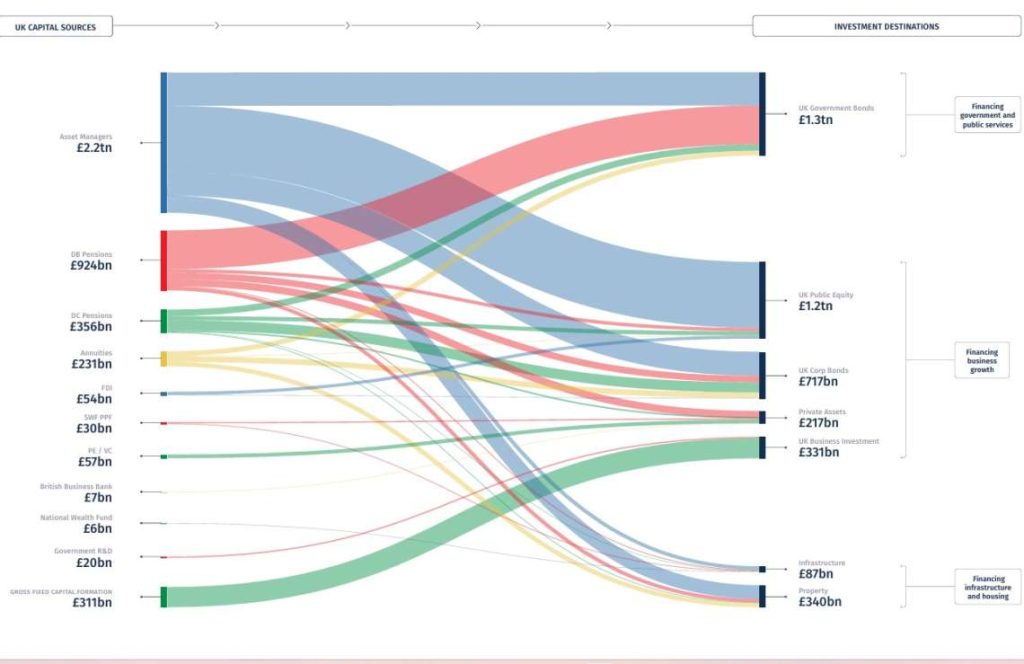
International investment weakened across several measures. Foreign direct investment fell by £14bn to £54bn in 2025, with 51 fewer projects. The total nevertheless remained in line with the average over the previous five years.
The decline largely reflected fluctuations in projects worth more than £1bn. Several major data centre investments recorded in 2024 were not repeated in 2025, while the report highlights fewer large projects in Scotland and the North East. Renewable energy attracted the most foreign direct investment, with funding rising by £2bn to £21bn. Financial services investment remained stable, providing a more resilient element of the international picture.
An EY investor survey cited in the report identified geopolitics, the economic outlook and tariffs as leading perceived risks. Investors regarded Europe and the UK as more exposed than other regions. Britain’s share of global private equity and venture capital investment fell from 11% to 9%. UK investment from these sources declined by £2bn, although the report describes activity as broadly stable.
Mergers and acquisitions attracted £38bn in 2025, while venture capital accounted for £8.5bn across 260 deals. Direct pension investment in UK growth equity remained rare, limiting one potential source of finance for expanding companies. Sovereign wealth funds and overseas public pension funds reduced UK investment by £3bn. Britain’s share of global sovereign investment fell from 13% to 9%, even as worldwide investment increased from £169bn to £215bn.
The report says sovereign capital continues to support assets including Heathrow, Gatwick, National Grid and Rolls-Royce’s small modular reactor programme. Higher investment in private equity and debt was offset by weaker activity in infrastructure and listed equity. Domestic investors provided a stronger counterweight. Asset managers increased UK investment by £154bn, supported by stronger flows and rising asset values. Their UK holdings grew by 6%, compared with 12% growth in overseas investments.
Government bonds were the largest investment destination, with holdings of £1,285bn despite a £56.5bn decline. Listed UK equities recorded the largest increase, rising by £222bn to £1,178bn, or 29% of the total covered. The British Business Bank supported around 28,000 smaller companies with £6.8bn, combining £3bn from private investors, £1.2bn from its own funds and £2.6bn through lending guaranteed by the bank.
The Corporation is promoting several initiatives to direct more money towards businesses and infrastructure. InvestConnect, announced at Mansion House in July, is intended to link domestic and international investors with UK infrastructure projects worth more than £100m. Its founding opportunity partners are the Scottish Government, Cornwall Council and Liverpool City Region Combined Authority. Investors managing $3tn in global assets are helping shape the platform, which the report says will launch in autumn 2026.

The Sterling 20 initiative brings together pension funds and insurers supporting the Mansion House Accord. Participants have committed to investing 10% of default pension assets in private markets by 2030, with half allocated to UK private investment. The Accord is expected to unlock £25bn for infrastructure, housing, clean energy, innovation and growing businesses by 2030. That figure represents an anticipated outcome of the commitments, rather than investment already delivered.
A further initiative, the Office for Investment: Financial Services, aims to attract £10bn of additional international financial services investment by 2030. Operating within the Corporation since October 2025, it helps overseas firms establish or expand in Britain. The report argues that Britain retains substantial domestic savings, established capital markets and financial expertise. Its central challenge is to translate those strengths into investments that support productivity, infrastructure and business expansion across the country.