The government has announced the creation of a new National Police Service to take over the most serious and complex criminal investigations across England and Wales…reports Asian Lite News
The government has confirmed it is setting up a new National Police Service to handle counter-terrorism, serious fraud and organised crime, in what ministers describe as the biggest shake-up of policing in decades. The new body, which will operate across England and Wales while retaining the ability to work throughout the wider UK, will bring together several existing national and regional units into a single organisation with its own leadership, technology and standards.
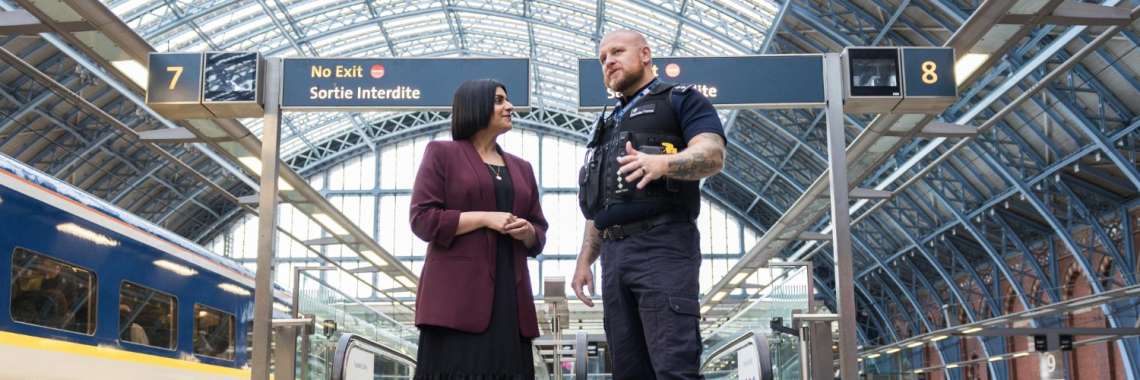
Home Secretary Shabana Mahmood said the new service, which she likened to a “British FBI”, would deploy “world class talent and state of the art technology to track down and catch dangerous criminals”. She said policing in Britain was stuck “in a different century” and argued that a national approach was now required to deal with threats that cross local, regional and international boundaries.
The National Police Service, or NPS, will absorb the work of agencies including the National Crime Agency, regional organised crime units and several specialist policing functions that are currently spread across forces. Counter-terror policing, which is led by the Metropolitan Police, the National Air Service run by West Yorkshire Police, and National Roads Policing will all be transferred into the new body. The Home Office said this would allow intelligence and resources to be shared more effectively so that people receive the same level of protection “no matter where they live”.
Under the plans, the NPS will be led by a national police commissioner, who will become the most senior police chief in the country. The new organisation will also set national standards and oversee training, in an effort to ensure consistency in how serious crime is tackled. Ministers say that local police forces have been “burdened” with dealing with complex investigations without sufficient specialist training or technology, leaving fewer officers available to focus on everyday crimes such as shoplifting and anti-social behaviour.
The Home Office said the new force would procure advanced technology, including facial recognition, on behalf of all police forces. The government has pointed to the use of facial recognition as evidence of the potential benefits of national coordination, saying it has led to a rapid reduction in crime and reportedly to 1,700 arrests over the past two years. Campaigners, however, have raised concerns about privacy and bias, arguing that the technology can misidentify people and undermine civil liberties.
Mahmood has also indicated that the NPS will recruit expertise from outside traditional policing, particularly for leadership and specialist roles. The aim, ministers say, is to reflect the changing nature of crime, which increasingly involves cyber fraud, international networks and sophisticated financial operations that require skills not always found within the existing system.
Graeme Biggar, the director general of the National Crime Agency, welcomed the move. “The overall policing system is out of date. Crime has changed, technology has changed, and how we respond needs to change,” he said. “These are threats that affect us all locally, but need a national and international response.” Supporters of the new body argue that bringing together intelligence, data and expertise will make it easier to disrupt criminal networks that operate across multiple police areas.
The creation of the NPS forms part of a wider package of reforms that Mahmood has described as necessary to overhaul what she calls an “irrational” policing structure. Earlier in the week she announced plans to reduce the number of police forces in England and Wales from 43 to 12 larger regional “mega” forces. Ministers argue that bigger forces will be better equipped to deal with complex and expensive investigations, although they have not set out a detailed timetable for the changes.
On Friday the government also published plans for a new licence scheme for police officers and increased powers for ministers to intervene where police and fire chiefs are judged to be failing. In November it was announced that police and crime commissioners would be scrapped in 2028, with ministers saying the move would save at least £100m and allow more money to be directed towards neighbourhood policing.