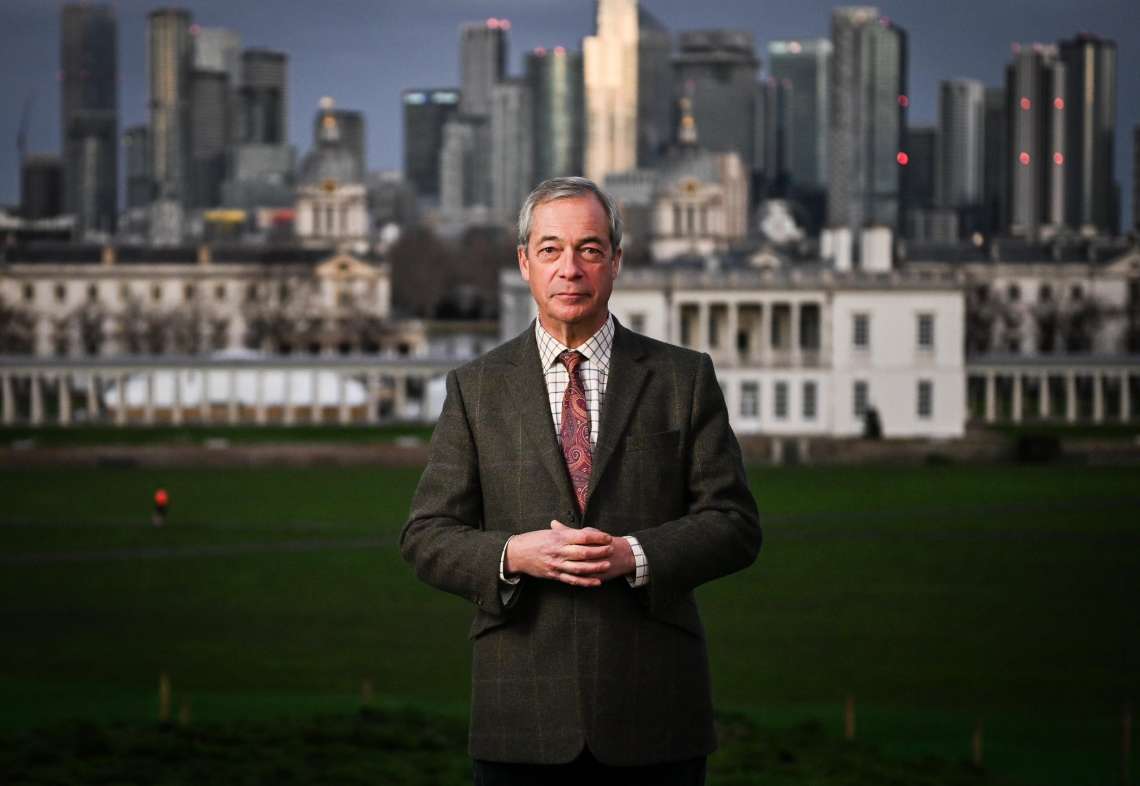
Nigel Farage has been accused by senior ministers and Labour figures of undermining Britain’s national security after saying he would vote against deploying UK troops to Ukraine…reports Asian Lite News
Nigel Farage has been accused of “parroting Kremlin lines” after saying he would oppose any UK government plan to deploy British troops to Ukraine, intensifying a political row over national security, parliamentary accountability and Britain’s role in Europe’s defence. The criticism followed comments by the Reform UK leader that he would vote against sending UK forces to Ukraine, even as Britain and France signalled readiness to contribute troops after a future peace settlement.
Earlier this week Britain and France said they would be prepared to send forces to Ukraine as part of a post-war security arrangement. However, Farage, who leads Reform UK and is one of the party’s five MPs, said he would not support any move to put British “boots on the ground”. His intervention prompted a sharp response from the Cabinet Office minister Pat McFadden, who questioned Farage’s commitment to the UK’s national security and accused him of taking a pro-Russia stance.
McFadden said the proposed security guarantee was not limited to Ukraine but extended to Europe as a whole. “This guarantee is not just for Ukraine, it’s for the whole of Europe,” he said. “It’s in the British national interest that we do that, and that’s why it’s so concerning to me to see some politicians, like Mr Farage, for example, immediately come out [and] parrot the Kremlin line and say that he wouldn’t support this.”
Farage made his position clear during an appearance on Times Radio on Wednesday, choosing to broadcast rather than attend prime minister’s questions in the House of Commons. His absence drew criticism from political opponents, who said he was “not really [being] an MP at all” by failing to scrutinise the prime minister in person. During the interview, Farage criticised Sir Keir Starmer’s approach to Ukraine and confirmed how he would vote if the issue came before Parliament.
“It would be a very interesting vote. I would vote against,” Farage said. He argued that the UK lacked the capacity for a long-term deployment, adding: “We neither have the manpower nor the equipment to go into an operation that clearly has no ending timeline.” He suggested his position might change only if a significantly broader international force were involved. “If the coalition of the willing was eight, 10, a dozen countries and we could rotate battalions through then I might well say, ‘Yeah, absolutely let’s do it’. As it is, it will be us and the French completely exposed for an unlimited period of time.”
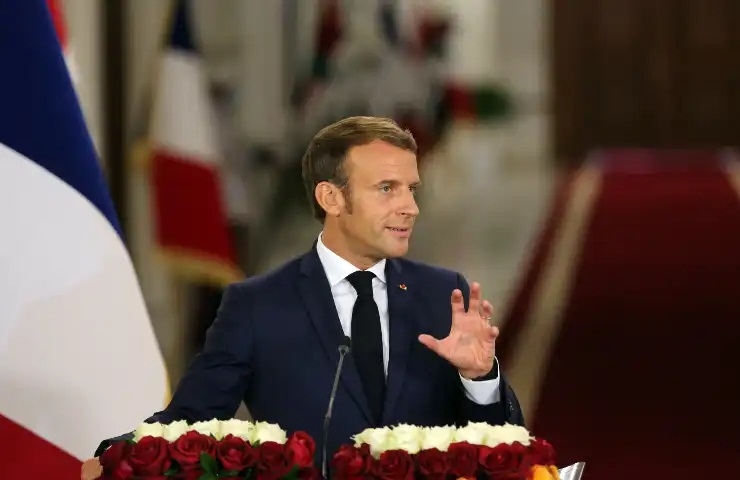
His remarks followed a summit in Paris on Tuesday involving more than two dozen leaders from countries backing Ukraine, described as a “coalition of the willing”. The meeting also included the US envoy Steve Witkoff and Donald Trump’s son-in-law Jared Kushner. After the talks, Sir Keir Starmer and the French president Emmanuel Macron signed a declaration of intent with Ukraine’s president, Volodymyr Zelenskyy, underlining their commitment to Ukraine’s security and signalling a willingness to deploy ground troops as part of a peacekeeping arrangement.
At prime minister’s questions on Wednesday, Starmer sought to reassure MPs that Parliament would have a decisive role in any military decision. He said there would be a debate and a vote in the Commons before any UK troops were deployed on peacekeeping duties in Ukraine, emphasising the gravity of the decision and the need for democratic consent.
Farage’s comments have sharpened Labour’s attacks on Reform UK, particularly on issues relating to Russia and Ukraine. Labour figures have repeatedly highlighted the party’s past controversies, including the jailing last November of Reform’s former leader in Wales, Nathan Gill, who was convicted of taking bribes to make statements in favour of Russia during his time as a Member of the European Parliament.
The Reform leader’s own record on Russia has also been placed under renewed scrutiny. In previous years Farage spoke of his admiration for Vladimir Putin as a political operator and warned the West against “poking the Russian bear with a stick”, accusing the European Union of provoking the war in Ukraine in 2024. Following criticism, he later wrote that Putin’s invasion was “immoral, outrageous and indefensible”, while maintaining that confronting Russia without sufficient means or political will was misguided.