London’s political and civic leaders have issued a joint call for deeper cooperation across the capital, warning that fragmentation risks weakening its global standing. Speaking at a high-profile City dinner, they stressed that trust, talent and strong institutions remain central to London’s competitiveness
The Lady Mayor of the City of London, Dame Susan Langley, has urged London’s political and business leaders to embrace stronger partnerships across the capital, warning that division risks undermining its position on the world stage.
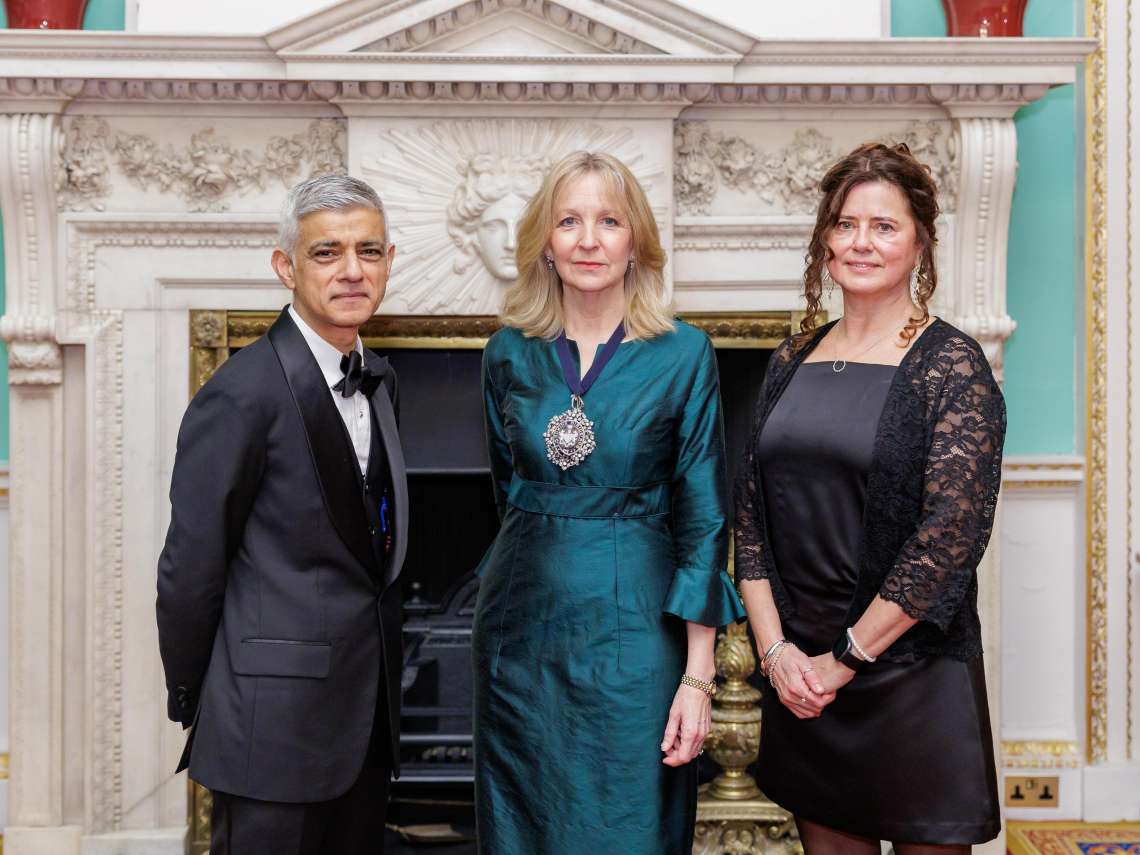
Addressing the annual London Government Dinner alongside the Mayor of London, Sadiq Khan, and the chair of London Councils, Claire Holland, Dame Susan said the City’s global success depends on trust, talent and close connections with the rest of London. She argued that in an increasingly competitive international environment, fragmentation represented a direct threat to the capital’s shared prosperity.
Dame Susan highlighted the role of trusted institutions in underpinning London’s reputation as a safe, secure and reliable place to do business, singling out the City of London Police for its work in protecting firms, tackling fraud and maintaining security in the Square Mile. That confidence, she said, supports investment not only in the City but across the wider capital.
The comments come as London faces intensifying competition from rival global cities for investment, talent and influence, alongside structural pressures ranging from technological change to public finances. Speakers at the dinner emphasised that these challenges could not be met in isolation by individual boroughs, institutions or sectors.
The Mayor of London, Sadiq Khan, said: “London is the best city for business in the world – an economic powerhouse bristling with creativity, innovation and enterprise, the engine of the UK economy and a leading global financial centre. We must continue to work together to protect our business ecosystem by strengthening partnerships – both local and global – and look towards the future to tackle the impact of AI on London’s labour market, which will be nothing short of colossal. We must future-proof our economy, and our workforce, seizing the potential of AI and use it as a superpower for positive transformation and creation, or risk being left behind.”
His remarks placed artificial intelligence at the centre of London’s next phase of economic change, with cooperation across government, business and communities presented as essential to managing disruption while capturing opportunity.
Claire Holland, chair of London Councils, echoed the call for collaboration, stressing the importance of cross-party working between boroughs and City Hall. She said: “We achieve far more for our city and for the communities we represent by working together in a spirit of collaboration. The cross-party consensus we have always sought to build through London Councils is foundational to our ability to have a strong London voice. And it’s provided us with the means to strengthen collaboration between boroughs and the GLA – whether that’s jointly developing the London Growth Plan, making homes and buildings more energy efficient through Warmer Homes London, or taking a more coordinated approach to tackling homelessness and rough sleeping.”
Dame Susan used her speech to underline the City of London’s historic role as a place where business is conducted on the basis of trust and enforceable rules, arguing that this reputation is more valuable than ever in uncertain times. “For centuries, the City has been a place where deals are made and honoured. People do business here because they trust and respect the system. Contracts are enforced. Disputes are resolved. And in an increasingly uncertain time, that is priceless,” she said.
She also stressed that the City’s success is inseparable from the wider capital, noting that the talent drawn to the Square Mile lives, studies and builds careers across London’s boroughs. Referring to her own background, she told guests: “You now have a Bow born girl standing before you as Lady Mayor.” The City, she said, thrives because it is connected not only to global markets but to London’s transport networks, universities, cultural institutions, faith groups and diverse communities.
Among examples of partnership, Dame Susan cited the new London Museum, backed by more than £400 million from the City Corporation and the Mayor of London, which is due to open this year and aims to tell the story of the whole capital. She also highlighted the City of London Police’s national role in tackling fraud, alongside its work keeping the Square Mile secure.
“In a competitive, turbulent world, fragmentation is weakness, togetherness is strength,” she said, adding that London’s longevity over nearly two millennia rests on its ability to adapt rather than stand still. The message from the dinner was clear: London’s future success will depend on how effectively its leaders and institutions work together across boundaries, at home and abroad.