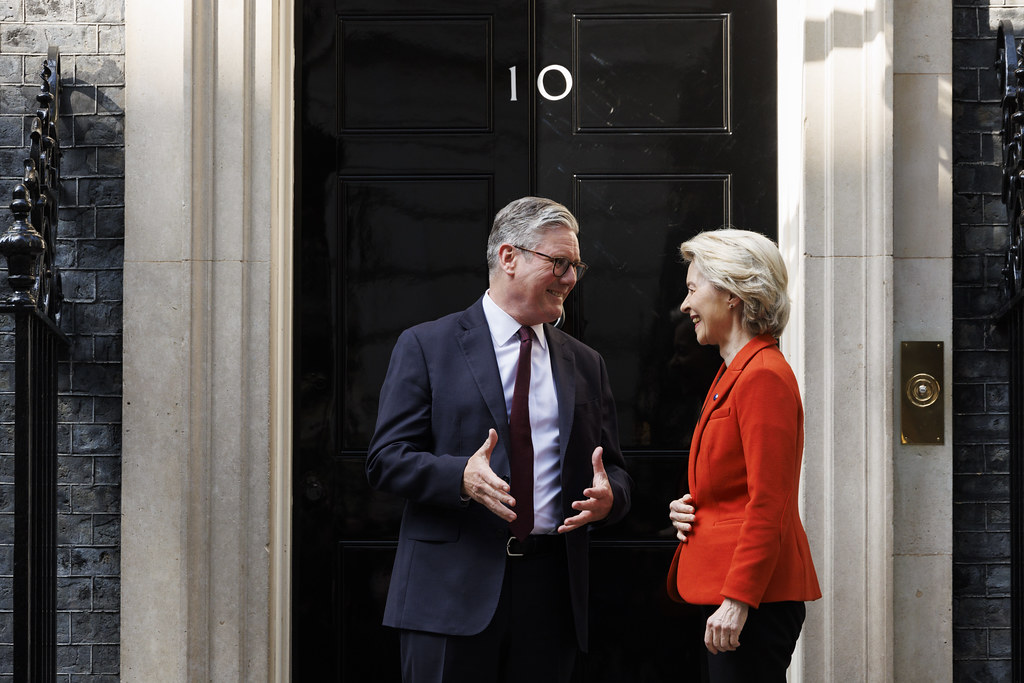
Financial ties between the UK and the EU remain deeply embedded nearly a decade after the Brexit vote, according to a new report from the City of London Corporation and New Financial
The interconnectedness of EU and UK financial markets remains a “fact of life”, according to a new report from the City of London Corporation and New Financial, which finds that links between the two systems remain strong despite years of political separation. The report shows that activity has not only endured since the 2016 referendum but in some areas has intensified, underscoring the continuing reliance of European finance on London’s depth, liquidity and expertise.
EU banking activity involving UK institutions has surged by 60 per cent since the Brexit vote, the report finds. While UK banks have diversified towards other global markets, cutting their overall share of EU lending by 20 per cent, the value of UK bank lending into the EU still exceeds lending in the opposite direction, accounting for 12 per cent compared with 8 per cent. The authors say this highlights the structural asymmetry between the two markets and London’s continuing role as a major conduit for European capital.
Titled The Interconnectedness of EU and UK Financial Markets, the report concludes that although both sides have sought to internationalise since Brexit, financial flows between them remain significant. UK capital markets are almost twice as deep relative to the size of the economy as those in the EU, while both lag far behind the United States, whose markets are around three times as deep as the EU’s. The UK also has a far larger pool of long-term capital, equivalent to 204 per cent of GDP, compared with 169 per cent in the EU, again trailing the US figure of 436 per cent.
The report argues that these differences matter at a time when both the UK and the EU face similar pressures, including sluggish growth, rising investment needs and global competition for capital. It calls for a more serious discussion on how the two sides can work more closely to reduce frictions and support growth, as the UK government signals a shift towards a more pragmatic relationship with Brussels. Prime Minister Keir Starmer has said he would like to pursue greater access to the EU’s Single Market, adding political weight to calls for renewed cooperation.
Among the key findings, cross-border venture capital ties remain robust, with a quarter of EU venture capital deals involving UK investors and more than a quarter of UK deals involving EU investors. London continues to dominate euro-denominated derivatives trading, accounting for around two-thirds of activity, while a fifth of EU-domiciled investment funds are managed in the UK. The share of EU equity held by UK investors has also risen, increasing from 30 per cent to 36 per cent of all cross-border equity holdings by UK investors.
However, the report warns that new regulatory barriers could undermine these connections. It highlights the EU’s Capital Requirements Directive as a major threat, noting that from 2027 it will prevent non-EU banks from lending into the bloc unless they establish a local branch. The authors say this could choke off investment from London at a time when the EU economy is stagnating and requires substantial additional funding. They argue that such rules would reduce flexibility and efficiency in UK–EU investment channels, to the detriment of European growth.
With the EU lacking sufficiently deep pools of long-term capital, the report says UK markets remain essential for funding growth and innovation across Europe. It argues that London continues to provide investment that is difficult to replicate within the bloc, particularly in areas such as venture capital, derivatives and complex financial services.
The report was launched at the City of London Corporation’s annual Brussels reception, where the UK Economic Secretary to the Treasury, Lucy Rigby KC, delivered the keynote speech. The event was attended by EU policymakers, regulators, MEPs and senior figures from the financial services industry, reflecting the continued interest in resetting aspects of the UK–EU financial relationship.
Recommendations include enhanced regulatory dialogue between the UK and the EU, closer cooperation in emerging areas such as sustainability and digital assets, and technical improvements to ease cross-border market activity. The report also calls for the UK to rejoin European statistical agencies such as Eurostat, explore binding bilateral frameworks rather than unilateral equivalence decisions, simplify rules for short-term business visitors, expand secondment programmes between regulators, and agree mutual recognition of professional qualifications.
Policy chairman of the City of London Corporation, Chris Hayward, said: “Almost 10 years after the Brexit vote, this report shows that the interconnectedness of EU and UK financial markets remains a fact of life. The EU and the UK face many common challenges – from defence and security to climate change and demographic shifts, from poor economic growth to low levels of investment. Let’s rethink initiatives like the ban on cross-border bank lending in the Capital Markets Directive, which hinder connectivity and reduce investment in the European economy. As this report shows, the prosperity and security of the UK and the EU are indivisible, and greater UK-EU connectivity in financial and professional services – in those areas where we’re already aligned – can accomplish those wider objectives which we all share.”