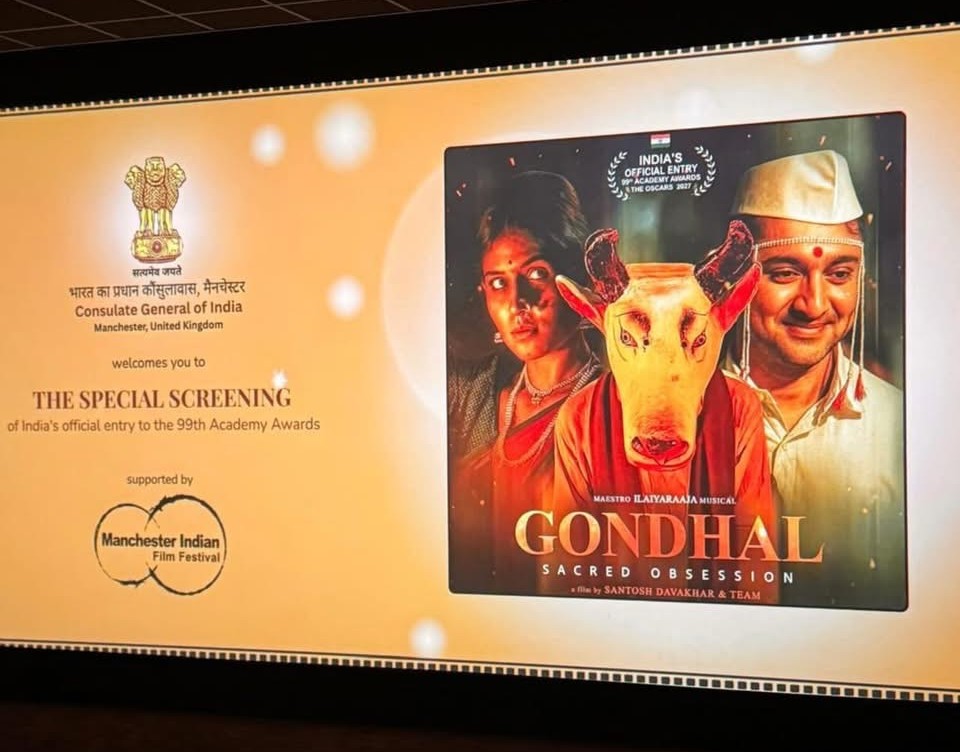
Rahul Laud attends the special screening in Manchester and speaks to lead actor Yogesh Sohoni about the film’s remarkable journey, its technical achievements and its Oscar ambitions
A Marathi film rooted in rural traditions, psychological intrigue and human betrayal is now carrying India’s hopes onto the international stage. Gondhal, whose digital partnership was handled by Cocktail Studio Pvt Ltd, has been selected as India’s official entry in the Best International Feature Film category for the 99th Academy Awards.
For London-based venture capitalist, strategic investor and serial entrepreneur Adhish Desai, the selection is a moment of considerable pride. Desai, a partner at India’s Cocktail Studio Pvt Ltd alongside Ajay Padwal and lead actor Yogesh Sohoni, is delighted by the film’s achievement and the recognition it has brought to Marathi cinema.
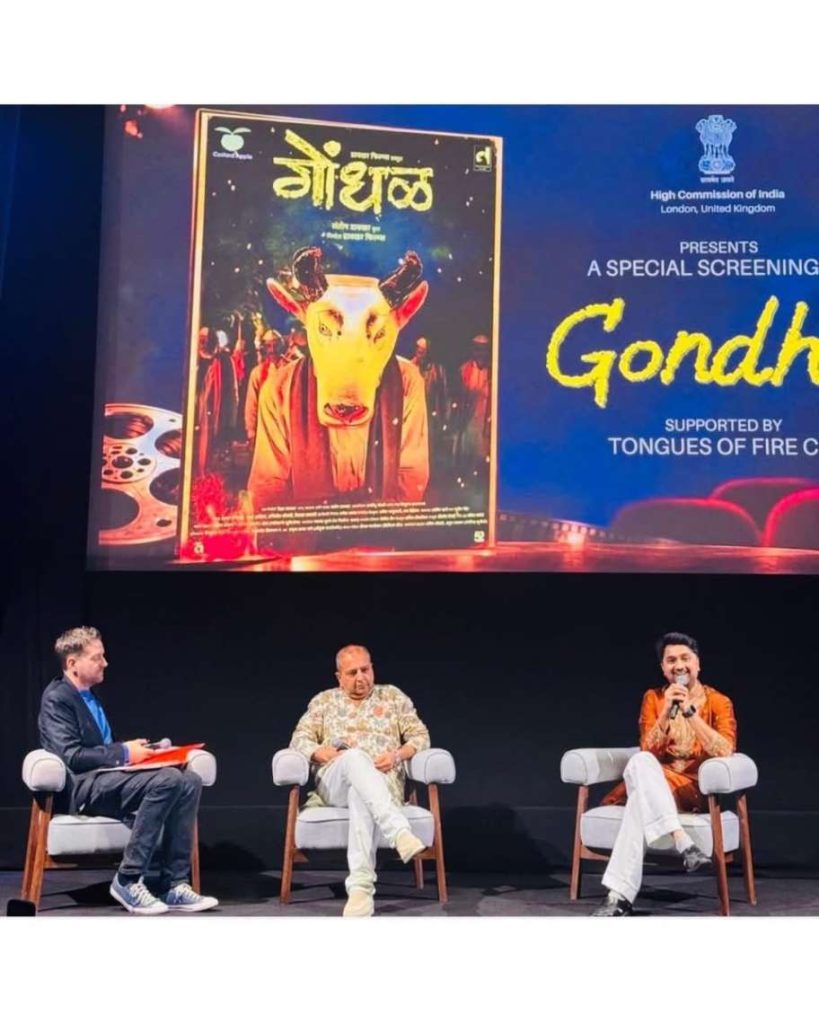
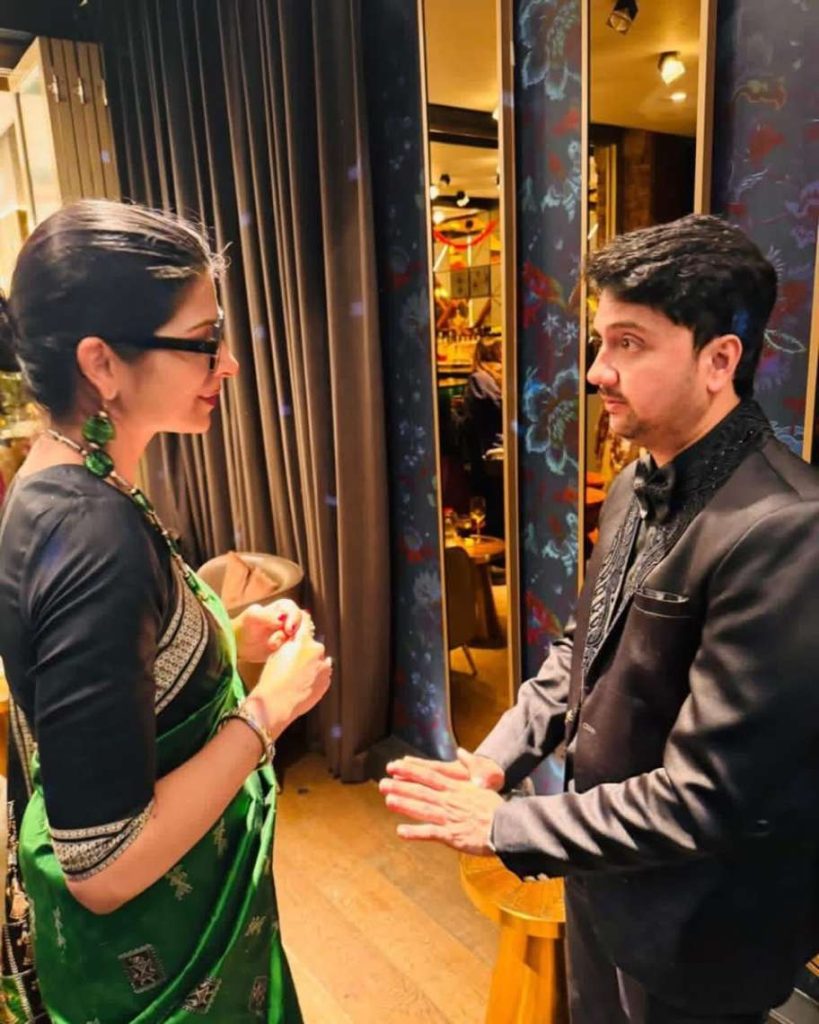
Mumbai-based actor Yogesh Sohoni, who is also a partner at Cocktail Studio, recently visited the UK to promote the film. The Indian High Commission in London and the Consulate General of India in Manchester supported the film by hosting special screenings in the respective cities.
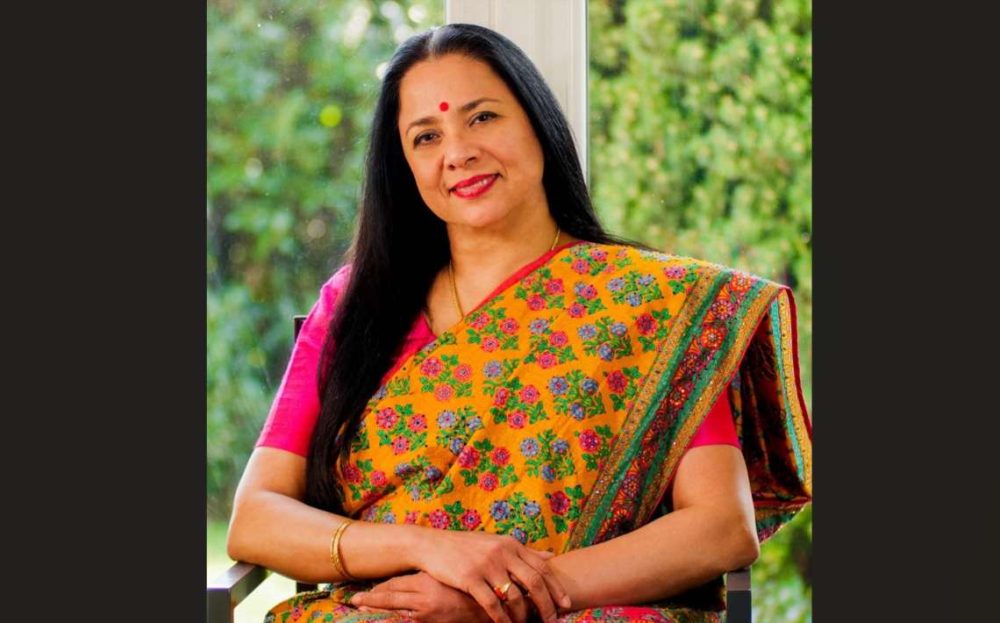
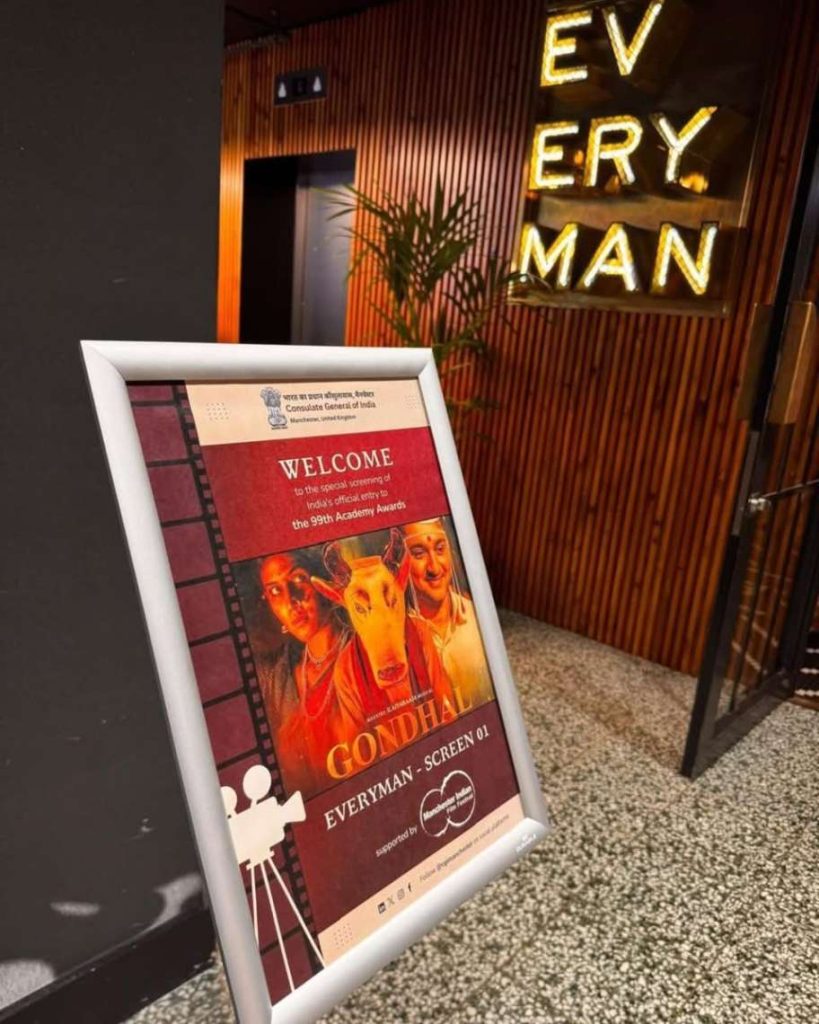
At the Manchester screening, Consul General Vishakha Yaduvanshi acknowledged the contribution of creative industries in strengthening India-UK relations, particularly following the formal signing of the Free Trade Agreement this year.
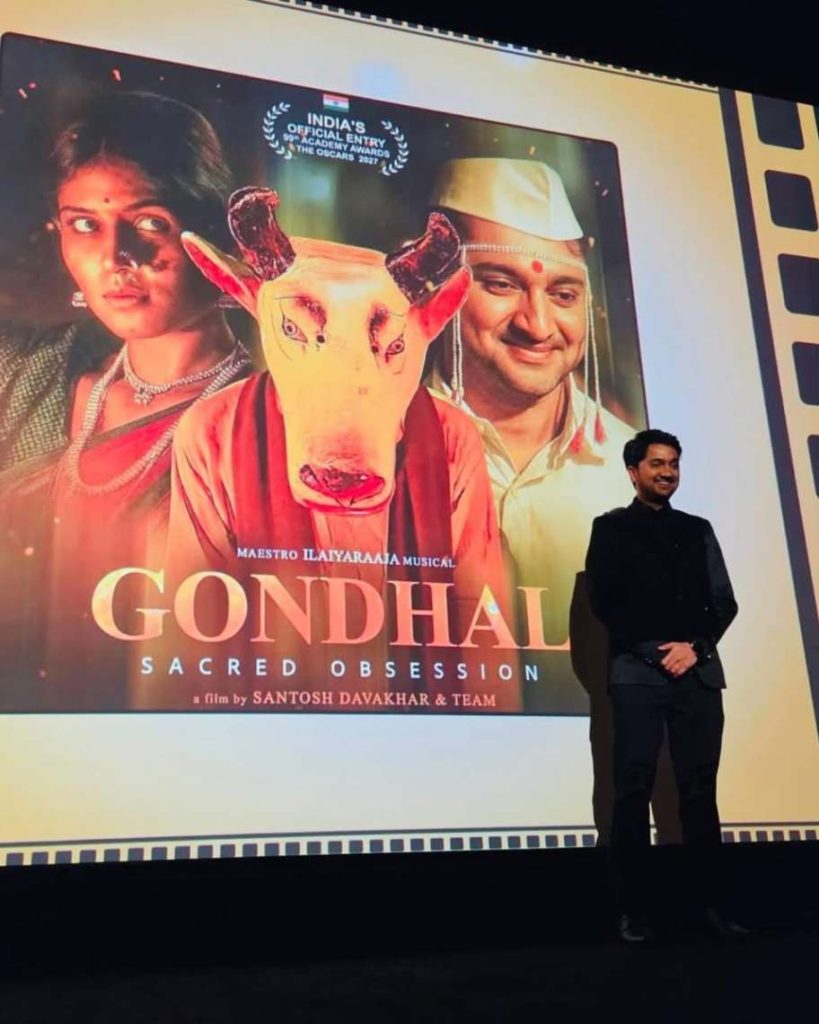
The recognition marks a significant milestone for the Marathi film industry. On 18 September 2026, the Film Federation of India selected Gondhal from 33 films to represent India in the Best International Feature Film category at the 99th Academy Awards. It is the fourth Marathi-language film to receive this distinction, following Court, Shwaas and Harishchandrachi Factory. The Oscar ceremony is scheduled for 14 March 2027.
A psychological thriller rooted in tradition
Written, directed and produced by Santosh Davakhar, Gondhal is a 2025 Marathi-language psychological thriller produced under the banner of Davakhar Films, with Diksha Davakhar as co-producer.
The film features Indore-born Ishita Deshmukh and Yogesh Sohoni in their acting debuts, alongside Kishor Kadam, Suresh Vishwakarma, Nishad Bhoir, Anuj Prabhu and Vitthal Kale in significant roles.
Set in rural Maharashtra, the film unfolds over a single night against the backdrop of a Gondhal — a traditional, night-long devotional ritual performed for a newly married couple. What begins as a sacred cultural ceremony gradually develops into a disturbing tale of obsession, betrayal and violence, as a young bride’s schemes transform the occasion into an unsettling psychological drama.
In his directorial debut, Davakhar demonstrates a distinctive approach to storytelling. Rather than using folk traditions merely as cultural decoration, he explores their human dimensions, examining the complex relationships, power structures and emotions that lie beneath the rituals.
The director also keeps the ending deliberately intriguing, leaving audiences to interpret the transformation of the central character. One particularly striking visual metaphor comes towards the end, when the lead character covers a hen with a basket. The gesture suggests complete control and symbolises his emergence as the new village head. The character’s transformation delivers a powerful jolt, compelling viewers to reconsider everything they have witnessed.
A remarkable 25-minute continuous opening shot
One of the film’s most talked-about technical achievements is its opening sequence — a continuous take lasting approximately 25 minutes, reported as the first of its length in Indian cinema.
As Yogesh Sohoni explained, the sequence demanded extraordinary coordination and preparation. According to Davakhar, completing the shot required seven nights of shooting, more than 300 junior artists each day, a lighting setup extending over three-quarters of a kilometre, five generators and three tankers of petrol.
The scale of the production reflects the director’s determination to create an immersive cinematic experience rather than rely on conventional filmmaking techniques.
The film’s cinematography, sound design and musical score further strengthen its atmosphere. The soundtrack was composed by legendary music maestro Ilaiyaraaja, whose involvement brought an additional dimension of authenticity to the film’s rural setting.
From IFFI’s Silver Peacock to the Oscars
Before its Oscar selection, Gondhal had already attracted significant international and national attention.
The film premiered in competition at the 56th International Film Festival of India (IFFI) in Goa in 2025, where Santosh Davakhar won the Silver Peacock for Best Director. It was the first time a Marathi film had received this distinction.
The film was subsequently released theatrically in India on 14 November 2025. Although it did not achieve commercial success at the box office, it went on to receive recognition at several film festivals and award ceremonies, including six Filmfare Awards Marathi.
Davakhar’s journey into filmmaking is itself noteworthy. He previously directed short films, including Adnyat (2017), a film exploring caste-related themes that was screened at the Cannes Short Film Corner.
According to Yogesh Sohoni, Davakhar is largely self-taught and did not attend a conventional film school to study direction. His exposure to international cinema played an important role in shaping his filmmaking philosophy.
During a visit to Cannes, Davakhar reportedly watched more than 40 films in 15 days. The experience prompted him to reflect on how Indian cinema is perceived internationally. He wanted to challenge the expectation that Indian films aspiring for international awards must necessarily focus on poverty or caste.
In 2018, he attended a 45-day screenwriting programme conducted by the Film and Television Institute of India (FTII) in Mumbai. He also studied international films and their storytelling techniques before developing Gondhal.
The influence of international cinema and accomplished filmmakers is evident in the film’s narrative structure, visual language and technical execution.
A childhood memory becomes cinematic inspiration
Davakhar’s colleagues have revealed that the inspiration for Gondhal came from a traditional ritual he experienced during childhood with his grandfather.
That personal memory became the foundation for a film that examines the human side of folk traditions. The director uses the ritual not simply as a backdrop, but as an integral part of the narrative, allowing the cultural setting to shape the characters’ behaviour and the unfolding psychological drama.
Technical excellence across departments
The film’s technical craftsmanship has been one of its strongest talking points among critics and cinema enthusiasts, many of whom have described it as an exceptional example of collaborative filmmaking.
Cinematographer Amalendu Chaudhary, known for his work on The Sabarmati Report, Ae Watan Mere Watan, Fukrey 3 and OMG 2, creates striking visuals through innovative lighting. Capturing the entire narrative within a single-night setting demanded careful control of light, atmosphere and visual continuity.
Chaudhary has also received the Filmfare Award and Maharashtra State Film Award for his work on Hampi (2017) and Cycle (2018).
Ilaiyaraaja’s contribution is equally distinctive. In pursuit of authenticity, the celebrated composer travelled to Sinnar taluka in Maharashtra to capture the essence of local folk music. The filmmakers also incorporated original folk artistes into the production, lending the soundtrack a genuine regional character.
Sound design was handled by Jayesh Dhakkan, an assistant to Oscar-winning sound designer Resul Pookutty. To preserve the rawness and authenticity of the sound, Dhakkan reportedly deployed between 30 and 40 microphones on the set constructed in Mumbai.
Together, these contributions create a rich soundscape that complements the film’s visual storytelling and its immersive rural atmosphere.
A unanimous choice by the Indian jury
The Film Federation of India’s 14-member jury unanimously selected Gondhal from the 33 films submitted for consideration. Reports indicate that the film received all 14 votes, while Dhurandhar secured four.
The unanimous decision underlines the jury’s confidence in Davakhar’s work and its potential to represent Indian cinema on the international stage.
The makers are now planning a theatrical re-release across India in multiple languages to allow a wider audience to experience the film following its Oscar selection.
Sources close to producers Santosh and Diksha Davakhar indicate that the filmmakers do not intend to release the film on OTT platforms or YouTube, preferring to preserve the cinematic experience for audiences in theatres.
An Oscar journey to watch
For Adhish Desai and his partners at Cocktail Studio, Gondhal’s Oscar selection is more than a professional achievement. It is an opportunity to showcase the creative capabilities of Marathi cinema and the wider Indian film industry to an international audience.
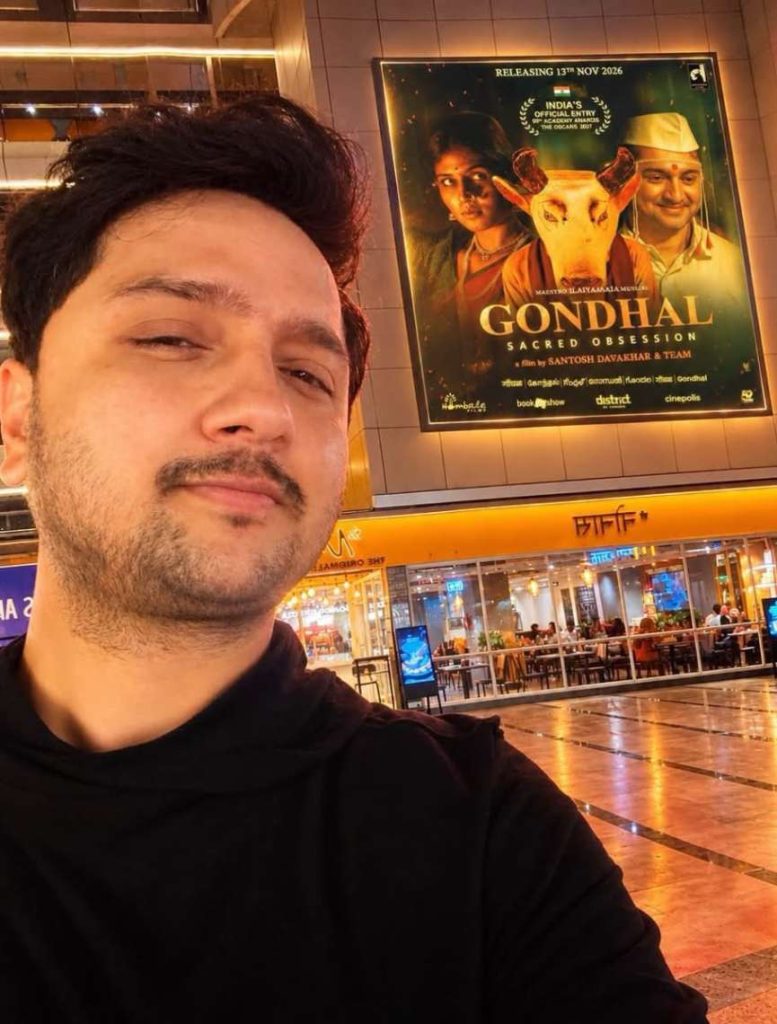
For Santosh Davakhar, the journey from a childhood memory of a traditional ritual to the international recognition of his directorial debut is remarkable. For Yogesh Sohoni, the film represents an ambitious acting debut and an opportunity to take Marathi storytelling to a global platform.
With its unconventional narrative, ambitious 25-minute opening shot, authentic folk music, innovative cinematography and meticulous sound design, Gondhal has demonstrated how regional stories can aspire to international recognition without losing their cultural identity.
Whether the film eventually secures an Oscar nomination or goes on to win the coveted award remains to be seen. But its selection as India’s official entry has already placed Gondhal and Marathi cinema firmly in the international spotlight.