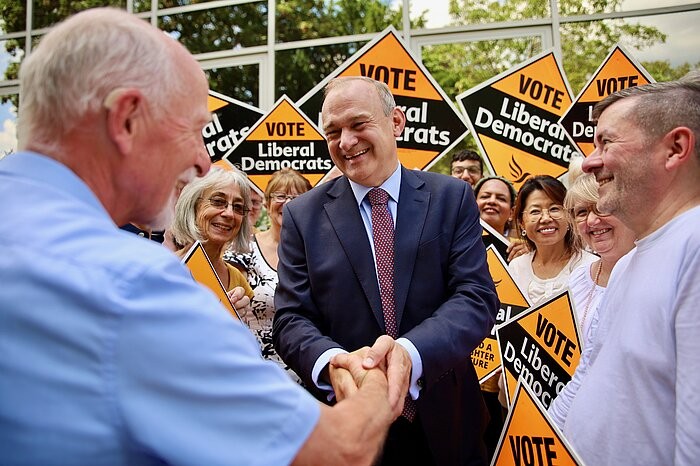
Ed Davey has urged ministers to consider whether wealthy Britons living in low-tax countries should cover the cost of being evacuated during international crises…reports Asian Lite News
Liberal Democrat leader Ed Davey has called on the government to examine whether British nationals living in low-tax countries should pay for their own evacuation flights during international emergencies, triggering debate over fairness and the responsibilities of citizenship.
Speaking during Prime Minister’s Questions on 2 March, Davey argued that Britons who choose to live in low-tax jurisdictions should not automatically expect the UK taxpayer to fund the cost of returning them to safety if conflict escalates. He suggested that individuals who base themselves overseas for financial advantages should bear a greater share of the financial burden when crises require government-organised evacuation efforts.
His comments came amid heightened concern about instability in the Middle East following military action involving the United States and Israel. The situation has prompted wider discussion about contingency planning for British citizens living and working in the region, including how evacuations would be organised and funded if security conditions deteriorate.
Davey indicated that the issue raised broader questions about fairness at a time when public finances are under pressure and defence spending is expected to rise. He argued that taxpayers in the UK should not necessarily shoulder the full cost of emergency flights for those who live abroad in countries with lower tax regimes.
The intervention shifts attention towards the practical costs of crisis response, particularly the expense of organising charter aircraft, logistical support and consular operations required to assist citizens during emergencies. Previous international evacuations have involved significant government coordination and public expenditure.
Prime Minister Keir Starmer responded by reaffirming that the government has a duty to protect British citizens overseas. He emphasised that ensuring the safety of nationals abroad remains a core responsibility of the state, although he did not directly endorse the idea that expatriates should be charged for evacuation flights.
The proposal drew mixed reactions from commentators and political opponents. Critics argued that emergency evacuations are part of the government’s longstanding consular responsibilities and warned that introducing financial conditions could create complications during fast-moving crises. Some also questioned how charges would be enforced, particularly where individuals might not have immediate access to funds or where rapid departures are required for safety reasons.
Others noted that the UK already issues travel advice and that citizens who choose to live or work in potentially unstable regions do so within an established framework of consular support. They cautioned that linking emergency assistance to tax status could prove legally complex and politically sensitive.
Supporters of Davey’s stance said the suggestion reflects growing concern about how limited public funds should be allocated. They argue that when individuals relocate primarily for financial reasons, it is reasonable to consider whether the general taxpayer should fully underwrite the costs of extracting them from high-risk situations.
The debate also touches on wider questions surrounding the modern relationship between the state and globally mobile citizens. As more people live and work overseas for extended periods, policymakers face increasing pressure to define what support governments should provide and where financial responsibility should lie.
While no formal policy has been proposed, the remarks have prompted discussion about contingency planning, consular services and the costs associated with large-scale evacuations. Any change to existing arrangements would require detailed legal and logistical consideration, as well as consultation with international partners and expatriate communities.
For now, the issue remains part of a broader political conversation about fairness, public spending and the responsibilities that accompany British citizenship. The government has not indicated that it plans to introduce charges for evacuation flights, but the exchange has highlighted the financial and ethical questions that can arise when crises place sudden demands on state resources.