Western governments and defence companies are seeking cheaper ways to counter drones and missiles as conflicts highlight the high cost of traditional air-defence systems, reports John Williams
Western defence companies and governments are intensifying efforts to develop lower-cost ways to counter drones and missiles as recent conflicts expose the growing financial imbalance between cheap offensive weapons and expensive air-defence systems. The push has gained urgency following Iranian attacks in the Gulf and lessons drawn from Russia’s invasion of Ukraine, where large numbers of relatively inexpensive drones have forced defenders to rely on costly missile-based interception systems.
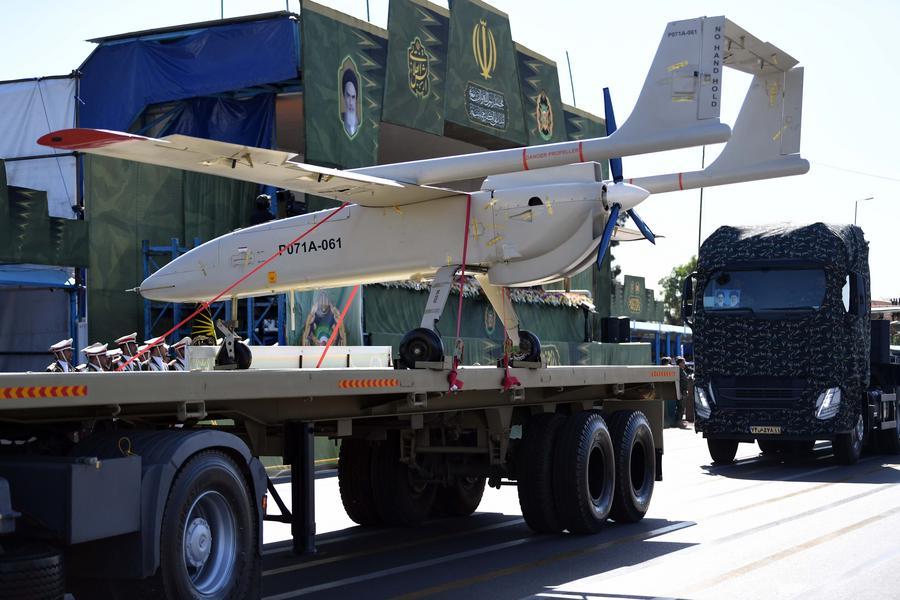
The changing nature of warfare has highlighted how systems designed primarily to counter aircraft and large missiles appear increasingly ill-suited to conflicts dominated by drones. In the Middle East, Gulf states have relied heavily on firing missiles from complex and costly air-defence systems such as the US Patriot to intercept Iranian Shahed drones, the same type widely used by Russian forces in Ukraine.
Iran’s approach mirrors tactics seen in Ukraine, where Russia flooded the skies with cheap drones to stretch air-defence resources. The imbalance in costs can be significant. It is estimated that for every $1 Iran spent on drones, the UAE spent at least 20 times as much on shooting them down using a mix of medium-range systems such as the US National Advanced Surface-to-Air Missile System.
The experience of Ukraine has also shown how rapidly innovation can occur when defence technology companies work closely with military forces. Ukrainian groups have pioneered the use of mass-produced interceptor drones to counter incoming attacks, supported by domestic technology start-ups. The war has helped accelerate investment in the defence technology sector and demonstrated the importance of manufacturing at scale.
Executives at several Western start-ups say governments in the Middle East have approached them about urgent supplies of lower-cost defensive technology. Interest has also been fuelled by the Pentagon seeking help from Ukrainian companies developing interceptor drones.
Established defence contractors are also moving to develop cheaper options alongside traditional missile systems. RTX, the company that builds the Patriot air-defence system used in Ukraine and the Middle East, has recently demonstrated a lower-cost version of its Coyote counter-drone system to the US Army.
BAE Systems is promoting its US-built APKWS kit, which converts unguided 2.75-inch rockets into precision-guided munitions and is seen as a lower-cost alternative to larger guided missiles. Studies have examined integrating the system with Eurofighter Typhoon aircraft.
Alongside new interceptor weapons, companies are investing in technologies that can detect and disable drones more cheaply. Radar systems remain central to air defence, but other detection technologies are also being developed, including acoustic sensors that detect drone engine noise, radio-frequency detectors that identify control signals, and optical cameras that use visible and infrared imaging.
Some governments are also exploring directed-energy weapons. High-power microwave systems designed to disable drone electronics and laser weapons capable of destroying small targets are being tested as potential alternatives to missile-based defences.
The developments reflect a wider shift in defence thinking, with companies and governments seeking layered systems combining radar, drones, missiles and emerging technologies to counter the growing threat from low-cost aerial weapons. The aim is to create defences capable of responding to large numbers of incoming drones without relying solely on expensive missiles.