A major design change has been confirmed for the national memorial to Queen Elizabeth II, with the late monarch now set to be depicted standing rather than on horseback…reports Asian Lite News
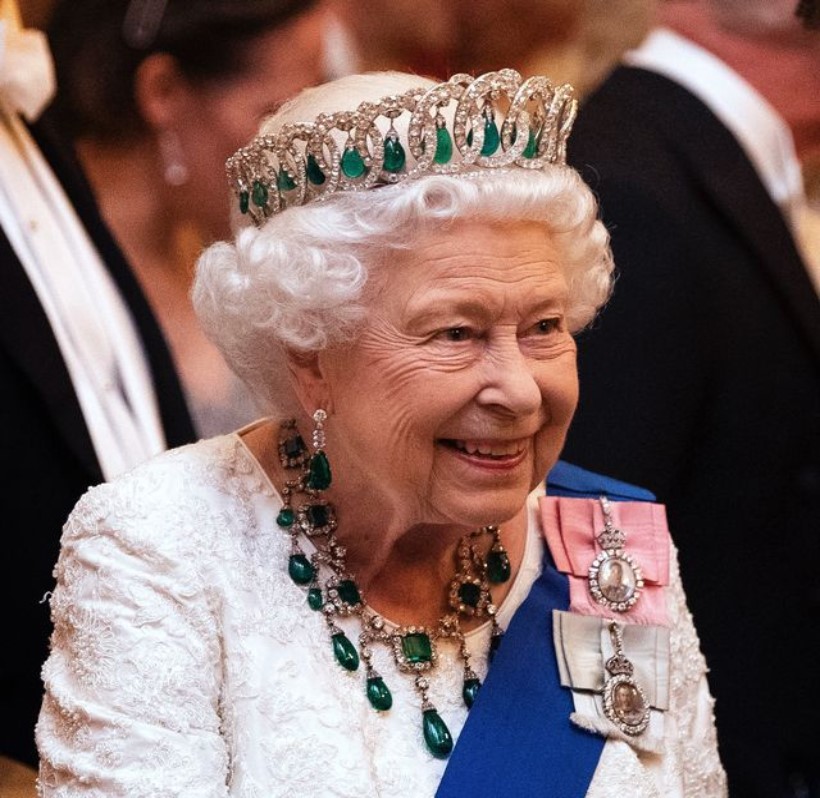
The national monument to Queen Elizabeth II will show the late monarch standing rather than riding a horse, the memorial committee has confirmed, in a significant change from early illustrations that had depicted her on horseback. The updated design will form the centrepiece of a large commemorative complex being created in St James’s Park in central London, close to Buckingham Palace and The Mall, and is intended to serve as the main national tribute to Britain’s longest-reigning monarch, who died in 2022.
The memorial, which will include three statues, a bridge with a tiara-shaped glass balustrade and landscaped gardens, is being overseen by a committee supported by the Cabinet Office. It is being developed under the direction of architect Lord Norman Foster, with sculptor Martin Jennings commissioned to create the principal statue of the Queen that will be positioned near Marlborough Gate on The Mall.
Earlier concept images had shown Queen Elizabeth II on horseback, reflecting her lifelong love of riding and equestrian sport. However, those images were never intended to represent the final design, according to officials, and were used only to indicate scale, position and general layout. Following further consideration, the decision has been taken that the Queen will instead be portrayed standing.
Jennings said the choice was deliberate and rooted in royal tradition rather than in any attempt to downplay the Queen’s personal interests. “After careful research and thought, my design for the Queen’s monument will emphasise her role as head of state and proudly follows a sculptural tradition that shows kings and queens from the House of Windsor in a standing position,” he said. The sculptor noted that nearby memorials to the Queen’s parents, King George VI and Queen Elizabeth, also depict them standing in formal robes, creating what he described as a visual and historical continuity within the park.
The main statue of Queen Elizabeth II will stand close to a statue of her husband, Prince Philip, who died in 2021. The positioning is intended to reflect both their personal partnership and their shared public roles over several decades. Together, the sculptures will sit within a wider commemorative landscape that includes a bridge crossing a lake, edged by a glass balustrade shaped to echo a tiara, and surrounding gardens designed to provide a place of reflection.
At another entrance to St James’s Park, a smaller sculpture of the Queen will be created by Karen Newman, whose appointment has now been confirmed. Newman has produced works depicting performers such as Charles Dance and Roger Daltrey, as well as Second World War heroines including Noor Inayat Khan and Violette Szabo. Earlier in her career, she also worked as a wax modeller at Madame Tussauds, where she made figures of Prince Philip and former prime minister Sir Tony Blair.
Newman said she was honoured to be asked to contribute to the memorial. “She was an iconic and unifying figure in our national story. I am very much looking forward to portraying the strong and complex personality of our late Queen,” she said. Lord Foster praised her appointment, saying her “talent and sensitivity will bring a profound sense of dignity to the work”.
The overall design of the memorial has been shared with King Charles, who has been kept informed and consulted as plans have developed. The final version of the scheme is scheduled to be made public in April 2026, to coincide with the centenary of Queen Elizabeth II’s birth, a date that is expected to be marked by a series of national events and commemorations.
While the project is intended as a permanent and high-profile tribute, its cost has already attracted controversy. The budget is expected to fall somewhere between £23m and £46m, depending on final design and construction costs. The anti-monarchy group Republic has criticised the level of public spending, arguing that the royal family should cover the cost rather than taxpayers. The group has said that, at a time of pressure on public finances, such a sum is difficult to justify for a ceremonial monument.
Supporters of the scheme argue that a national memorial to Queen Elizabeth II is appropriate given her 70-year reign and her role in shaping modern Britain’s constitutional monarchy. They point out that major monuments to previous monarchs, including Queen Victoria and King George VI, were also funded by the state and have become enduring parts of the country’s cultural and historic landscape.
The decision to depict the Queen standing rather than on horseback is likely to be seen as part of an effort to emphasise her constitutional and symbolic role rather than her private passions. Although she was widely known for her love of horses and racing, particularly in relation to Royal Ascot and her breeding interests, the memorial committee has chosen to place greater weight on how she is remembered as head of state.