Sir Keir Starmer begins a landmark China visit, promising a pragmatic reset in ties to boost British jobs and trade while keeping firm guardrails on national security….reports Asian Lite News
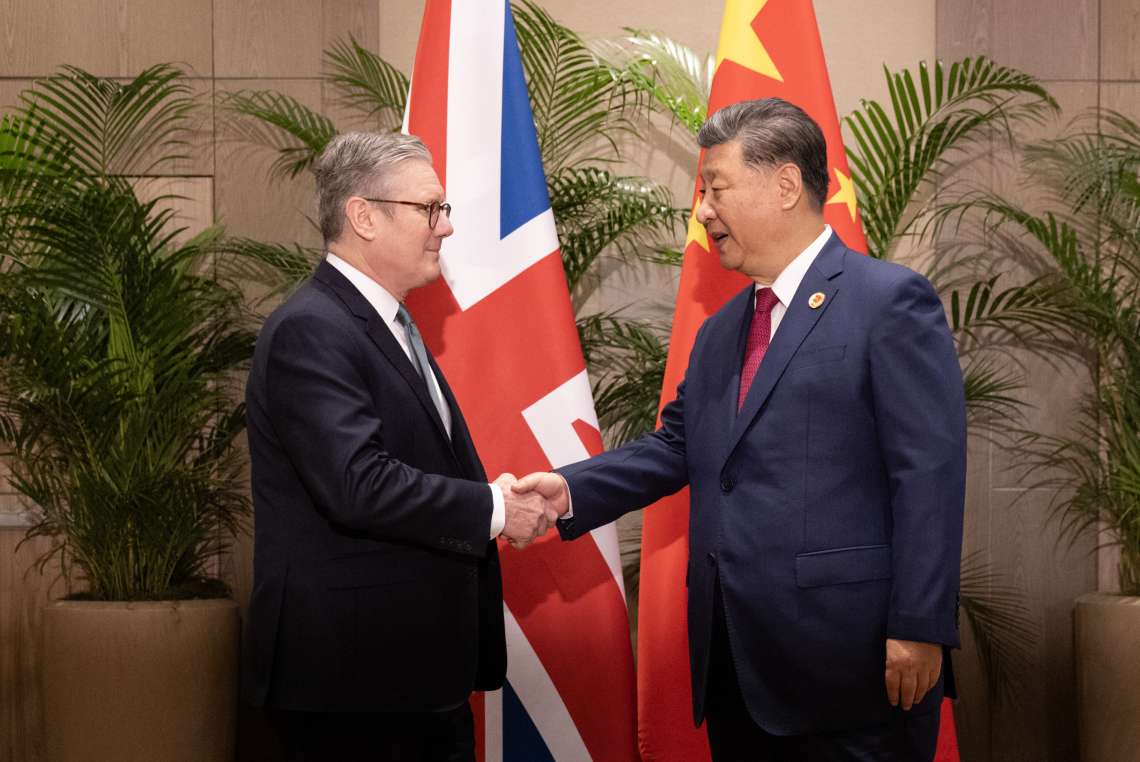
Sir Keir Starmer has pledged a more consistent and strategic relationship with China, arguing that a pragmatic reset in ties is essential to boosting British jobs, trade and long-term economic stability, as he heads to Beijing on the first visit to the country by a UK prime minister since 2018.
The Prime Minister is accompanied by a delegation of nearly 60 senior figures from British business, culture and finance, in what Downing Street has described as the most significant step yet in the government’s effort to reboot relations with one of the world’s most powerful and controversial economies. The visit comes amid a backdrop of global instability, slowing growth and heightened security tensions, all of which the government believes make engagement unavoidable.
A shift from ‘hot and cold’ diplomacy
Sir Keir is expected to argue that Britain’s approach to China has swung wildly for more than a decade, veering from optimism about a “Golden Age” of trade to an almost complete diplomatic freeze. He will say this inconsistency has cost the UK influence, investment and opportunities, leaving Britain isolated from the kind of structured engagement pursued by allies such as France, Germany and Canada.
The Prime Minister will tell Chinese leaders that his government intends to be “clear-eyed and realistic”, pursuing cooperation where it benefits British workers and businesses while maintaining firm guardrails on national security. He has said China matters to the UK whether governments like it or not, pointing to its role as the world’s second-largest economy, a dominant force in global supply chains and the UK’s third-largest trading partner, supporting an estimated 370,000 British jobs.
Business, culture and trade on focus
During the visit, Sir Keir is due to meet President Xi Jinping and Premier Li Qiang for talks on trade, investment and security, before travelling to Shanghai for further engagements with British and Chinese firms. The focus will be on unlocking growth in sectors where the UK believes it holds global strengths, including financial services, life sciences, advanced manufacturing and the creative industries.
He is joined by Business and Trade Secretary Peter Kyle and Economic Secretary to the Treasury Lucy Rigby, who have both argued that disengagement has weakened Britain’s economic position. Kyle has said that the UK failed for years to engage seriously with China, leaving trade opportunities untapped at a time when the Chinese economy was rapidly evolving. Rigby has said the UK’s financial services sector remains a cornerstone of the economy and that deeper cooperation could support jobs and growth across Britain.
Cultural and scientific institutions are also part of the delegation. British Airways’ chief commercial officer Colm Lacy has said the airline was proud to support the visit, highlighting decades of operations in China and the role of aviation in connecting trade and tourism. Natural History Museum director Doug Gurr has pointed to long-standing research partnerships with Chinese scientists, saying the visit offers opportunities to expand collaboration and knowledge exchange.
Security, human rights and political risks
The government is under no illusion about the sensitivities surrounding the trip. Human rights groups and opposition figures have criticised engagement with Beijing, citing alleged abuses in Xinjiang, the imprisonment of Hong Kong media tycoon Jimmy Lai and concerns over Chinese espionage activity in the UK. The head of MI5 has previously warned that Chinese state operations present a daily national security threat.
Downing Street has said Sir Keir will raise “challenging issues” where values and interests differ, while insisting that dialogue is essential even in areas of sharp disagreement. The Prime Minister has argued that engagement does not mean compromise on security or values, but a more effective way of defending them.
After completing his programme in Beijing and Shanghai, Sir Keir will travel on to Tokyo to meet Japanese Prime Minister Sanae Takaichi, reinforcing what Downing Street describes as a growing UK–Japan partnership worth more than £100 billion and supporting around 200,000 UK jobs.