Ministers are reviewing income thresholds for funded childcare in England as spending on early years provision approaches £5bn annually. The move has raised questions about access, affordability and whether current rules fairly support working families, reports Asian Lite Newsdesk
The education secretary has said the government is reviewing the income thresholds for parents’ eligibility for funded childcare as its spending on early years entitlements reaches £5bn a year. Bridget Phillipson said “every element” of the childcare system was under review to ensure “we are getting the best possible outcomes from the money that is being invested”.
In an interview with the Financial Times, Phillipson said: “We are going to continue to look at eligibility through the childcare review that we are undertaking, and it does need to be simpler for parents.” Her comments come as ministers examine how effectively current rules support families and whether changes could improve access to provision.
Under existing rules in England, a child must have at least one parent earning a wage equivalent to 16 hours a week at the minimum wage to qualify for the extended 30-hour entitlement. At the higher end, neither parent’s adjusted net income can exceed £100,000 a year.
Since last September, eligible working families have been able to access 30 hours of funded childcare from the term after their child turns 9 months old until they start school. The thresholds have not changed since the last Conservative government introduced the policy in 2017.
For higher earners, a modest pay rise can leave them above £100,000; even a modest pay rise can leave them substantially worse off. Meanwhile, children whose parents earn below the minimum working threshold may be unable to access the extended 30-hour entitlement, potentially limiting their early years learning.
Asked if the government was considering reducing the cap or lowering the threshold to qualify for funded hours, Phillipson said: “I do want to keep under review every element of the childcare system . . . between now and the next general election.” The review is part of a wider effort to assess how the system operates and whether it delivers value for public spending.
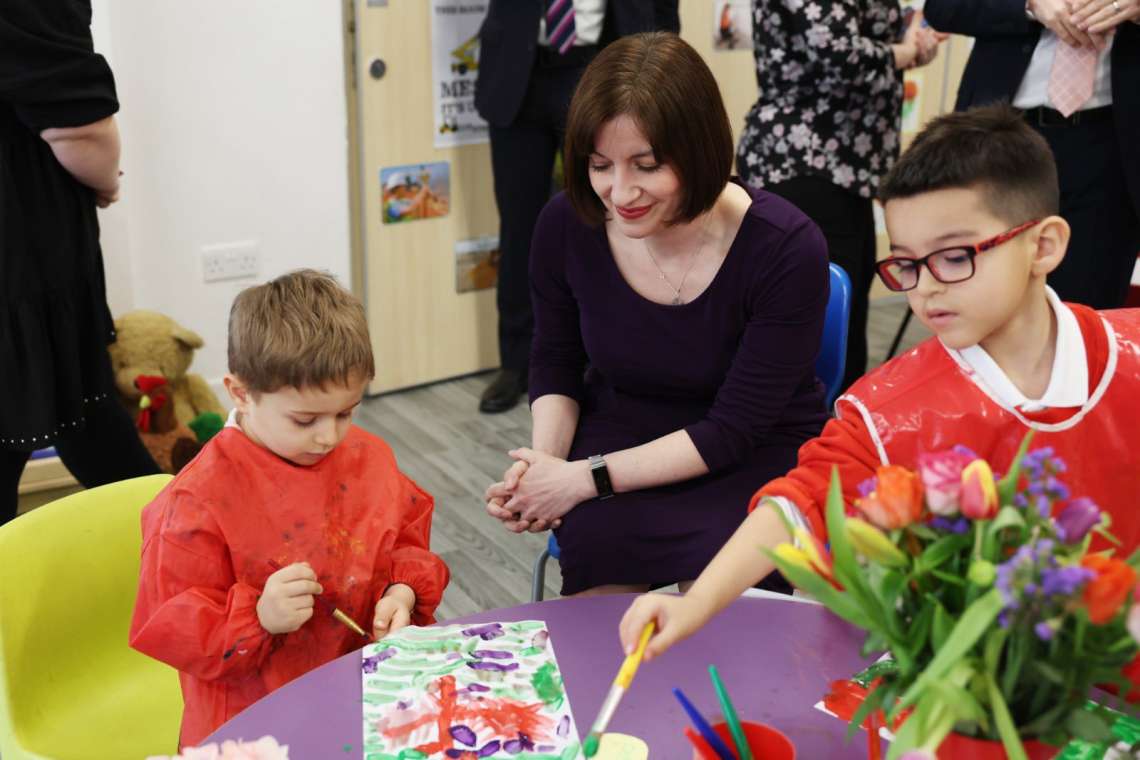
Speaking at a primary school in London, she said: “There are many quirks that exist, that have developed over the course of the last decade or so as different elements of childcare support have been added into the system.” Phillipson added: “It does make sense to make that more coherent, more straightforward, both for the sector, but also for parents too, and to make sure that we are getting the best possible outcomes from the money that is being invested and . . . as of next year, it will be £5bn a year that we are spending on the early years entitlements.”
Government officials stressed that any changes to the thresholds were not imminent and would form part of a wider review of childcare services. The government has pledged to create 100,000 additional childcare places and more than 3,000 new nurseries, many of them within primary schools, as part of its early years and childcare plan.
It recently announced an overhaul of its £400mn programme to focus on England’s most deprived areas, after new data revealed the majority of childcare was provided in areas where children were least likely to be “school ready” — a measure of development that includes being able to count, sit still and share with others.
The government has pledged that by the end of the parliament, 75 per cent of five-year-olds in England will be “school ready”. Just over 68 per cent are currently deemed to have reached these standards when starting reception. The review of eligibility thresholds is expected to continue alongside these broader reforms, as ministers seek to balance access, cost and outcomes across the childcare system.