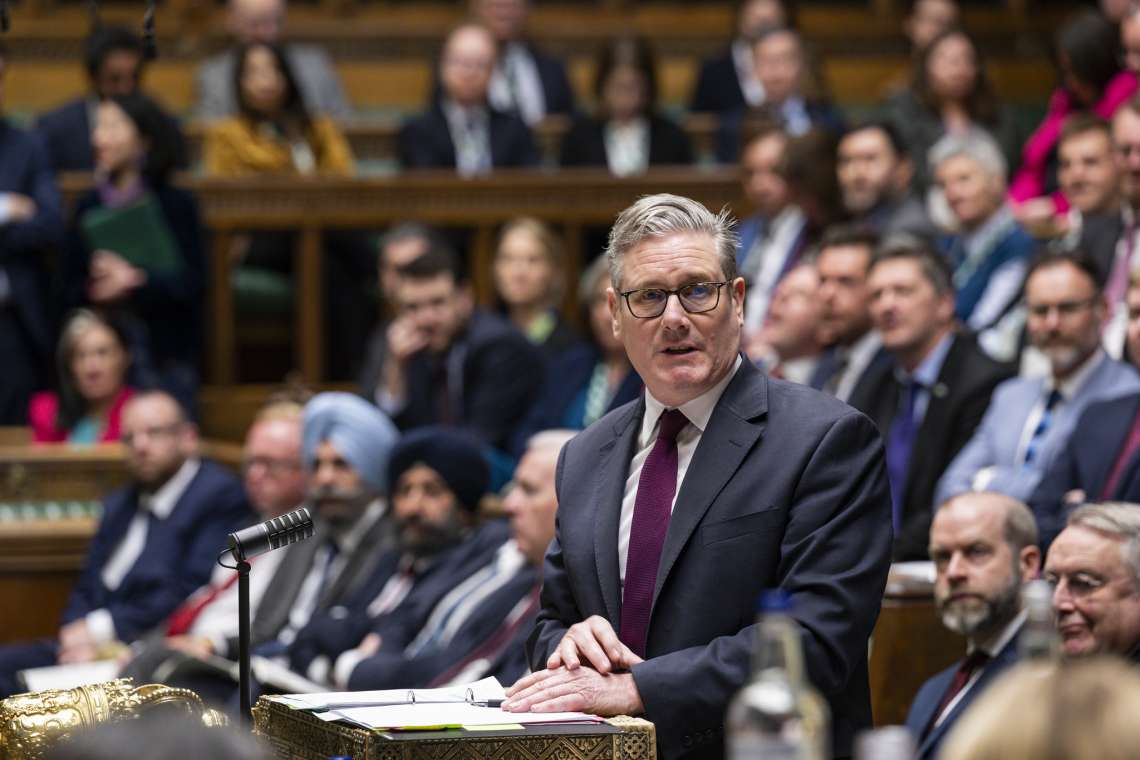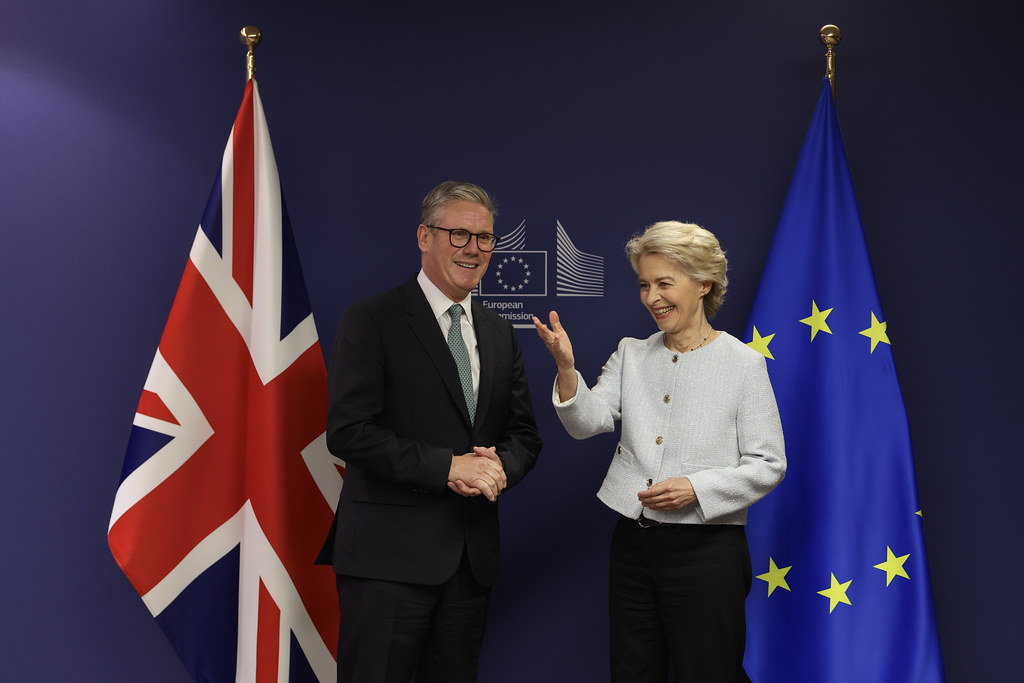
Prime Minister Keir Starmer is preparing legislation that would allow ministers to import a wide range of European Union laws into the UK, with plans expected to be set out in the King’s Speech, reports Asian Lite Newsdesk
Keir Starmer is set to bring forward legislation in May’s King’s Speech that would enable ministers to import a broad sweep of European Union laws into the UK, as part of efforts to reset relations with Brussels and reduce trade frictions. The proposed bill would give ministers the power to transfer EU rules into the UK statute book, a move the government has framed as a practical step to support businesses and align standards in key sectors.
The plan follows earlier comments by Chancellor Rachel Reeves, who said the government would seek closer alignment with EU rules in areas deemed to be in the “national interest”. The approach is intended to facilitate smoother trade with the bloc, particularly in sectors where regulatory divergence since Brexit has created additional barriers.
In its initial phase, the bill would focus on EU regulations considered easier to adopt, including those related to agriculture, food standards, hygiene, and organic produce. Officials believe progress in these areas could be achieved relatively quickly, with both sides aiming to reach an agreement at a summit expected to coincide with the 10th anniversary of the Brexit vote, due on June 23.
The government is also expected to draw on legislation introduced in 2016 that gave ministers the power to amend regulations and rules. Under the new proposal, these powers could be used to transfer EU laws into the UK statute book, with the stated aim of enabling the UK to reconnect with European regulatory frameworks where this is judged to be beneficial.
Although officials have indicated that Britain would seek “carve-outs” from certain elements of EU law, concerns have been raised about the level of parliamentary oversight. Reports suggest that MPs may have limited opportunities to scrutinise the adoption of some measures, particularly where they are introduced through statutory instruments rather than primary legislation.
In a lecture at the London School of Economics earlier this week, Rachel Reeves set out the scale of the changes being considered, stating that Britain would keep its regulatory autonomy “for sectors with unique characteristics or strategic importance for the UK, but that should be the exception, not the norm”. Her remarks underline the government’s intention to pursue closer alignment in a wide range of areas, while retaining flexibility in specific cases.
The King’s Speech, scheduled for the week after elections in Scotland, Wales and for English councils, is expected to include the formal presentation of the bill. The timing reflects the government’s broader legislative agenda following those elections, with ministers expected to outline further details of their approach to EU relations.
Reaction to the proposal has been mixed. Critics have argued that adopting EU rules risks undermining the regulatory independence secured after Brexit, while supporters contend that alignment could ease trade and reduce costs for businesses operating across borders. Concerns have also been raised about the political implications, with some opposition figures warning of potential backlash from voters who supported leaving the EU.
The proposal comes amid ongoing discussions between the UK and EU under a “common understanding” framework aimed at resetting ties. As part of these talks, Britain is expected to seek carve-outs from certain EU rules, including maintaining its ban on live animal exports and retaining the ability to diverge in specific areas. However, any such arrangements would remain subject to negotiation with Brussels.
Government officials have indicated that there would be mechanisms for oversight and dispute resolution, with any disagreements handled through independent arbitration rather than the European Court of Justice. The Cabinet Office has stated that new rules and disputes would be addressed in this way, reflecting the government’s position on maintaining UK legal autonomy.
While the full details of the legislation have yet to be published, the proposed bill represents a significant step in the government’s approach to post-Brexit regulation. By seeking to align more closely with EU standards in selected areas, ministers aim to balance economic considerations with political commitments on sovereignty, setting the stage for further debate as the legislation progresses through Parliament.