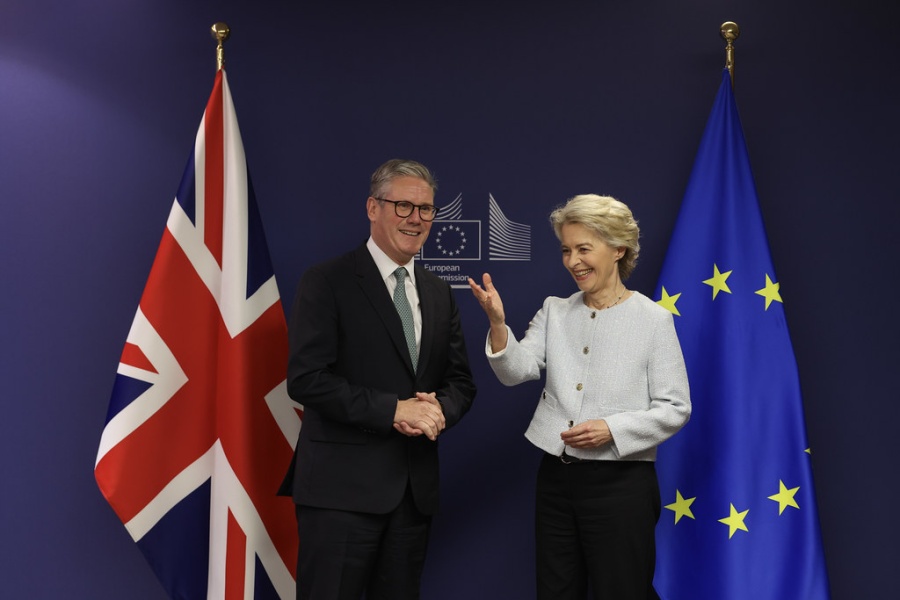
UK officials have explored the possibility of creating a frictionless goods trading arrangement with the European Union as part of a wider Brexit reset. The proposal has reportedly met resistance from Brussels, but discussions over closer economic ties are continuing ahead of a UK-EU summit expected in July…reports London Daily News Desk
UK officials have explored the idea of establishing a single market arrangement for goods trade with the European Union as part of the next phase of efforts to reset post-Brexit relations, according to reports.
Industry figures briefed on the discussions said the proposal was raised by British negotiators in recent months but has not progressed further following scepticism from EU officials.
The discussions are understood to have taken place as both sides continue negotiations over existing areas including food, farming, electricity and emissions trading.
The proposal would have gone significantly beyond the current scope of talks by potentially allowing frictionless trade in goods between the UK and the EU.
The BBC reported that the idea formed part of wider discussions ahead of a UK-EU summit expected in the coming weeks.
In recent months, Prime Minister Sir Keir Starmer and Chancellor Rachel Reeves have repeatedly called for a closer economic relationship with the European Union as part of the government’s broader Brexit reset strategy.
However, ministers have so far provided few public details beyond ongoing negotiations concerning sanitary and phytosanitary standards, agricultural trade and energy cooperation.
The emergence of the proposal suggests some within government are considering a much more ambitious approach to future UK-EU economic relations.
Business groups briefed on the discussions were reportedly told that EU officials had pushed back against the idea, arguing that such an arrangement would be difficult to negotiate while the UK maintains existing red lines on issues including freedom of movement.
A spokesperson for the European Commission declined to comment directly on the reported proposal but indicated Brussels remained open to strengthening cooperation with Britain in selected sectors.
The spokesperson said the EU continued to “see scope to deepen” industrial defence cooperation and pointed to Britain’s interest in discussions linked to support for Ukraine.
The UK government did not confirm details of the reported discussions but acknowledged that a range of options had been explored with European counterparts in recent months.
Officials said conversations with the EU remain ongoing ahead of the planned summit.
Some ministers are understood to believe changing global political and economic conditions, including shifts in the United States’ approach towards Europe, could encourage more flexible thinking within EU capitals about rebuilding closer economic ties with Britain.
The government has increasingly argued that stronger economic cooperation with European partners could support growth, improve supply chains and strengthen strategic resilience.
The issue is expected to feature prominently at the upcoming UK-EU summit scheduled for July, which is likely to focus on trade, security and defence cooperation.
In the recent King’s Speech, the government announced plans for a European Partnership Bill designed to create a legal mechanism through which UK and EU rules could be aligned in specific sectors under negotiation.
The proposed legislation would initially support agreements in areas such as food and agricultural trade but could also be used to align regulations in other sectors if future agreements are reached.
Supporters of closer UK-EU trade ties argue that reducing barriers to goods trade could help businesses facing higher costs and delays since Brexit.
Critics, however, have warned that closer regulatory alignment with Brussels could limit Britain’s freedom to diverge from EU standards and strike independent trade arrangements elsewhere.
The discussions underline the continuing debate within British politics and business over the long-term shape of the country’s relationship with the European Union nearly a decade after the Brexit referendum.
While officials insist no formal proposal has been agreed, the reported talks indicate the government is examining options for deeper economic integration as it seeks to improve trade flows and support growth amid wider global economic uncertainty.