Britain, France and Canada have reaffirmed support for a two-state solution while condemning Israeli settlement expansion in the West Bank…reports Asian Lite News Desk
Britain, France and Canada have reaffirmed their commitment to a two-state solution to the Israeli-Palestinian conflict, warning that the expansion of Israeli settlements in the occupied West Bank poses a growing threat to prospects for peace.
The leaders of the three countries issued a joint statement on Tuesday, expressing concern over what they described as the “systematic expansion” of Israeli settlements and a sharp increase in settler violence.
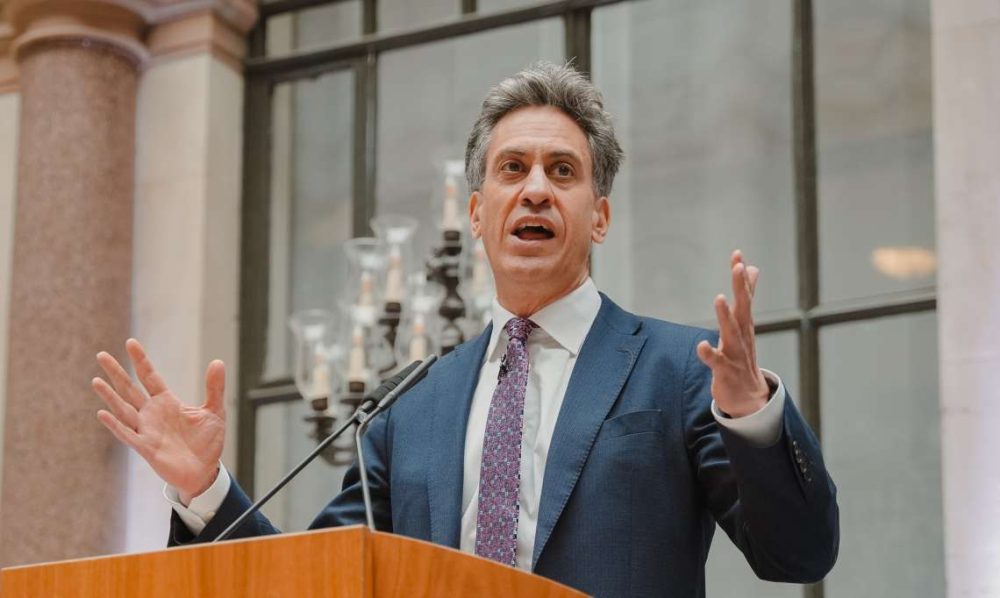
British Prime Minister Andy Burnham, French President Emmanuel Macron and Canadian Prime Minister Mark Carney said a two-state solution remained essential to peace, stability and security in the Middle East and beyond.
“A two-state solution to the Israeli-Palestinian conflict is critical for peace, stability and security in the Middle East and beyond,” the leaders said.
They warned that the continued expansion of settlements posed a direct threat to that objective.
“Settlements are illegal under international law,” they said, while condemning the Israeli government’s decision to progress the E1 settlement project and what they described as a “dramatic increase in settler violence”.
The three countries said they would introduce measures targeting settlement-related economic activity. They plan to ban imports of goods from Israeli settlements and impose targeted measures against settlements and individuals or organisations that facilitate or profit from them.
The announcement marks a coordinated position from Britain, France and Canada as international concern over developments in the West Bank continues to grow.
The E1 settlement project has been a particular source of concern because of its potential implications for the territorial continuity of a future Palestinian state.
The three leaders nevertheless stressed that they wanted to maintain close relations with Israel and reiterated their support for the country’s security.
“We support a safe and secure Israel, living alongside a safe and secure Palestine,” they said.
Their statement reflects an attempt to combine pressure over settlement expansion with continued support for Israel’s security and the wider goal of achieving a political settlement between Israelis and Palestinians.
The announcement came as the United Nations raised separate concerns over escalating Israeli military operations in southern Lebanon.
UN Secretary-General Antonio Guterres expressed deep concern over reports of attacks that have killed civilians, displaced thousands of people and damaged a hospital, according to his spokesperson Stephane Dujarric.
“The secretary-general said he was particularly alarmed by reports of Israeli strikes affecting hospitals, healthcare workers and public institutions, along with restrictions on humanitarian access,” Dujarric said.
The UN chief was particularly concerned about attacks reported over the weekend and through Monday in the Nabatieh governorate, Dujarric said.
Although the attacks took place outside the area of operations of the UN peacekeeping mission in Lebanon, known as UNIFIL, the peacekeepers continued to monitor developments closely.
Dujarric said UNIFIL had recorded a significant increase in Israeli military activity, including ground operations, projectile fire and airstrikes, as well as violations of Lebanese airspace.
The UN has expressed concern over the broader deterioration in the security situation as military activity continues across the region.
The developments in the West Bank and southern Lebanon come against the wider backdrop of the continuing Israel-Palestine conflict and heightened tensions across the Middle East.
For Britain, France and Canada, the latest statement places renewed emphasis on the two-state solution while signalling stronger opposition to settlement expansion.
Their planned restrictions on settlement-linked goods and targeted measures also indicate a willingness to use economic tools to put pressure on activities they regard as undermining the prospects for a future Palestinian state.
At the same time, the three governments have stressed that their objective is not to sever relations with Israel but to support a political path towards two states living alongside one another in security.
The joint position comes as the international community continues to face the challenge of addressing violence, humanitarian concerns and the future political status of the Palestinian territories.