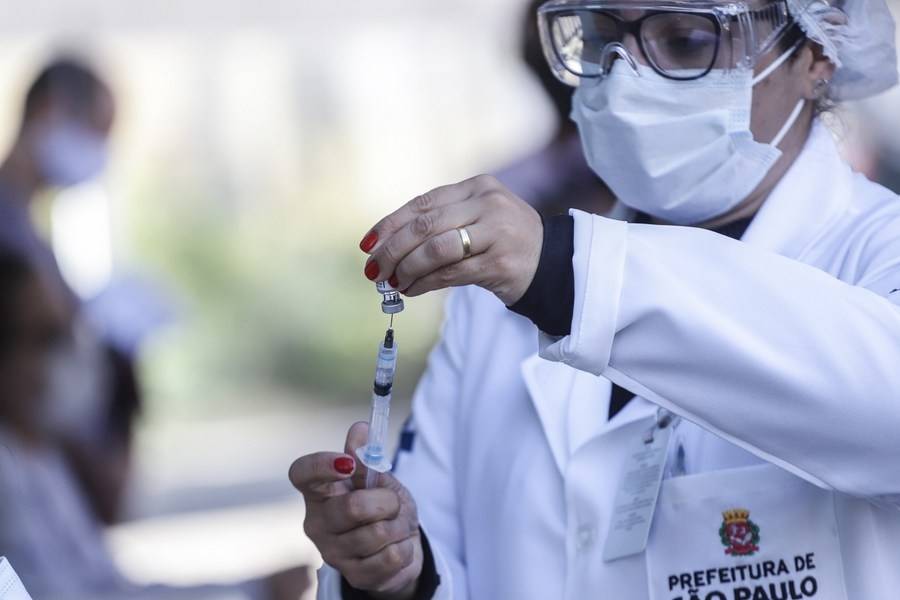
A team of researchers has suggested that consideration of a third vaccine dose might be warranted as a new study has found a gradual increase in Covid-19 infection risk after the second vaccine dose…reports Asian Lite News
The study, published by The BMJ journal, indicated a gradual increase in the risk of Covid-19 infection from 90 days after receiving a second dose of the Pfizer-BioNTech vaccine.
The researchers, including Ariel Israel from Leumit Health Services, Tel Aviv, Israel, said that findings confirm that the Pfizer-BioNTech vaccine provided excellent protection in the initial weeks after vaccination, but suggest that protection wanes for some individuals with time.
For the study, the team examined electronic health records for 80,057 adults (average age 44 years) who received a PCR test at least three weeks after their second injection and had no evidence of previous Covid-19 infection.
Of these 80,057 participants, 7,973 (9.6 per cent) had a positive test result. These individuals were then matched to negative controls of the same age and ethnic group who were tested in the same week.
The rate of positive results increased with time elapsed since a second dose. For example, across all age groups, 1.3 per cent of participants tested positive 21-89 days after a second dose, but this increased to 2.4 per cent after 90-119 days; 4.6 per cent after 120-149 days; 10.3 per cent after 150-179 days; and 15.5 per cent after 180 days or more.
And after taking account of other potentially influential factors, the researchers found a significantly increased risk of infection with time elapsed since a second dose.
ALSO READ: Global Covid caseload tops 259.9 mn
Compared with the initial 90 days after a second dose, the risk of infection across all age groups was 2.37-fold higher after 90-119 days; 2.66-fold higher after 120-149 days; 2.82-fold higher after 150-179 days; and 2.82-fold higher after 180 days or more.
The researchers concluded that in individuals who received two doses of the Pfizer-BioNTech vaccine, protection seemed to decrease over time, and the risk of breakthrough infection increased progressively compared with the protection provided during the initial 90 days.