February 1, 2024
4 mins read

Soren quits as Jharkhand CM as ED arrests him

Champai Soren, the state transport minister and a loyalist of Hemant Soren, will step into his role as the Chief Minister. …reports Asian Lite News

Jharkhand Chief Minister and Jharkhand Mukti Morcha (JMM) Chief Hemant Soren resigned on Wednesday evening after over six hours of questioning by the Directorate of Enforcement (ED) in connection with a money laundering probe linked to the alleged land scam case.

Champai Soren, the state transport minister and a loyalist of Hemant Soren, will step into his role as the Chief Minister. 

“Hemant Soren has resigned from the post of CM. We have the support of 47 MLAs and have proposed to form a new government. Champai Soren will be our new Chief Minister. We have not been given time for swearing in…” Jharkhand Minister Alamgir Alam said while speaking to media.

In the 81-member Jharkhand Assembly, the Jharkhand Mukti Morcha (JMM)-led alliance, which includes Congress and RJD ruling has 47 MLAs, including 29 of JMM, 17 of Congress, and 1 of RJD. The BJP has 25 members and the AJSU party has three MLAs. The NCP and CPI (ML)L have one member each, apart from 3 Independents.

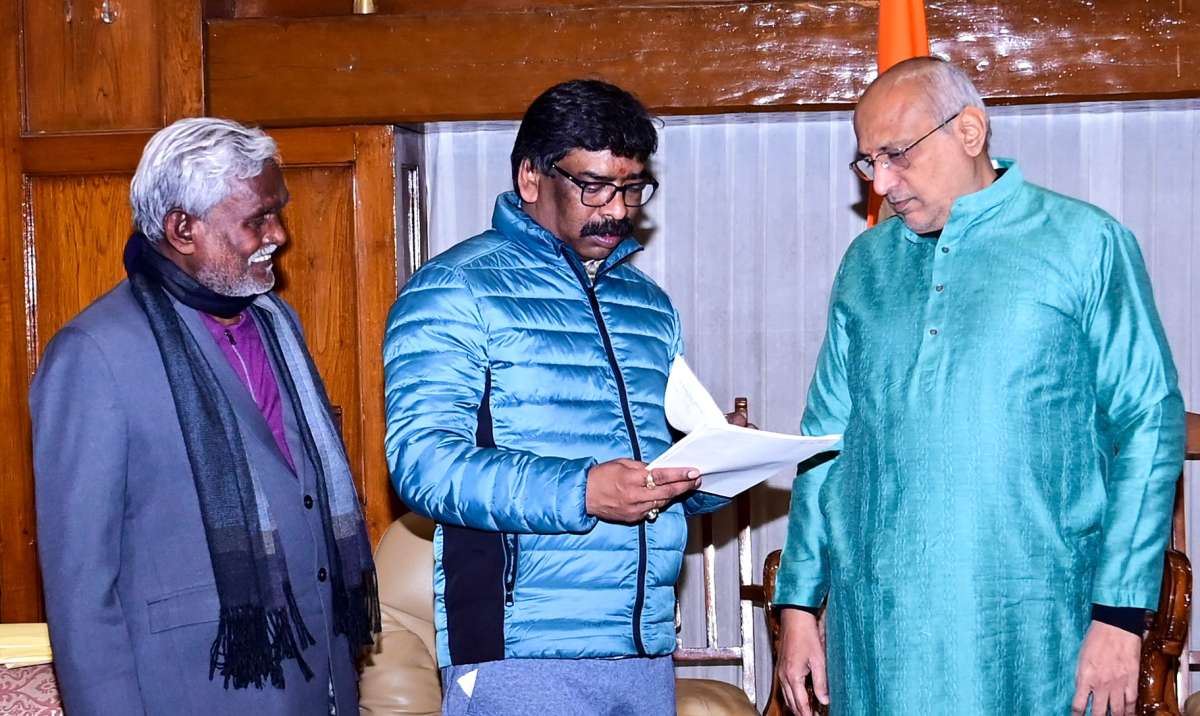
Hemant Soren met Governor CP Radhakrishnan at Raj Bhawan and submitted his resignation. Meanwhile, the JMM leaders confirmed that Soren is in ED custody.

“The CM is in ED custody. The CM has gone to the governor with the ED team to submit his resignation. Champai Soren will be the new Chief Minister… We have enough numbers,” JMM MP Mahua Maji told reporters.

Champai Soren, the state transport minister, is a seven-time MLA and he represents the Seraikella constituency in Jharkhand. Before joining the JMM, he was an independent MLA.

He actively participated in the movement for the separate statehood of Jharkhand and rose to prominence during that movement. Later, Champai came to be known as the ‘Tiger of Jharkhand.’

“We have chosen Champai Soren as the leader of the Legislative Party. We came to the Raj Bhawan to request the governor for the oath ceremony,” JMM leader and state minister Banna Gupta told reporters.

Earlier in the day, a team of ED officials arrived at the residence of Jharkhand CM Hemant Soren for questioning in connection with a money laundering case linked to an alleged land scam.

As per sources, the ED had issued a fresh summons to Soren, asking him to be available for questioning on January 29 or 31, or else the agency itself will go to him for questioning. This is the tenth summons issued to the Jharkhand Chief Minister, by the ED.

According to the ED, CM Soren was questioned as a part of the probe into the ‘huge racket of illegal change of ownership of land by the mafia’.

The probe pertains to huge amounts of proceeds of crime generated by forging official records by showing ‘fake sellers’ and purchasers in the guise of forged or bogus documents to acquire huge parcels of land having value in crores.

‘Blow to Federalism

Reacting sharply to the resignation of Jharkhand Chief Minister and Jharkhand Mukti Morcha (JMM) leader Hemant Soren, Congress President Mallikarjun Kharge said that forcing Hemant Soren to resign is a blow to Federalism.

In a post on ‘X’, Mallikarjun Kharge said, “One who will not go with PM Modi will go to jail. Imposing ED against Jharkhand Chief Minister, Hemant Soren and forcing him to resign is a blow to Federalism. Intimidating opposition leaders by making the provisions of PMLA draconian is part of the BJP’s tool kit.”

He further said that the BJP’s work of destabilising the opposition governments one by one as part of a conspiracy was continuing.

“Whoever went into the BJP’s washing machine is clean as white; who didn’t go was tainted. If democracy has to be saved from dictatorship, then the BJP will have to be defeated. We will not be afraid, Will continue to fight from Parliament to the streets,” he added.

Rashtriya Janata Dal leader Tejashwi Yadav also sharply reacted to the ED’s move: “Bihar, Chandigarh and now Jharkhand! BJP has ruined democracy and federalism in a single week. It is not hidden from anyone what the central government is doing by destroying the impartiality of the investigating agencies due to the fear of electoral defeat and by making the agencies cells of the BJP,” he said.  (ANI)

ALSO READ: Canada’s politics gave space to extremism, says Jaishankar
Previous Story

10,000 Indian workers to reach Israel amid war

Next Story

Opposition criticises President Murmu’s speech, BJP defends it

Previous Story

10,000 Indian workers to reach Israel amid war

Next Story

Opposition criticises President Murmu’s speech, BJP defends it

Latest from -Top News

Nepal Floods Cause $1.66 Billion In Damage, Says World Bank

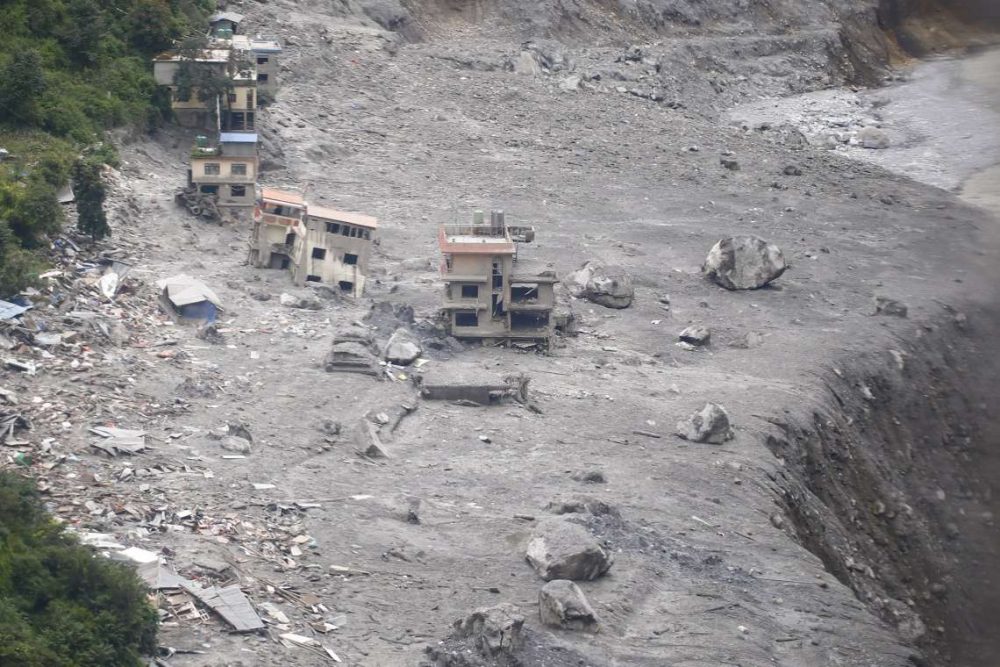
Nepal’s August 2026 floods caused an estimated US$1.66 billion in direct physical damage, with infrastructure accounting for 83 per cent of the total…reports Asian Lite News Desk Nepal’s devastating floods in August 2026 caused an estimated US$1.66 billion in direct physical damage, with infrastructure accounting for 83 per cent of the total, according to a World Bank report. The estimate, included in the World Bank’s Nepal Development Update unveiled this week, is close to the Nepal government’s preliminary Rapid Damage and Needs Assessment (RDNA), which put physical damage at US$1.81 billion. The government’s assessment also estimated losses beyond physical assets at US$883.32 million, taking the total economic effects of the disaster to approximately US$2.7 billion. The World Bank’s Global Rapid Post-Disaster Damage Estimation (GRADE) found that infrastructure suffered the greatest damage, estimated at US$1.38 billion, or 83 per cent of the total. Residential buildings accounted for US$185 million, or 11 per cent, while non-residential buildings sustained damage worth US$101 million, or 6 per cent. The floods along the Bhotekoshi and Trishuli rivers caused extensive damage to hydropower projects, solar energy facilities, electricity transmission infrastructure and transport networks. The energy sector, particularly hydropower, was among the worst affected. The August 2026 floods affected 12 hydropower projects and one solar project, involving 281.1 MW of operational capacity and 395.02 MW of capacity under construction. Damage to transmission lines and substations also disrupted the transmission of 149.6 MW of electricity to the national grid. The total affected capacity reached approximately 430.7 MW, equivalent to 10.6 per cent of Nepal’s installed hydropower and solar capacity at the end of fiscal year 2025-26, which concluded in mid-July. The disaster also severely damaged transport infrastructure along the 82-km Rasuwa trade corridor, which connects Kathmandu with the Rasuwagadhi border point with China. More than 55 km of the corridor was damaged, including 40 km that was completely destroyed. The floods also damaged 37 motorable bridges and 68 suspension bridges. The disaster resulted in significant human losses along the affected corridor and beyond. According to Nepal’s National Disaster Risk Reduction and Management Authority, 1,455 people had been confirmed dead, while 5,285 remained missing following the disaster. The World Bank report found that the physical damage was concentrated in three districts in central Nepal: Rasuwa, Nuwakot and Dhading. Rasuwa was the worst-affected district, accounting for US$1.07 billion, or 64 per cent, of the total direct damage. Nuwakot recorded an estimated US$551 million in damage, while Dhading suffered approximately US$39 million. “The findings highlight the concentration of physical damage in a small number of districts and the disproportionate impact on infrastructure, underscoring the scale of the reconstruction challenge facing the affected areas,” the World Bank said. The global development financier said the floods had demonstrated the scale and complexity of disaster risks in Nepal’s Himalayan environment. The event also showed how a single extreme weather event could trigger cascading impacts across sectors and geographical areas. The report said recovery efforts should extend beyond restoring infrastructure to its pre-disaster condition. While the principle of “Build Back Better” remained relevant, the World Bank stressed that rebuilding infrastructure to higher engineering standards in the same locations might not always be sufficient. “In some cases, simply rebuilding the same infrastructure in the same location to a higher engineering standard may not be sufficient. Nepal may need to build differently — based on a better understanding of risk, more careful decisions about location and design, greater redundancy in critical networks, stronger monitoring and early warning, and a more integrated approach to infrastructure development in the Himalayas,” the report said. The World Bank said Nepal’s recovery strategy should incorporate improved risk assessment, more informed infrastructure planning, stronger monitoring systems and better early warning mechanisms. The report emphasised that reconstruction should not only restore damaged assets but also reduce the impact of future disasters, particularly in the country’s vulnerable Himalayan regions.

Vaccine Delays Fuel Bangladesh Measles Outbreak

More than 32,000 suspected cases and over 250 deaths have been reported since mid-March, with children making up most of the fatalities….reports Asian Lite News Desk Bangladesh’s measles outbreak has intensified, with

Tsai: Stand With Taiwan, Strengthen The Indo-Pacific

The former president said stronger international partnerships would help Taiwan withstand mounting military, cyber and economic pressure while reinforcing democratic resilience….repots Asian Lite News Desk Former Taiwan President Tsai Ing-wen has called
Go toTop

Don't Miss

Punjab needs NDA govt for security, economic revival: Captain

Addressing a function organized by the District Bar Association here,

India emerges as a force for good in WIO

The Indian navy has been a regular player in the