The next stage is to approach the government for funds and also establish the mechanism for development along with the private industry….reports Asian Lite News
The project report for the next generation rocket has been submitted by the project team and the next stage is to seek government funds, said S. Somanath, Chairman, Indian Space Research Organisation (ISRO).
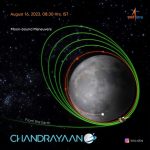
He also said internal discussions are on about the next moon mission – Chandrayaan-4 as to what it should achieve differently that was not done by others.
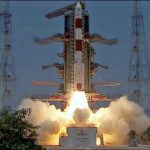
Speaking to the reporters here after the successful orbiting of the country’s latest weather satellite INSAT-3DS Somanath said: “The project team of the Next Generation Launch Vehicle (NGLV) has submitted its report.”
The project team has also estimated the cost. The next stage is to approach the government for funds and also establish the mechanism for development along with the private industry.
The rocket design work is underway. The next generation rocket will be partially reusable and will have a carrying capacity of about 10 tonnes to Geosynchronous Transfer Orbit (GTO).
Currently, ISRO’s heaviest rocket LVM3 has a carrying capacity of four tonne. Queried about the next Moon mission, Somanath said it has to achieve something new that was not done earlier by others, say “bringing a lunar sample back using a robot”.
“It will be a complex rocket and high-end technology is being developed. We are working on some novel design,” he said while underlining the requirement for funds. Somanath, however, ruled out categorically that India-US collaboration earth observation satellite NASA-ISRO Synthetic Aperture Radar (NISAR) will be used for surveillance.
He said the NISAR will be used only for earth observation and focus will be on the Earth as a system. As to the status of other weather satellites like INSAT-3D and INSAT-3DR, Somanath said the INSAT-3D launched in 2013 will be put to a different use.
On the status of the country’s human space mission, Somanath said 2024 will be the year of Gaganyaan for ISRO as it will be carrying out various tests and other activities to realise the country’s manned space mission in 2025.
Somanath said ISRO will be carrying out two more abort missions in 2024. Last year, the space agency carried out the first Flight Test Vehicle Abort Mission-1 (TV-D1) to demonstrate the crew escape system.
One test vehicle is ready. According to him, ISRO will carry out two unmanned missions, helicopter drop test, launchpad abort tests and several others.
ALSO READ: China’s Chang’e-6 lunar sample-return mission to lift off in May