June 13, 2024
4 mins read

‘Some of Hamas’ proposed changes workable’

The ceasefire proposal has global support but has not been fully embraced by Israel or Hamas…reports Asian Lite News

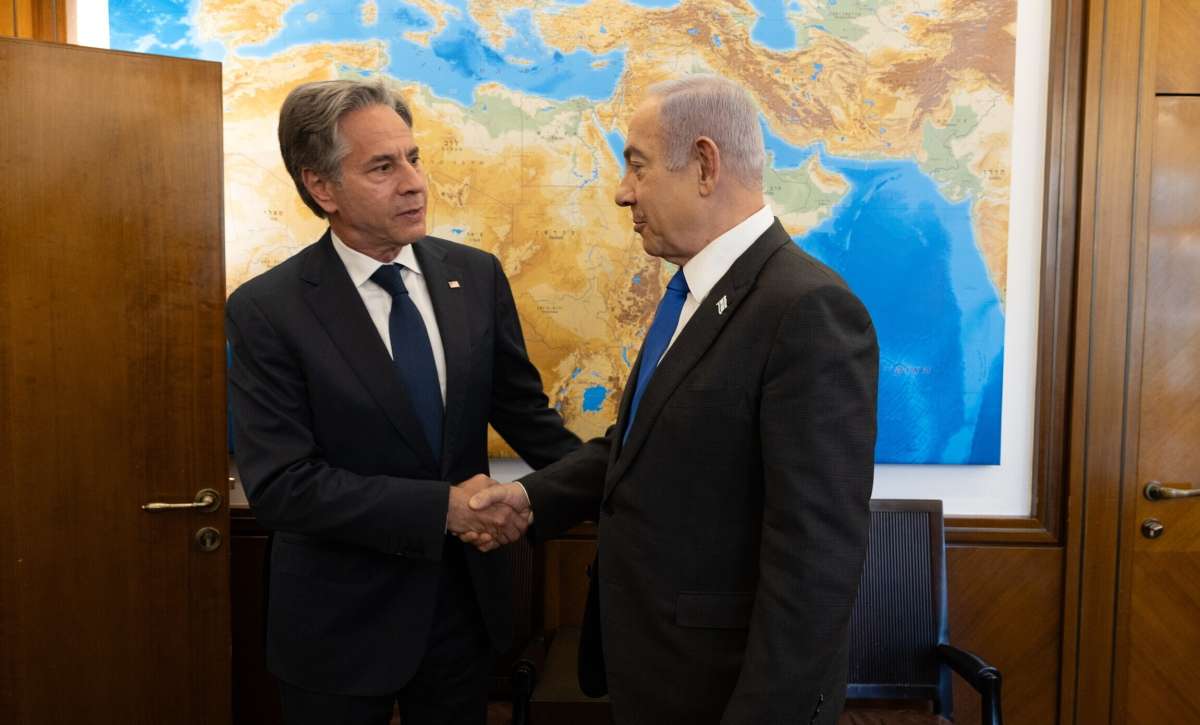
Secretary of State Antony Blinken said Wednesday that mediators would keep trying to close an elusive ceasefire deal for Gaza after Hamas proposed changes to a US-backed plan, some of which he said were “workable” and some not.

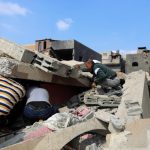
The back-and-forth laid bare frustration over the difficulty of reaching an accord that could end eight months of war that has decimated the territory, killed tens of thousands of Palestinians and left scores of Israeli hostages still languishing in militant captivity. Previous moments of optimism have been repeatedly dashed by the differences between the two sides.

The ceasefire proposal has global support but has not been fully embraced by Israel or Hamas. Blinken did not spell out what changes Hamas sought, but he said the mediators — Qatar, Egypt and the US — will keep trying to “close this deal.” He put the onus on Hamas, accusing it of changing its demands.

“Hamas has proposed numerous changes to the proposal that was on the table. … Some of the changes are workable. Some are not,” Blinken told reporters in Qatar. “I believe that they (the differences) are bridgeable, but that doesn’t mean they will be bridged because ultimately Hamas has to decide.”

Blinken’s comments came as Lebanon’s Hezbollah fired a massive barrage of rockets into northern Israel to avenge the killing of a top commander, further escalating regional tensions.

Hezbollah, an Iran-backed ally of Hamas, has traded fire with Israel nearly every day since the Israel-Hamas war began and says it will stop only if there is a truce in Gaza. That has raised fears of an even more devastating regional conflagration.

Air-raid sirens sounded across northern Israel, and the military said about 215 projectiles were fired from southern Lebanon, making it one of the largest attacks since the fighting began. There were no immediate reports of casualties as some rockets were intercepted while others ignited brush fires.
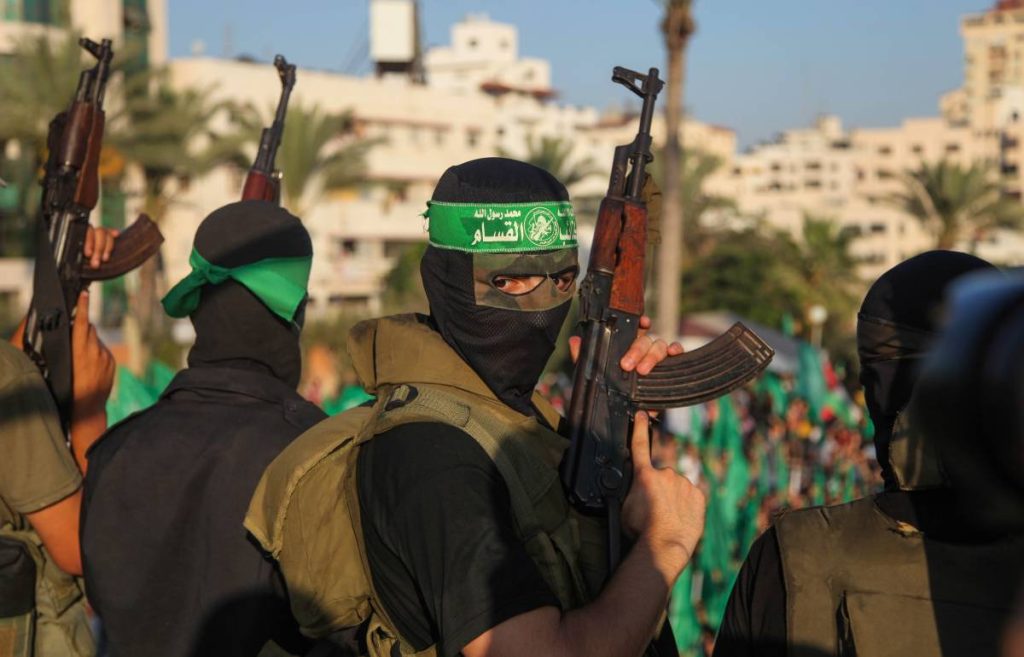
Hamas Slams Israel Security Hurdles in Gaza border

Hamas asks for changes

Hamas conveyed its official reply to the proposal to mediators on Tuesday. Hamas spokesman Jihad Taha told the Lebanese news outlet ElNashra that the “amendments” requested by the group aim to guarantee a permanent ceasefire and complete Israeli troop withdrawal from Gaza.

The proposal announced by US President Joe Biden includes those provisions, but Hamas has expressed wariness about whether Israel will implement the terms. While the US says Israel has accepted the proposal, Israeli Prime Minister Benjamin Netanyahu has given conflicting statements, saying Israel is still intent on its goal of destroying Hamas.

Blinken, on his eighth visit to the region since the start of the war, said the deal on the table was “virtually identical” to one Hamas put forth on May 6. The UN Security Council voted overwhelmingly in favor of the plan on Monday.

“At some point in a negotiation, and this has gone back and forth for a long time, you get to a point where if one side continues to change its demands, including making demands and insisting on changes for things that it already accepted, you have to question whether they’re proceeding in good faith or not,” he said.

Speaking alongside Blinken, Qatari Deputy Prime Minister and Foreign Minister Sheikh Mohammed bin Abdulrahman bin Jassim Al Thani said there had been “counterproductive” actions by both sides.

The proposal’s three-phase plan would begin with a six-week ceasefire and the release of some hostages in exchange for Palestinian prisoners. Israeli forces would withdraw from populated areas, and Palestinian civilians would be allowed to return to their homes. Aid distribution would also increase.

At the same time, negotiations would start over the second phase, which is to bring “a permanent end to hostilities” and “full withdrawal” of Israeli troops from Gaza in exchange for the release of all remaining hostages.

Phase three would see the launch of a reconstruction plan for Gaza and the return of remains of deceased hostages.

A major hitch for both sides appears to be the negotiations for the second phase.

Israel’s ambassador to the UN, Gilad Erdan, said Israel will demand that Hamas be removed from power as part of any agreement on that phase.

“One of our conditions is not only the release of the hostages, it’s also the future of Gaza,” Erdan told CNN’s “The Source” on Monday. “We cannot agree to Hamas continuing to be the rulers of Gaza because then Gaza will continue to pose a threat to Israel.”

He also said Israel opposes a provision extending the initial ceasefire as long as talks are going on, saying it would allow Hamas to “continue with endless and meaningless negotiations.”

Hamas, in turn, appears to want stronger guarantees up front that the talks will lead to the permanent ceasefire and withdrawal.

Netanyahu’s far-right coalition allies have rejected the proposal and threaten to bring down his government if he ends the war leaving Hamas intact. But Netanyahu is also under mounting pressure to accept a deal to bring the hostages back. Thousands of Israelis, including families of the hostages, have demonstrated in favor of the US-backed plan.

ALSO READ: Hamas says it creates broad prospects for Gaza truce
Previous Story

Key challenges in NDA 3.0

Next Story

Fed keeps interest rate unchanged

Previous Story

Key challenges in NDA 3.0

Next Story

Fed keeps interest rate unchanged

Latest from -Top News

Pakistan Risks Overstretching Itself in Yemen War

Pakistan’s expanding military role in Saudi Arabia amid the Yemen conflict could strain its defence resources and fragile finances…reports Asian Lite News Desk Pakistan’s military involvement in the war in Yemen may prove unsustainable because of mounting financial pressures and competing security demands, according to a new report. Islamabad’s growing military presence in Saudi Arabia risks stretching its defence resources while exposing the country to greater strategic and economic challenges. An article by Andrew Wilson in One World Outlook describes Pakistan’s involvement as a case of “fiscal and strategic overreach”, arguing that the country lacks the financial flexibility to sustain an expanded military commitment. Pakistan’s external finances depend heavily on an International Monetary Fund (IMF) programme, financial support from Gulf countries and remittances from Pakistani workers in the region. The report argues that deeper military involvement in the conflict could place additional pressure on these sources of financial stability. It also warns that deploying troops and military equipment abroad could weaken Pakistan’s capacity to address security challenges along its eastern border and deal with two domestic insurgencies. The move could also draw Islamabad into a conflict it has sought to approach cautiously. A Reuters report in May, citing Pakistani security and government sources, said Islamabad had deployed around 8,000 troops, a squadron of approximately 16 aircraft, mostly JF-17 fighter jets, two drone squadrons and a Chinese HQ-9 air-defence battery to Saudi Arabia. According to those sources, Riyadh was financing the deployment, with Pakistani personnel operating the equipment. The sources also said a confidential agreement contemplated the possibility of deploying up to 80,000 troops. Islamabad has not confirmed those figures, although it has acknowledged its military presence in Saudi Arabia, including the deployment of fighter jets at King Abdulaziz Air Base from April. The One World Outlook article argues that Saudi financial support can cover allowances and operating expenses but cannot easily replace military equipment needed elsewhere or resolve the political and strategic challenges of participating in the Yemen conflict. Pakistan’s defence budget is another concern. For the 2026-27 financial year, the federal government allocated PKR 3 trillion, or approximately $10.8 billion, to defence services. The allocation represents an 18 per cent increase from the original PKR 2.55 trillion provision and amounts to around 2.1 per cent of projected gross domestic product (GDP). Defence spending accounts for approximately 16 per cent of the federal government’s PKR 18.8 trillion expenditure. Military pensions are budgeted separately at PKR 822 billion, while debt servicing costs stand at approximately PKR 8 trillion, more than two-and-a-half times the defence allocation. The report argues that these competing financial obligations leave little room for additional military expenditure without placing further pressure on public finances. Pakistan’s reliance on IMF assistance also limits its fiscal flexibility. The country must meet the conditions attached to the programme, including a primary budget surplus target of 2 per cent of GDP and continued restraint on development spending. According to the article, these requirements make it difficult for Islamabad to finance an additional military commitment without compromising other budgetary priorities. Pakistan’s economic indicators offer limited reassurance. Economic growth for the 2025-26 financial year is estimated at between 3.6 and 3.7 per cent, while inflation reached approximately 10.3 per cent in September following an energy price shock. Foreign exchange reserves stood at around $21.5 billion at the end of September. Although this marks an improvement from the low levels recorded in 2023, the report notes that the reserves cover only a few months of imports. Financial assistance from Gulf partners remains central to Pakistan’s external stability. The article says Islamabad holds approximately $8 billion in Saudi deposits at its central bank. In July, the State Bank of Pakistan said Riyadh had extended the maturity of $5 billion in deposits to December 2028, easing the country’s immediate external financing requirements. A further $3 billion deposit was also extended in the spring. However, the article argues that these arrangements provide temporary relief rather than long-term financial independence, particularly as regional conflict threatens the stability of the Gulf economies on which Pakistan relies. The report concludes that Pakistan faces a difficult balance between supporting Saudi Arabia militarily and preserving the financial and military resources needed to address its domestic and regional challenges.

UK and Germany Ratify Kensington Treaty

Britain and Germany ratify the Kensington Treaty, agreeing new cooperation on AI, quantum research, defence and security while targeting investment, jobs and Russian hybrid threats…reports Asian Lite News Desk Britain and Germany

Economic tide is turning in Bangladesh

If there is one thing that can bring some comfort to the struggling Bangladeshi economy, it is good relations with India. Bangladesh should remember that Delhi’s backing, through easy supplies of essentials
Go toTop

Don't Miss

‘Banning arms exports to Israel would strengthen Hamas’

Cameron said he did not support an operation in Rafah

Over 123,000 Displaced in Gaza Amid Israel-Hamas Conflict

As fighting rages between the two sides, at least 493