August 8, 2025
4 mins read

60+ nations in tariff tizzy

Industry representatives warn of job losses and say decision could be ‘nail in the coffin’ for those exporting to the US

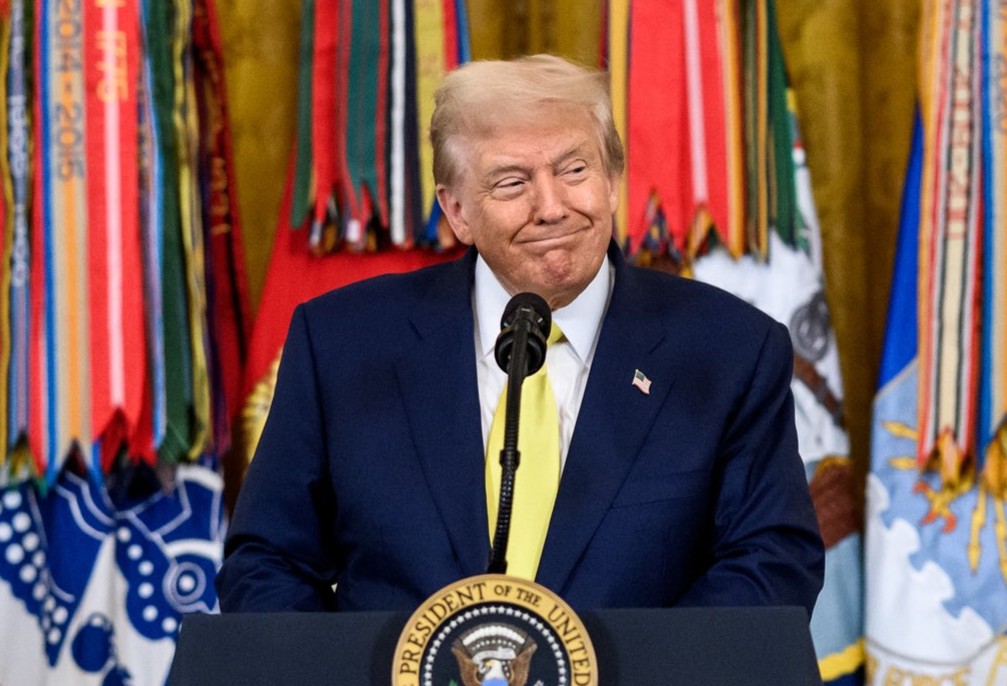
More than 60 countries around the world are scrambling to respond to the latest wave of US tariffs announced by Donald Trump, which came into force on Thursday.

Industry representatives in rich and poor countries warned of job losses as the tariffs upended a decades-old world trading system with rates ranging from 10% to 39%, 40% and 41% for Switzerland, Brazil and Syria.

All over the globe, leaders were attempting to put contingencies in place after Trump’s tariff threats turned to reality at a minute past midnight Washington time. The Brazilian government said it was planning a state aid plan for companies affected. The president, Luiz Inácio Lula da Silva, said the duties were “unacceptable blackmail”.

Switzerland said it was seeking new talks with the US after a last-gasp mission to Washington by its president, Karin Keller-Sutter, failed to stop a 39% tariff blow that industry group Swissmem described as a “horror scenario”.

In a statement after an emergency meeting with Keller-Sutter, the Swiss cabinet said the tariffs would “place a substantial strain on Switzerland’s export-oriented economy”. “For the affected sectors, companies and their employees, this is an extraordinarily difficult situation,” Keller-Sutter told reporters.

Taiwan is also continuing talks with the US. Its president, Lai Ching-te, said the 20% rate imposed on the key Washington ally was “temporary”. Ireland, which is locked into an EU-US deal setting the tariff ceiling at 15%, said it would publish a new plan for diversifying an economy that relies heavily on US multinationals including Intel, Pfizer and Johnson & Johnson, all in Trump’s crosshairs.

Despite a last minute reprieve from Trump for Lesotho with tariffs dropping from 50% to 15%, the impoverished African nation said it was already hurting. Textile industry players in the country – which produces jeans and other garments for US companies including Levi and Walmart – said the uncertainty around tariffs over the past few months had already devastated the sector, with orders cancelled and jobs cut.

Laos, which, like Brazil and Myanmar, was hit with a 40% rate, was among those handed a steep increase in import duties because of a trade imbalance with the US. “A 40% tariff is just a nail in the coffin for any industry trying to ship to the United States,” Johannes Somers, the executive chair of the garment manufacturing firm Diep Vu said.

“We estimate about 20,000 workers or more could be impacted,” added Xaybandith Rasphone, the head of the Association of the Lao Garment Industry. The sweeping “reciprocal” rates were announced by the White House a week ago, just before a previous 1 August deadline was due to elapse.

Just before the tariffs came into effect at midnight, Trump claimed on social media that billions of dollars would start flowing into the US as a result. However, while the customs duties make countries’ exports more expensive and less competitive, they are payable on import and usually passed on to the customer.

“The only thing that can stop America’s greatness would be a radical left court that wants to see our country fail,” the president wrote in capital letters, referencing an ongoing case in the US court of appeals, which is considering whether he exceeded his authority in imposing the tariffs. Some trading partners had already secured reductions through negotiations or by striking deals, including the UK, Thailand, Cambodia, Vietnam, Indonesia, the Philippines, Japan, South Korea, Pakistan and the EU.

The EU is the only trading partner where its baseline rate of 15% will include previous tariffs. It means, for example, cheeses that are normally hit with import duties of 14.9% will be taxed at 15% and not 29.9%. However, the deal has only been implemented in part with tariffs of 27.5% still being imposed on EU car imports while the details of the US-EU deal are being finalised.

Hildegard Müller, the president of the German car industry federation, said the EU-US deal had “brought no clarity or improvement” to the industry. “The sectoral tariffs on cars and automotive parts of 27.5%, which have been in effect since April and May respectively, remain in place and place a significant burden on German automakers and automotive suppliers, as well as on transatlantic trade.

“It is important that the promised agreement is reached now and the relief measures are implemented promptly,” she said. India’s 25% tariff rate could rise to a total of 50% after Trump signed an executive order on Wednesday imposing an additional levy in retaliation for the country’s purchase of oil from Russia. Delhi has 21 days to respond. Trump has threatened to use the same tactic on other countries that supply Russia.

Newsdesk

Newsdesk

Aravind Rajeev is Deputy News Editor at Asian Lite, mostly covering the Middle East and GCC. He has over eight years of experience as a journalist, with a background in ground-level reporting, crime reporting, as well as international and regional news.

Previous Story

Trump rules out trade talks with India

Next Story

Trump and Putin to meet in Alaska for Ukraine talks

Previous Story

Trump rules out trade talks with India

Next Story

Trump and Putin to meet in Alaska for Ukraine talks

Latest from -Top News

Pakistan Risks Overstretching Itself in Yemen War

Pakistan’s expanding military role in Saudi Arabia amid the Yemen conflict could strain its defence resources and fragile finances…reports Asian Lite News Desk Pakistan’s military involvement in the war in Yemen may prove unsustainable because of mounting financial pressures and competing security demands, according to a new report. Islamabad’s growing military presence in Saudi Arabia risks stretching its defence resources while exposing the country to greater strategic and economic challenges. An article by Andrew Wilson in One World Outlook describes Pakistan’s involvement as a case of “fiscal and strategic overreach”, arguing that the country lacks the financial flexibility to sustain an expanded military commitment. Pakistan’s external finances depend heavily on an International Monetary Fund (IMF) programme, financial support from Gulf countries and remittances from Pakistani workers in the region. The report argues that deeper military involvement in the conflict could place additional pressure on these sources of financial stability. It also warns that deploying troops and military equipment abroad could weaken Pakistan’s capacity to address security challenges along its eastern border and deal with two domestic insurgencies. The move could also draw Islamabad into a conflict it has sought to approach cautiously. A Reuters report in May, citing Pakistani security and government sources, said Islamabad had deployed around 8,000 troops, a squadron of approximately 16 aircraft, mostly JF-17 fighter jets, two drone squadrons and a Chinese HQ-9 air-defence battery to Saudi Arabia. According to those sources, Riyadh was financing the deployment, with Pakistani personnel operating the equipment. The sources also said a confidential agreement contemplated the possibility of deploying up to 80,000 troops. Islamabad has not confirmed those figures, although it has acknowledged its military presence in Saudi Arabia, including the deployment of fighter jets at King Abdulaziz Air Base from April. The One World Outlook article argues that Saudi financial support can cover allowances and operating expenses but cannot easily replace military equipment needed elsewhere or resolve the political and strategic challenges of participating in the Yemen conflict. Pakistan’s defence budget is another concern. For the 2026-27 financial year, the federal government allocated PKR 3 trillion, or approximately $10.8 billion, to defence services. The allocation represents an 18 per cent increase from the original PKR 2.55 trillion provision and amounts to around 2.1 per cent of projected gross domestic product (GDP). Defence spending accounts for approximately 16 per cent of the federal government’s PKR 18.8 trillion expenditure. Military pensions are budgeted separately at PKR 822 billion, while debt servicing costs stand at approximately PKR 8 trillion, more than two-and-a-half times the defence allocation. The report argues that these competing financial obligations leave little room for additional military expenditure without placing further pressure on public finances. Pakistan’s reliance on IMF assistance also limits its fiscal flexibility. The country must meet the conditions attached to the programme, including a primary budget surplus target of 2 per cent of GDP and continued restraint on development spending. According to the article, these requirements make it difficult for Islamabad to finance an additional military commitment without compromising other budgetary priorities. Pakistan’s economic indicators offer limited reassurance. Economic growth for the 2025-26 financial year is estimated at between 3.6 and 3.7 per cent, while inflation reached approximately 10.3 per cent in September following an energy price shock. Foreign exchange reserves stood at around $21.5 billion at the end of September. Although this marks an improvement from the low levels recorded in 2023, the report notes that the reserves cover only a few months of imports. Financial assistance from Gulf partners remains central to Pakistan’s external stability. The article says Islamabad holds approximately $8 billion in Saudi deposits at its central bank. In July, the State Bank of Pakistan said Riyadh had extended the maturity of $5 billion in deposits to December 2028, easing the country’s immediate external financing requirements. A further $3 billion deposit was also extended in the spring. However, the article argues that these arrangements provide temporary relief rather than long-term financial independence, particularly as regional conflict threatens the stability of the Gulf economies on which Pakistan relies. The report concludes that Pakistan faces a difficult balance between supporting Saudi Arabia militarily and preserving the financial and military resources needed to address its domestic and regional challenges.

UK and Germany Ratify Kensington Treaty

Britain and Germany ratify the Kensington Treaty, agreeing new cooperation on AI, quantum research, defence and security while targeting investment, jobs and Russian hybrid threats…reports Asian Lite News Desk Britain and Germany

Economic tide is turning in Bangladesh

If there is one thing that can bring some comfort to the struggling Bangladeshi economy, it is good relations with India. Bangladesh should remember that Delhi’s backing, through easy supplies of essentials
Go toTop