End of US-Africa trade pact threatens thousands of jobs and exports as tariffs loom
African manufacturers and workers are bracing for a major economic shock as the United States prepares to end the African Growth and Opportunity Act (AGOA), a long-standing trade agreement that has granted duty-free access to thousands of products from qualifying African nations since 2000. The agreement will expire on Tuesday, leaving businesses across the continent exposed to new tariffs and competitive pressures amid uncertainty over whether Washington will renegotiate or renew the deal.
The White House announced in April that new tariffs would be imposed on a range of imports, heightening concerns that African exporters could lose the crucial market advantages they have relied on for over two decades. The end of AGOA is expected to hit sectors such as textiles, apparel, and manufacturing the hardest, particularly in countries like Kenya where the deal has been pivotal in building export industries.
Kenya’s textile and apparel sector has flourished under AGOA, enabling it to compete effectively with Asian exporters from Bangladesh and Vietnam. “If AGOA goes away we have zero chance to compete with the Asian countries,” said Pankaj Bedi, owner of United Aryan, a major apparel manufacturer in Nairobi that exports brands such as Levi’s and Wrangler to the US.
When AGOA was first introduced, Kenyan exports of textiles and apparel to the US were valued at about $50 million. Today, that figure has risen tenfold to around $500 million. But without the preferential trade terms, manufacturers warn that the sector could collapse.
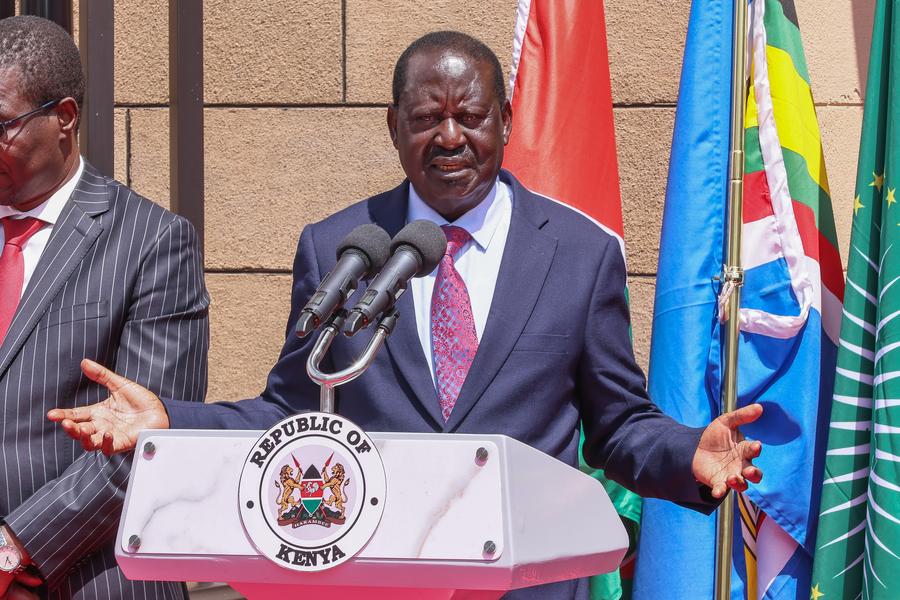
Kenyan President William Ruto has appealed directly to Washington for an extension. “I will be asking (Trump) for the US to consider seriously renewing and extending AGOA for at least a minimum of five years,” Ruto said last week at the UN General Assembly. “It is a platform that connects Africa and the US in a very fundamental way.”
Ruto and other African leaders are lobbying for a last-minute renegotiation while also pursuing new bilateral trade agreements with the United States. However, they face a challenging geopolitical environment and mixed signals from the White House over its commitment to African trade partnerships.
Kenya already pays a 10% tariff on exports that fall outside the AGOA framework, and industry leaders warn that the reintroduction of duties will devastate competitiveness. Even though some Asian countries may face higher tariffs, Kenyan manufacturers will still struggle due to a limited domestic supply chain, higher energy costs, and expensive borrowing. Most raw materials are imported, further increasing production costs.
“African countries including Kenya must be alive to the possibility that AGOA won’t be extended, AGOA won’t be remodified, and … America won’t be interested in having a trade pact,” said Raphael Obonyo, a public policy expert at UN Habitat. Ruto said Kenya and the US had made “good progress” toward a bilateral agreement that could be signed by the end of this year.
The end of AGOA could have wide-ranging effects across the continent. The agreement has benefited large and small economies alike, from Nigeria and Angola’s oil exports to South Africa’s automotive industry and Kenya’s garment trade. Smaller economies such as Lesotho and Eswatini, which rely heavily on exports to the US, are especially vulnerable.
Researchers at the German Institute of Development and Sustainability warned that Nigeria and Lesotho were likely to face “notable adverse effects” from the termination of AGOA and the introduction of new tariffs. While they predicted limited macroeconomic effects across Africa as a whole, the researchers cautioned that such estimates “likely understate the full impact of new Trump-era tariffs and do not capture the indirect effects like reduced foreign investment, weakened supply chains, rising poverty, or the loss of capacity-building.”
AGOA-supported industries are estimated to employ about 1.3 million people across Africa, many of whom face uncertain futures if exports decline. In Kenya, around 66,000 people — many of them women — work in textile and apparel factories that rely on US orders. In Nairobi’s garment districts, factories are already beginning to shed workers as the deadline approaches.
United Aryan, one of Kenya’s largest apparel exporters, said this week it will cut about 1,000 jobs — 10% of its workforce — because of the trade uncertainty. “There is no way we can survive,” said Bedi, who also serves as the apparel export sub-chair at the Kenya Association of Manufacturers.
For workers like Julia Shigadi, a machinist at United Aryan, the end of AGOA poses an existential threat. “This has been my bread and butter,” she said. “I only depend on this job — so if it is gone, it means my life is gone too.”
As the clock ticks down to the agreement’s expiry, African leaders are struggling to balance diplomatic lobbying with the economic reality that a generation of trade-driven jobs and industries may be wiped out almost overnight. Without AGOA or an equivalent framework, many of the continent’s exporters face an uncertain future — one that could reverse years of progress in Africa’s manufacturing and industrial development.