By Commodore Ranjit Rai (Retd)

Maritime global supply chains are becoming great power competition strategic assets. However, the infrastructure that supports these networks—the ports, bunkers, warehousing facilities, and heavy-lift ships—ever more so comes under the operational or financial control of Chinese state-owned enterprises. As such, dual-use logistics nodes spread across continents, they risk illicit use and therefore require urgent scrutiny. The challenge is not new or speculative: the legitimate commercial purpose of the infrastructure covers real criminal diversion risks, especially where contractual protection is lacking and host-country oversight continues to be compromised.
There is a built-in paradox in China-funded dual-use logistics infrastructure. By necessity, ports, warehousing, and bunkers must be capable of high-volume, high-throughput operation in order to remain commercially viable. This operational imperative—speed over scrutiny—creates systematic vulnerabilities that criminal networks and state actors can exploit with sophistication and impunity. When Chinese SOEs control these facilities, the opacity of their operations compounds the problem. Unlike ports under transparent Western management, Chinese-operated terminals frequently restrict local law enforcement access, particularly within concession areas where Chinese companies maintain proprietary control.
The scale of the problem is staggering. About 2–10 per cent of containers passing through international ports are physically inspected, with the roll-out of sophisticated screening technology permanently inadequate. This shortage of inspections is not happenstance; it is a reflection of conscious commercial prioritisation. Port authorities internationally have conflicting mandates: promote trade expediency or implement strict security procedures. Chinese-financed and operated complexes, with no responsibility to democratic structures, have manifested systematic bias toward commercial expediency. In Latin American ports dominated by Chinese firms—in Panama’s Balboa and Cristóbal terminals and Brazil’s Paranaguá and Mexico’s Lázaro Cárdenas—authorities report routine denial of inspection rights across Chinese-run areas.
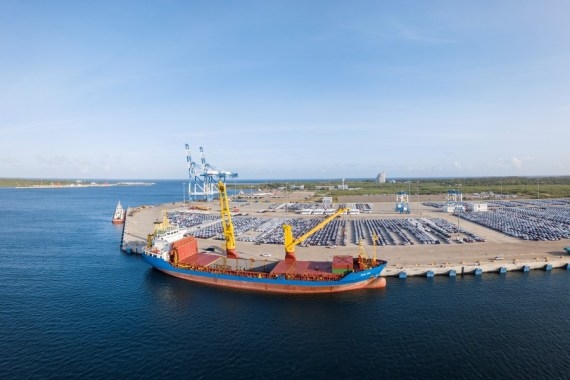
Bunkering activities—the sale of marine fuel—are representative of diversion susceptibility. These activities were identified early as susceptible to fraud, with illegal actors taking advantage of ship-to-ship bunkers outside coastal state jurisdiction to conceal the origin and destination of contraband. Bunkering fraud alone carries an estimated USD 5 billion yearly burden on worldwide shipping, while smuggling of poor-quality or contaminated fuel by means of bunkering networks has directly supported maritime criminal businesses. Heavy-lift equipment (cranes, container handlers, and cargo-securing mechanisms) also raises dual-use concerns. Equipment requirements for legitimate cargoes can be used to conceal and move illegal goods quickly. Where Chinese firms supply and service this equipment, standardisation deficits and restricted transparency provide openings for intentional or facilitated exploitation.
The contractual structure of Chinese-constructed infrastructure often integrates instead of counteracting such vulnerabilities. Port concession contracts, examined in a number of Latin American and South Asian examples, have little explicit security beyond generic nods to “national security” clauses that are unenforceable in fact. More damningly, contracts allow Chinese operators wide latitude in regard to security processes, access permissions, and inspection routines within their concession areas. Combined with host-country corruption—a documented characteristic in at least a dozen BRI-linked port projects—contract terms are meaningless.
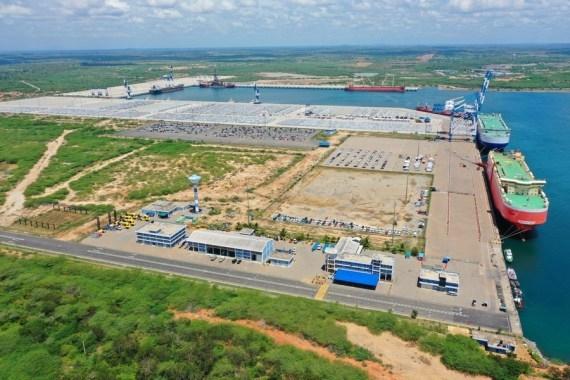
Sri Lanka’s Hambantota Port embodies this path. Initially marketed as a commercial undertaking, the 99-year lease of territory given to Chinese interests in 2017 contained nebulous security oversight terms that were found to be illusory when a Chinese survey ship—codirected to undertake “scientific” research and cooperation—sat moored for many months carrying out what observers estimated was satellite and missile surveillance. The Khalifa Port of the UAE also took the same script with the use of satellite images uncovering secret military development that went undetected by regulation until American intelligence stepped in. These are not one-off events; they are part of a pattern in which dual-use port infrastructure increasingly changes use from commercial to strategic military intent, with illicit trafficking frequently taking place concurrently.
The evidence of trafficking is clear. Fentanyl precursor chemicals, forbidden medicines, fake products, and cocaine routinely pass through Chinese-controlled ports with seizure levels implying systematic abuse rather than random failures. Chinese-aligned ports maintain facilities that are involved in transporting hundreds of millions of dollars in illegal fentanyl precursors bound for Mexican cartels and onwards to North American streets. Chinese ports in Panama, Mexico, and Brazil also appear disproportionately in seizure data, but enforcement action is lacking.
Current safeguarding measures are demonstrably inadequate. The International Ship and Port Facility Security Code (ISPS) require physical security but does not include cybersecurity measures and is silent on operational transparency. Port State Control regimes are reliant on flag-state cooperation and regional coordination—both undermined when the operator is itself a state entity that reports to Beijing rather than to local jurisdiction. The Port State Measures Agreement, which aims to deter illegal fishing, has nothing to provide in dealing with illicit trafficking of goods via legitimate port facilities. Policy design should expect abuse as a default assumption, not as an extraordinary contingency. Successful safeguarding entails: compulsory operational transparency enforced by independent audits; limiting Chinese SOE port control in strategically sensitive areas; harmonised inspection standards with minimum physical inspection levels; and real-time information-sharing mechanisms between port operators and host-country law enforcement. Without these measures, dual-use logistics infrastructure will continue to enable not only legitimate trade but systematic criminal abuse on a scale compatible with state-level strategic advantage.
(Commodore Ranjit B Rai (Retd) is the author of the book ‘The Indian Navy @75: Reminiscing the Voyage. He is an RNSC-qualified officer who served as Director Naval Intelligence and Director Naval Operations and writes on maritime matters. He also served as India Representative of Waterman Steam Ships USA and curated a New Delhi Maritime Museum.)