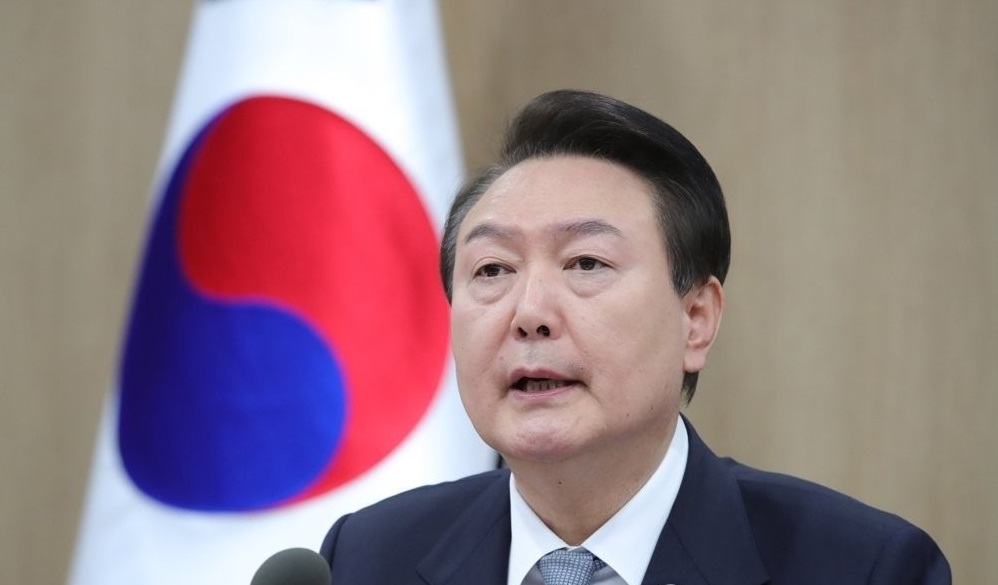
South Korean prosecutors seek a decade-long jail term for ex-president Yoon Suk Yeol, accusing him of grave abuses of power linked to his failed martial law bid.
South Korea’s political crisis deepened further on Friday as a special counsel formally sought a 10-year prison sentence for former President Yoon Suk Yeol, accusing him of serious abuses of power linked to his short-lived imposition of martial law in December 2024.
The sentencing demand was made during the final hearing of Yoon’s obstruction of justice trial at the Seoul Central District Court, marking the first time prosecutors have requested punishment in any of the four criminal cases stemming from the controversial episode. The special counsel team argued that Yoon’s actions struck at the core of constitutional order and public trust, describing them as among the gravest offences committed by a South Korean leader in recent history.
Special counsel Cho Eun-suk’s team told the court that the former president had effectively “privatised” state institutions to conceal and justify unlawful acts, undermining the rule of law for personal and political ends. A member of the prosecution team said Yoon’s conduct had caused serious damage to legal norms in the Republic of Korea and inflicted deep harm on citizens who had placed their trust in him by electing him president.
The prosecution further argued that Yoon showed little remorse during the trial, instead repeatedly insisting on the legitimacy of his martial law declaration. According to the special counsel, this stance highlighted the need for a severe sentence to reinforce constitutional accountability and deter future abuses of executive power.
The charges in the case centre on allegations that Yoon obstructed justice by blocking investigators from detaining him in January, shortly after the collapse of the martial law bid. Prosecutors said he also violated the rights of nine Cabinet members by excluding them from a key meeting convened to review the martial law plan, thereby undermining collective decision-making at the highest level of government.
In addition, Yoon is accused of drafting a revised martial law proclamation after the decree was lifted, only to later destroy it. Prosecutors said this act was aimed at erasing evidence and rewriting the narrative surrounding the events. Further charges include ordering the distribution of press statements containing false information about the declaration to overseas media and instructing the deletion of records from secure phones used by senior military commanders at the time.
Breaking down the sentencing request, the special counsel team asked for five years in prison for obstructing Yoon’s detention, three years for violating Cabinet members’ rights, spreading falsehoods to the foreign press and destroying secure phone records, and a further two years for drafting and discarding the revised proclamation. Taken together, prosecutors argued, the offences demonstrated a sustained effort to evade accountability and manipulate state machinery.
A member of the prosecution team told the court that strict punishment was necessary to repair the constitutional and legal damage caused by the former president and to prevent a repeat of power abuses by future leaders. The case, they said, was about more than individual wrongdoing and went to the heart of safeguarding democratic institutions.
The obstruction of justice case is one of four trials Yoon is currently facing over his failed attempt to impose martial law. The most serious among them involves charges that he led an insurrection, a case that carries potentially heavier penalties and remains ongoing. While the insurrection trial is expected to conclude in early January at the earliest, a verdict in that case is unlikely before February.
The obstruction of justice trial, however, is set to conclude first. The court has indicated that a verdict is likely on January 16, just two days before Yoon’s arrest period is due to expire. Yoon’s legal team had argued that the court should delay its ruling until after the insurrection trial was completed, but the presiding judge rejected that request.