Thousands protest in Tokyo against Japan’s plan to ease arms export rules, warning military expansion risks undermining pacifist constitution and pushing nation toward conflict, reports Asian Lite Newsdesk
Thousands of protesters, joined by senior opposition figures, gathered in Tokyo on Sunday to oppose the government’s plans to loosen restrictions on arms exports and expand military capabilities, raising concerns over Japan’s long-standing pacifist stance.
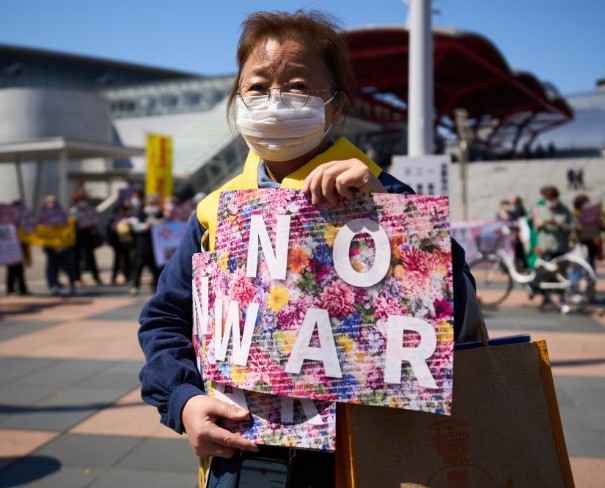
The demonstration took place near Ikebukuro Station, where more than 6,000 people assembled, according to organisers. Protesters held placards reading “Military force cannot bring peace” and “Oppose war,” while chanting slogans calling for the preservation of Japan’s post-war peace principles.
The backlash comes as the government, led by Sanae Takaichi, is reportedly preparing to revise guidelines governing the “three principles on transfer of defence equipment and technology,” potentially easing restrictions on exporting military hardware abroad.
Opposition leaders addressing the rally warned that such changes could mark a significant shift in Japan’s defence policy, risking entanglement in international conflicts. They argued that expanding arms exports would contradict the pacifist ideals embedded in Constitution of Japan, which renounces war and the use of force in settling international disputes.
Tomoko Tamura, chair of the Japanese Communist Party, said the proposed policies must be firmly resisted. She cautioned that exporting weapons or developing strike-capable missile systems could push Japan towards becoming what she described as a “war-waging nation.”
Protest organisers echoed these concerns, arguing that the government’s broader security agenda—including military expansion, proposals for an anti-espionage law, and plans for a national intelligence agency—signals a departure from the country’s traditionally defensive posture.
Demonstrators also voiced fears that invoking regional threats, particularly concerns over China, could be used to justify policies that may heighten tensions rather than ensure stability.
For many participants, the issue is deeply personal. Protesters said the use of weapons inevitably leads to escalation, retaliation, and long-term instability, with consequences extending beyond national borders.