India and Japan deepen science and technology partnership through joint research, innovation programs, AI, space, quantum, and sustainable development initiatives…reports Asian Lite News Desk
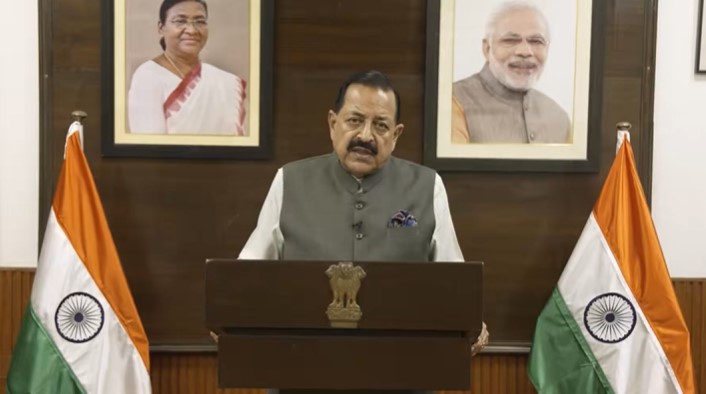
Union Minister of State for Science and Technology, Jitendra Singh, highlighted the strong bilateral science and technology partnership between India and Japan during the grand finale of the India-Japan Year of Science, Technology and Innovation Exchange, held virtually at the Embassy of India in Tokyo on Monday.
Addressing the event, Singh said the Indo-Japan collaboration in science and technology is “one of the strong pillars of our international Science & Technology engagements,” reflecting four decades of consistent cooperation. He praised India’s growing role in research and innovation, citing the participation of multiple stakeholders including academia, R&D institutions, entrepreneurs, women, and young scientists.
Singh noted several recent milestones in the partnership. The 11th Indo-Japan Joint Science & Technology Committee meeting held in New Delhi in June 2025 paved the way for new initiatives. A Joint Statement of Intent signed during Prime Minister Narendra Modi’s visit to Japan last year further strengthened bilateral ties in science, technology, and innovation.
Key ongoing collaborations include the Indian Beamline at Tsukuba, contributing to cutting-edge research, and the unveiling of a bust of Bharat Ratna Sir C.V. Raman at Shimane University in 2025. Singh also highlighted the Lotus Program launched by the Japan Science & Technology Agency, which invites and supports 1,000 Indian researchers annually, and the LUPEX project under an ISRO-JAXA implementation arrangement to conduct a joint Moon landing.
Looking ahead, Singh underscored the shared vision of leveraging Japan’s technology with India’s talent to address critical scientific and technological challenges, including global issues such as sustainable development goals. Plans are underway to establish a joint innovation centre to accelerate research in emerging sectors.
Singh also lauded the Embassy of India in Japan for organising the event and reflected on the successes of the Sakura Science Program, which has enabled around 7,000 Indian students to visit Japan for advanced research exposure since 2015.
The ongoing collaboration is expected to expand further in emerging fields such as Artificial Intelligence, Machine Learning, Quantum Technology, and Space, marking a new phase in Indo-Japan scientific and technological cooperation.