UAE defends OPEC exit as a strategic economic decision, signalling a shift towards greater flexibility, investment freedom and long-term energy leadership without abandoning global market stability, reports Asian Lite News Desk
The UAE has sought to draw a clear line between geopolitics and economics following its decision to exit OPEC and the wider OPEC+ alliance, with senior officials insisting the move reflects long-term national strategy rather than political divergence.
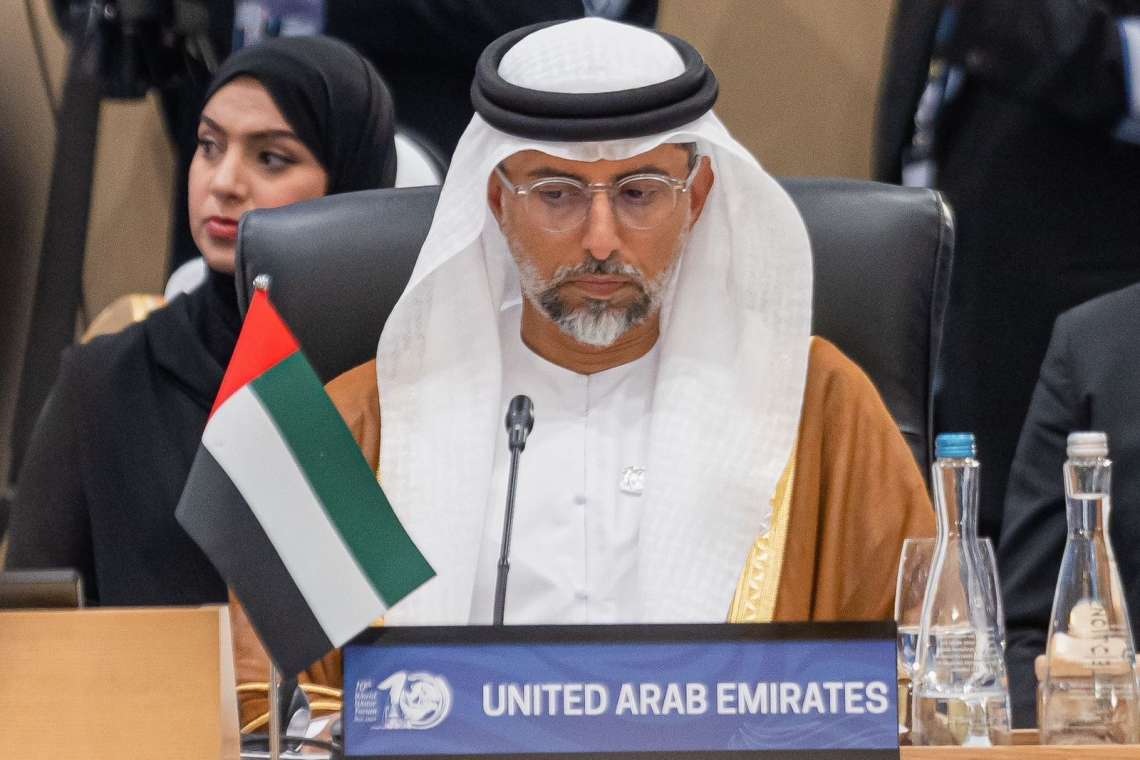
Energy and Infrastructure Minister Suhail Mohamed Al Mazrouei said the decision was the outcome of a comprehensive review of the country’s production policy, capacity expansion and future ambitions, stressing that it was rooted entirely in the UAE’s national interest.
In a public statement, Al Mazrouei emphasised that the move should not be interpreted as a rupture with partners or a signal of division within the oil-producing bloc. Instead, he framed it as a sovereign economic choice aimed at strengthening the UAE’s position as a reliable global energy supplier while allowing greater flexibility to expand production and investment.
“The UAE has always acted as a responsible producer,” he said, adding that independence would not come at the cost of global market stability. Officials have reiterated that the country will continue to engage with former partners, albeit on its own terms, maintaining cooperation where it aligns with shared interests.
The UAE’s exit marks a significant moment in the evolution of global oil markets. A member of OPEC since 1967—prior to the country’s formal establishment—the UAE has long been one of the group’s most influential producers, second only to Saudi Arabia in its ability to adjust output during times of crisis.
Its departure comes as the global energy landscape undergoes rapid transformation, shaped by geopolitical tensions, fluctuating demand and increasing competition among producers. Analysts say the UAE’s move reflects a broader recalibration, as countries with substantial reserves and spare capacity seek greater autonomy in responding to market conditions.
Before the current regional conflict disrupted production flows, the UAE was pumping just over three million barrels per day, largely in line with OPEC+ quotas. Abu Dhabi has since been working toward significantly expanding its production capacity, targeting nearly 4.9 million barrels per day in the coming years.
However, output has been temporarily constrained by the ongoing crisis, with production currently estimated between 1.8 and 2.1 million barrels per day. The disruption has underscored the importance of flexibility—both in production strategy and in export infrastructure—as producers navigate an increasingly volatile environment.
Flexibility over quotas
Industry experts note that one of the UAE’s key advantages lies in its spare production capacity, a critical buffer that can be brought online quickly to stabilise markets during supply shocks. Alongside Saudi Arabia, the UAE controls a significant portion of the world’s readily available spare capacity, giving it outsized influence during periods of disruption.
By stepping away from OPEC+, the UAE is effectively freeing itself from production quotas that may limit its ability to respond swiftly to changing market conditions. The move is expected to enable more aggressive investment in upstream capacity and allow the country to optimise output in line with its economic priorities.
At the same time, officials have been keen to stress that the decision does not signal a retreat from global responsibility. Al Mazrouei said the UAE remains committed to balancing supply and demand, contributing to market stability even as it operates independently.
The decision to exit OPEC+ is also closely tied to the UAE’s broader economic transformation agenda, which seeks to integrate energy policy with industrial growth, technology development and long-term diversification.
Sultan Ahmed Al Jaber, Minister of Industry and Advanced Technology and Group Chief Executive of ADNOC, described the move as a “carefully considered strategic decision” aligned with national development goals. He emphasised that it was not directed against any country or institution, but rather designed to enhance the UAE’s ability to invest, expand and create value across sectors.
Al Jaber highlighted how the country is increasingly linking its energy strategy with emerging industries such as artificial intelligence, advanced manufacturing and critical minerals. This integrated approach is intended to position the UAE not just as a major oil producer, but as a key player in the broader global economy of the future.
“Real strength is not measured by the abundance of resources, but by how they are harnessed,” he said, underlining the shift from volume-driven production to value-driven growth.
Despite its departure from OPEC+, the UAE has sought to reassure markets that it will remain a dependable supplier. Officials have pointed to decades of investment in infrastructure, logistics and partnerships as evidence of the country’s commitment to reliability.