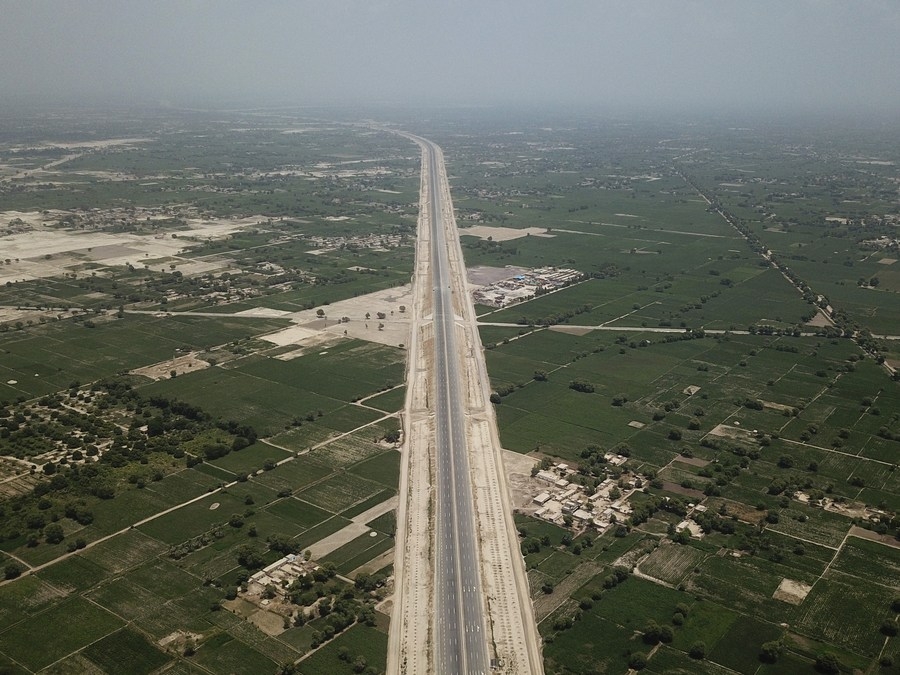
A report warns that rising debt obligations, costly infrastructure projects and growing dependence on Beijing are undermining the long-term benefits of CPEC….reports Asian Lite News Desk
The China-Pakistan Economic Corridor (CPEC), promoted as a flagship infrastructure and development initiative, is pushing Pakistan deeper into debt while delivering limited economic benefits, according to an analysis published in Modern Diplomacy.
The article argues that despite billions of dollars in Chinese-backed investments aimed at transforming Pakistan’s infrastructure and economy, concerns continue to grow over rising debt obligations, the financial viability of major projects and Islamabad’s increasing dependence on Beijing.
According to the report, one of the most significant concerns surrounding CPEC is the debt burden associated with the initiative. Pakistan’s external debt has risen substantially during the CPEC period, with questions persisting over the actual cost of financing, transparency of loan agreements and the ability of completed projects to generate sufficient revenue to service accumulated debt.
The analysis notes that while Chinese investments have helped add around 9,500 megawatts of electricity generation capacity to Pakistan’s power sector, many of the projects carry high operational costs. The resulting electricity tariffs have placed additional pressure on consumers and government finances.

The report points out that the International Monetary Fund (IMF) has repeatedly raised concerns about the long-term financial sustainability of some of these energy projects and whether they can generate returns commensurate with their investment costs.
The article also highlights concerns surrounding the Main Line-1 (ML-1) railway upgrade project, estimated to cost between $6.7 billion and $7 billion. While the project is expected to modernise Pakistan’s railway infrastructure, questions remain over its revenue-generating potential.
Pakistan’s railway system has historically struggled to turn a profit, with subsidised fares aimed at keeping travel affordable for lower-income groups. Without significant reforms to pricing structures and operational efficiency, the report argues that the project risks becoming a costly investment with insufficient returns to meet debt repayment obligations.
Beyond the economic implications, the analysis raises concerns about the strategic consequences of Pakistan’s growing reliance on Chinese investment.
It argues that as Beijing’s financial footprint expands, Pakistan’s dependence on Chinese capital could limit its policy autonomy. Chinese companies play a dominant role in the implementation, procurement and technology supply of CPEC projects and are involved in the operation of key infrastructure assets, including ports, energy facilities and transport networks.
The article contends that this growing economic dependence comes at a time when Pakistan is attempting to maintain relations with multiple global powers, including the United States and Russia.
According to the report, increasing reliance on China may constrain Islamabad’s ability to pursue an independent foreign policy in situations where Chinese interests diverge from those of other major powers.
While CPEC has delivered visible infrastructure projects across Pakistan, the analysis concludes that concerns over debt sustainability, project profitability and strategic dependence continue to cast a shadow over the long-term benefits of the initiative.