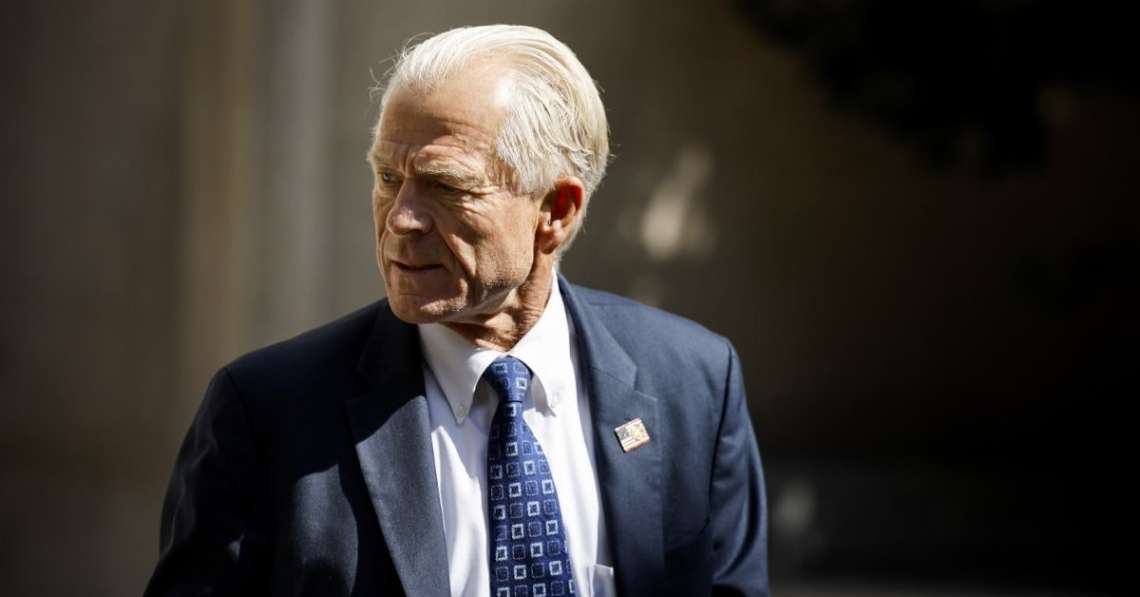
Peter Navarro said newly declassified documents have heightened concerns over vulnerabilities in the US electoral system…reports Asian Lite News Desk
Senior White House trade adviser Peter Navarro has defended President Donald Trump’s renewed focus on election integrity, arguing that newly declassified documents have reinforced concerns about vulnerabilities in the US electoral system and strengthened the case for sweeping election reforms.
Speaking at the White House on Friday, a day after Trump’s nationally televised address, Navarro said the administration’s objective was not to revisit the outcome of the 2020 presidential election but to improve safeguards for future elections through the proposed Save America Act.
“That’s not what last night was about. What last night was about is protecting future elections,” Navarro told reporters. He said the release of the declassified material had prompted Americans to reconsider questions surrounding the integrity of the 2020 election, asking whether “the probability that that election was stolen” had increased “because of what came out.”
Navarro outlined what he described as four key issues emerging from the newly released documents.
He alleged that China had accessed US voter-related data before the 2020 election, arguing that such activity should raise “deep concerns among the American people.” Although Beijing has denied the allegations, Navarro said that obtaining voter information and metadata indicated “mal intent.”
He also criticised what he described as disagreements within the US intelligence community over China’s alleged election-related activities. Referring to documents released by the administration, Navarro said they revealed internal divisions that were not reflected in intelligence briefings provided to the president.
“There was one very chilling comment,” he said, referring to “an FBI agent, who bragged about running a shadow government… to keep key intelligence off the desk of the president.”
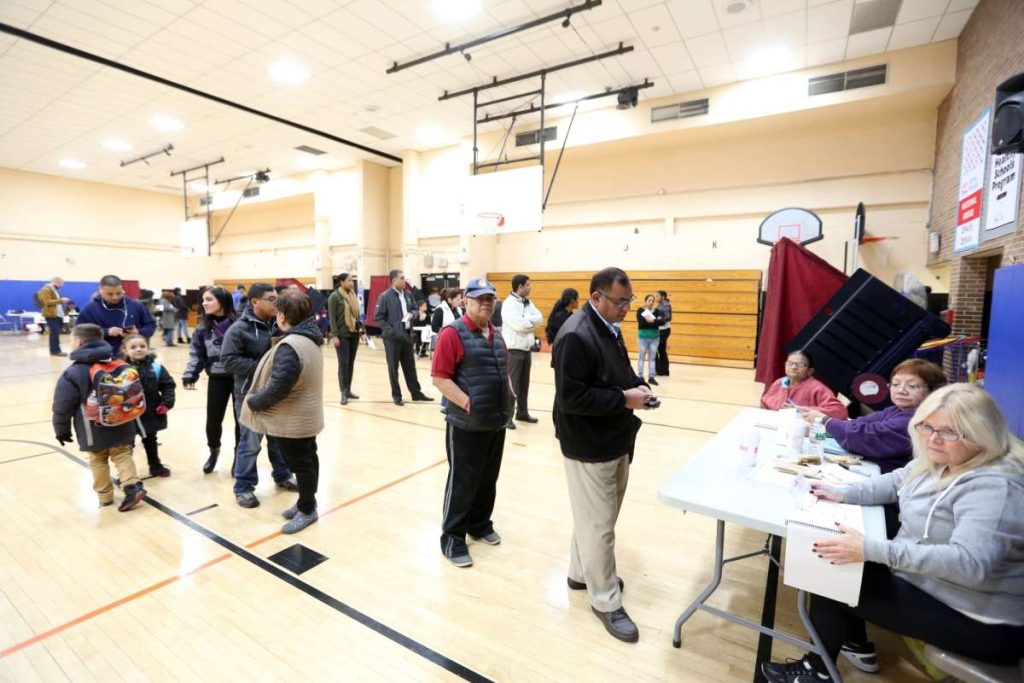
Navarro further claimed the documents showed that voting machines were “vulnerable to being used to sway elections” and that such interference “may well be undetectable when that kind of nefarious activity takes place.”
He also pointed to what he said were nearly 300,000 illegal voters identified by the Department of Homeland Security in a limited number of states, arguing that even relatively small numbers could influence closely contested elections.
Using Georgia as an example, Navarro repeated his criticism of changes to absentee voting procedures during the 2020 election. He said removing signature verification while expanding absentee voting had weakened election safeguards, while emphasising that Thursday night’s presentation “was not to prove anything about the 2020 election.”
“It was basically to look forward of how we can fix things,” he said.
Navarro urged journalists to review the declassified documents published on the White House website before reaching conclusions.
“I’m astonished that reporters could go out and write authoritative stories… when they literally… didn’t have the time to review the documents,” he said.
Asked whether the allegations involving China could affect US trade policy, Navarro said the issues should be treated separately.
“I think they’re separate lanes,” he said, adding, “The story… isn’t a story about China. It’s about the American refusal at the political level to safeguard our election system.”
Throughout the briefing, Navarro promoted the proposed Save America Act, describing it as legislation that would require voter identification, proof of citizenship and tighter controls on absentee ballots. He said the bill “checks every box needed to ensure the integrity of our election.”
Responding to criticism from Democrats that the renewed emphasis on election integrity could undermine confidence in next year’s midterm elections, Navarro rejected those concerns.
“If you pass the Save America Act… we’ll have a more secure election with integrity,” he said. “Most importantly, the American people will have more faith in the elections and are more likely to vote.”