The World Uyghur Congress has accused the Dutch government of failing to raise concerns over alleged Uyghur forced labour and human rights abuses during a recent trade mission to China….reports Asian Lite News Desk
The World Uyghur Congress (WUC) has criticised the Dutch government for not raising concerns over alleged Uyghur forced labour and human rights violations during a recent trade mission to China, while outlining its latest international advocacy efforts aimed at increasing pressure over the situation in East Turkistan.
In its Weekly Brief released on Thursday, the Germany-based organisation reviewed developments related to Uyghur rights, including advocacy at the United Nations, participation in international religious freedom discussions and renewed calls for action against what it describes as ongoing human rights abuses.
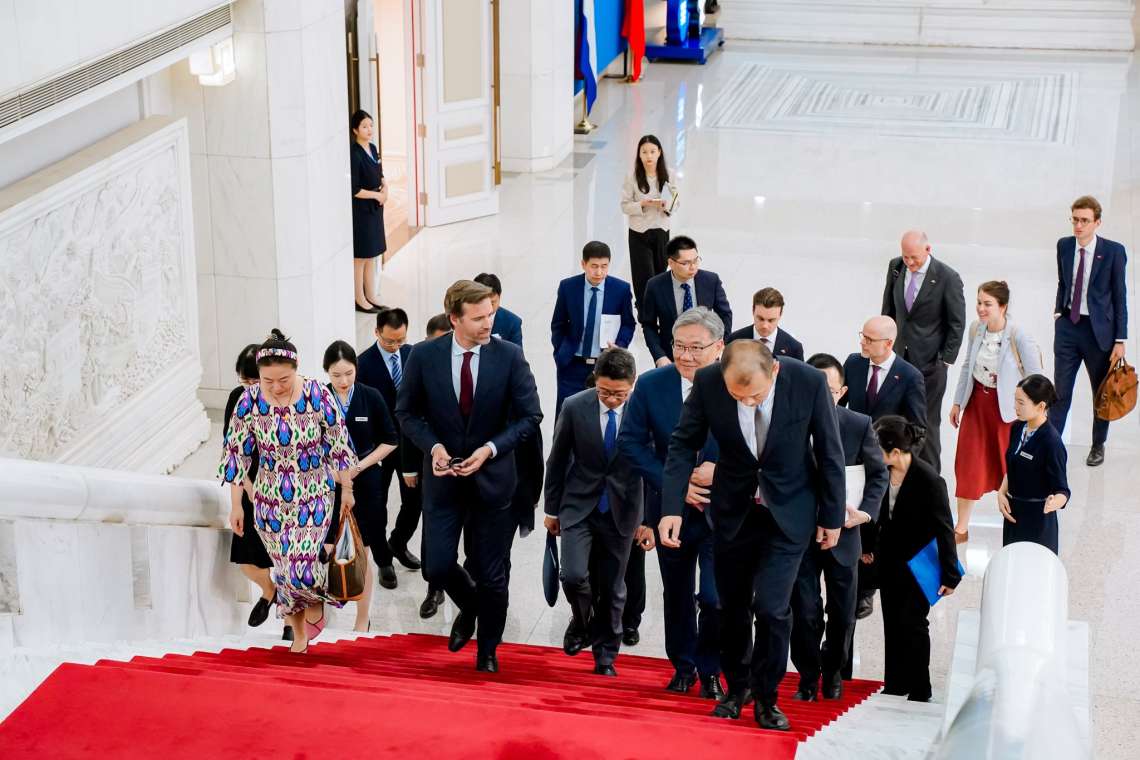
The WUC expressed disappointment that the issue of alleged Uyghur forced labour and wider human rights concerns was not raised during the Dutch trade mission to China on July 13, despite a motion passed by the Dutch Parliament calling for the matter to be addressed.
According to the organisation, Dutch Foreign Trade and Development Cooperation Minister Sjoerd Sjoerdsma did not include the issue in official discussions during the visit.
The WUC said it was particularly disappointed because Sjoerdsma had previously supported recognition of what it describes as the Uyghur genocide while serving as a Member of Parliament.
The organisation also voiced concern over increasing imports from East Turkistan, arguing that goods linked to state-imposed forced labour could be entering Dutch markets.
It called on the Netherlands to raise the issue publicly with Chinese authorities, strengthen efforts to remove forced labour from supply chains, fully implement the European Union Forced Labour Regulation and introduce mandatory human rights due diligence requirements for businesses.
The weekly brief also highlighted an opinion article by UZDM President Dolkun Isa titled “Coming Together Against Silence: Reflections on the 3rd International Uyghur Forum, Ten Years After the Camps”.
In the article, Isa reflected on what he described as a decade of systematic repression against Uyghurs, stating that although international awareness has increased, accountability remains limited.
He also referred to continued surveillance, forced labour, cultural destruction, family separation and transnational repression, while calling for greater international solidarity and coordinated action.
The WUC said it also raised Uyghur rights issues during the 19th session of the UN Expert Mechanism on the Rights of Indigenous Peoples in Geneva.
Vice President Zumretay Arkin addressed what the organisation described as restrictions on Uyghur cultural and linguistic rights, while Dolkun Isa warned that China’s Ethnic Unity and Progress Law could further strengthen policies of forced assimilation affecting Uyghurs and other Turkic communities.
Separately, Uyghur representatives participated in the IRF Peace Builders Forum in Washington, DC.
During the event, WUC Executive Committee Chair Rushan Abbas and Uyghur Human Rights Project Executive Director Omer Kanat discussed China’s ethnic policies, restrictions on religious freedom and what they described as the growing impact of transnational repression on communities living outside China.
China has consistently rejected allegations of forced labour, genocide and other human rights abuses in Xinjiang, maintaining that its policies are aimed at countering extremism, promoting economic development and ensuring social stability in the region.