The meeting comes after recent tensions over Iran, changes in Gaza policy and a challenging political backdrop for the Israeli prime minister…reports Asian Lite News Desk
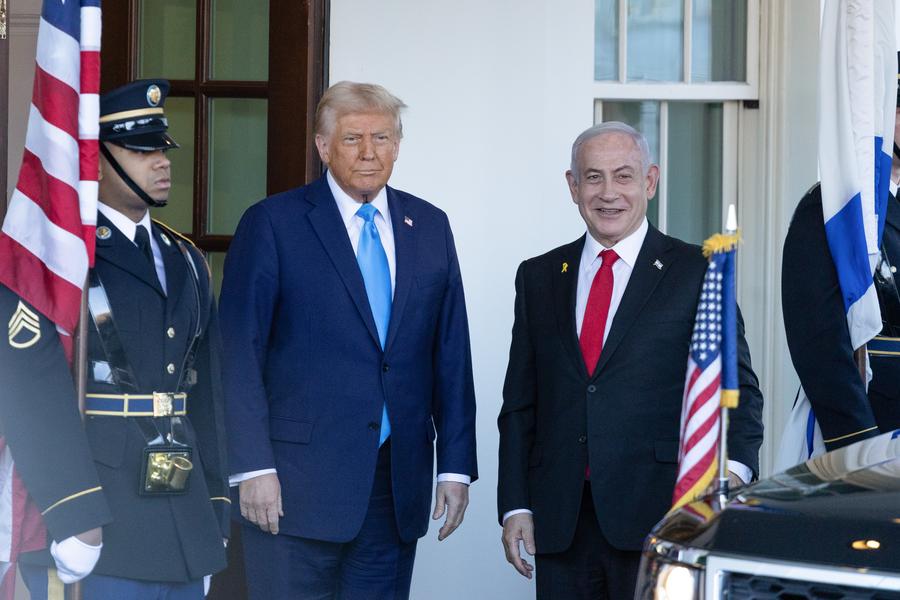
Israeli Prime Minister Benjamin Netanyahu travelled to Washington on Monday for talks with US President Donald Trump, marking their first face-to-face meeting since the recent conflict involving Iran and the first since February.
The visit will be Netanyahu’s eighth meeting with Trump since the US president returned to office. It comes after Israel and the United States launched a joint aerial campaign against Iran earlier this year, placing regional security high on the agenda for the latest discussions.
Speaking before departing, Netanyahu said the meeting would focus primarily on Iran while also addressing broader regional issues.
“In these complex times, you need to act with both great determination and great wisdom. We will discuss all the issues on the agenda, primarily Iran. Of course, our goal is to protect our security and also to expand the circle of peace around us,” Netanyahu said in a video statement upon departure.
The meeting follows a period of heightened military activity involving the United States and Iran. Israel did not take part in the two-week US bombing campaign this month that prompted Tehran to launch retaliatory strikes against American military bases.
Trump brought the campaign to a halt over the weekend. Iran subsequently said it would suspend its own attacks for as long as the US pause remains in place. Israel has warned that any attack by Tehran would be met with a forceful response.

The talks also come after signs of differences between the two leaders over regional policy. Netanyahu has acknowledged in recent weeks that he and Trump have not agreed on every issue, as Israeli and US priorities have at times appeared to diverge.
Those tensions became public following reports of a phone call in June in which Trump called Netanyahu “f***ing crazy”. The account was first leaked to the media before being publicly confirmed by the US president.
Despite those disagreements, both governments have continued to coordinate on a range of security and diplomatic issues.
On Sunday, Israel announced it would allow a multinational security force to enter Gaza under a proposal contained in Trump’s peace plan for the territory. The move was widely seen as a step that could help advance discussions during the Washington meeting.
Earlier, on July 21, Israel said it had redeployed some of its forces in southern Lebanon as part of US-backed agreements reached with Lebanese authorities in recent weeks.
The White House meeting also carries domestic political significance for Netanyahu. A public display of cooperation with Trump could provide a boost ahead of Israel’s general election on October 27, as opinion polls suggest the prime minister is facing a difficult campaign.
For Trump, the meeting comes at a time when public attitudes towards Israel in the United States have become more divided than in previous years.
The discussions are expected to cover regional security, Iran, Gaza and wider diplomatic efforts in the Middle East. While no major announcements have been made ahead of the meeting, the talks will be closely watched for indications of how Washington and Jerusalem intend to coordinate their next steps following recent military tensions and ongoing efforts to reshape the regional security landscape.