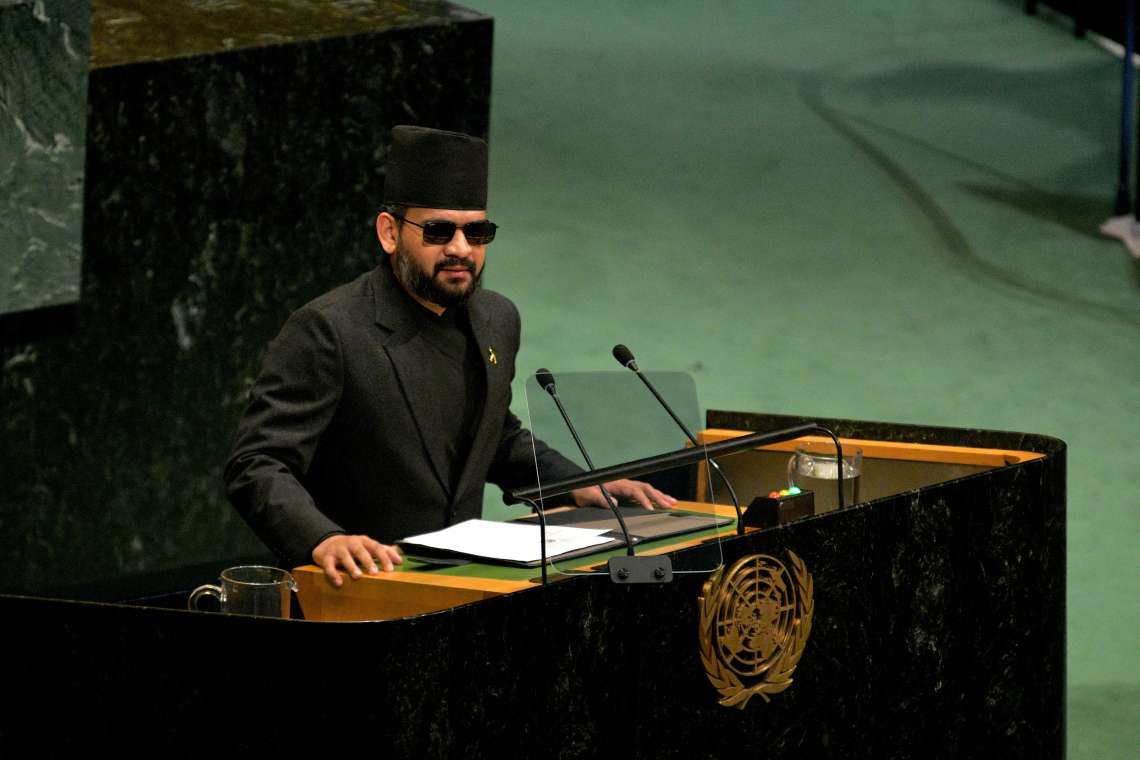
Nepal PM Balendra Shah has proposed a trilateral climate resilience mechanism involving Nepal, India and China….reports Asian Lite News Desk
Nepal Prime Minister Balendra Shah has proposed the creation of a Himalayan Climate Resilience Mechanism involving Nepal, India and China to strengthen regional cooperation in tackling climate related risks across the Himalayan region.
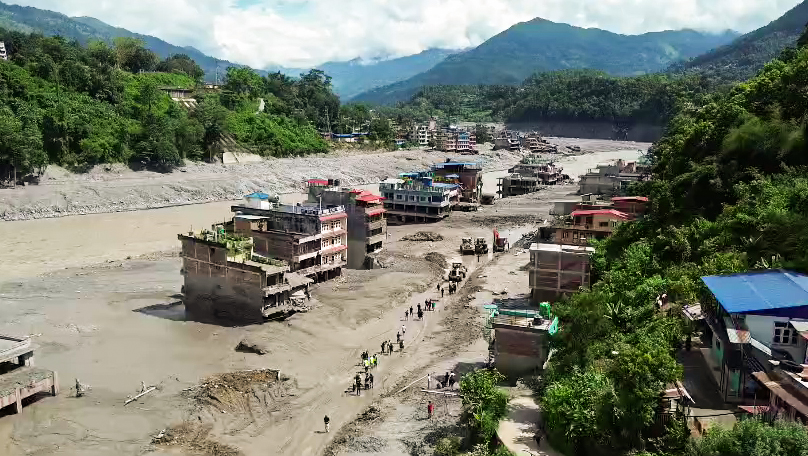
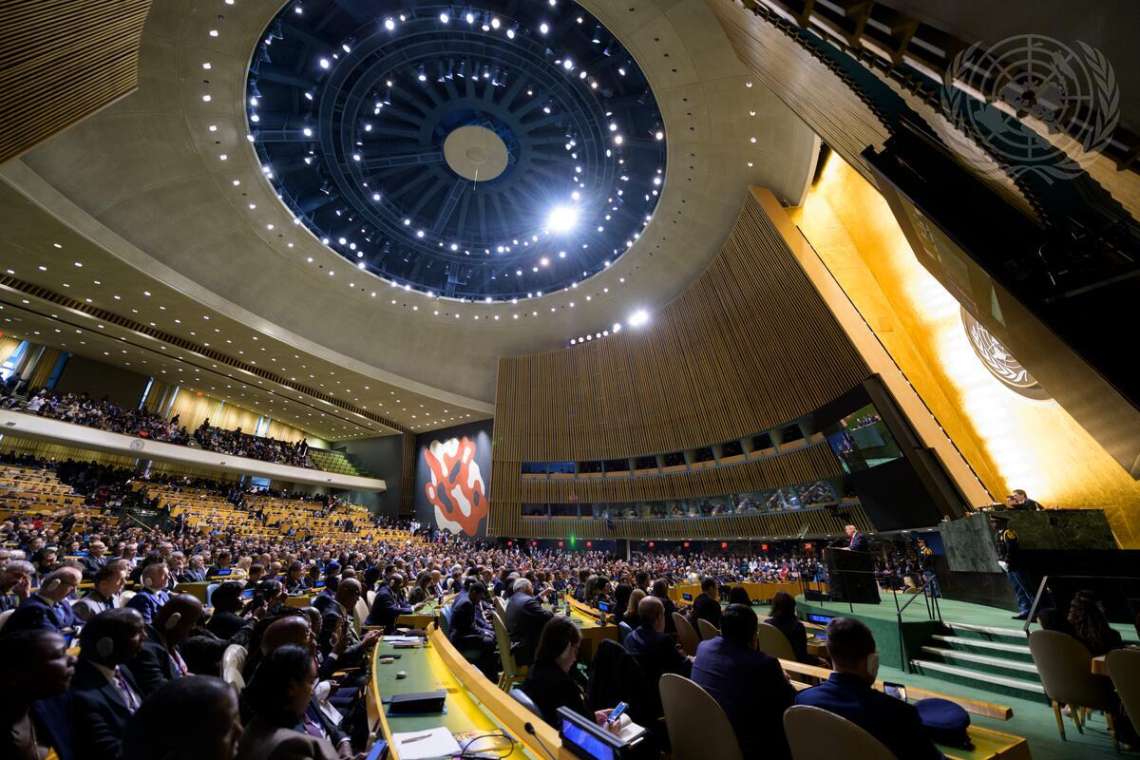
Shah made the proposal while addressing the 81st session of the United Nations General Assembly in New York on Wednesday, as Nepal continues to assess the devastation caused by catastrophic floods that struck mountain communities on August 26.
The floods, described by some as a “Mountain Tsunami” or “Himalayan Tsunami”, have killed 1,453 people, while 5,550 remain missing, including 636 foreign nationals, according to the National Disaster Risk Reduction and Management Authority as of Thursday evening. Experts have attributed the disaster to climate change.
Under the proposed mechanism, Nepal, India and China would cooperate on sharing satellite data and technical expertise, monitoring dangerous glacial lakes and strengthening regional early warning systems.
“Let us monitor dangerous glacial lakes. Let us strengthen joint early warning systems. And when disaster strikes, let us coordinate assistance across borders,” Shah said.
He said the Himalayas should serve as a platform for international cooperation rather than an area where information remains fragmented.
“Let the Himalayas become a laboratory of international cooperation rather than a frontier of fragmented information,” Shah said.

Shah also outlined Nepal’s efforts to address climate change, saying the country had restored forest cover to nearly half of its territory and was expanding hydropower generation to meet clean energy needs and reduce reliance on fossil fuels.
“We are promoting electric mobility with an adoption rate to match parts of Europe. We are strengthening climate adaptation at local levels, and we shall do more to withstand the increasing intensity and frequency of climate disasters,” he said.
The Prime Minister stressed that Nepal contributes less than 0.1 per cent of global greenhouse gas emissions, but remains highly exposed to the consequences of climate change.
“We did not create this crisis, yet we are paying a colossal price for it. Our glaciers are retreating, our mountain slopes are becoming unstable, our rivers are becoming less predictable, and every major disaster threatens to erase years of development,” he said.
Shah described climate related disasters as both humanitarian and development emergencies for Nepal, saying they damage roads, bridges, schools, homes, farms, livelihoods and clean energy infrastructure.
He also called for international solidarity following the destruction along the Bhotekoshi and Trishuli river corridors, where floods swept away settlements, bridges and roads and damaged schools, homes and livelihoods.
According to a Rapid Disaster Needs Assessment prepared jointly by the National Planning Commission and the National Disaster Risk Reduction and Management Authority, the floods caused estimated losses of $2.69 billion.
The assessment estimated that $4.77 billion would be needed for reconstruction and recovery of affected infrastructure and assets, equivalent to about 10 per cent of Nepal’s gross domestic product.
Shah called on the international community to look beyond immediate relief and reconstruction and focus on long term resilience and accountability.
“This is why this Assembly must note six words – relief, rehabilitation, reconstruction, and also responsibility, reparation, resilience,” he said.
He said relief, rehabilitation and reconstruction were immediate requirements after disasters, while responsibility, reparation and resilience were needed to prevent climate disasters from becoming a permanent condition for vulnerable countries.
Shah also urged greater grant based international support for developing countries vulnerable to climate change, arguing that disaster affected nations should not be pushed further into debt.
“When a climate driven disaster destroys the infrastructure of a poor country, the answer cannot simply be another mega loan or a patchwork of small grants,” he said. “We need adequate grant based support from the world.”
He said existing climate financing mechanisms, including the Loss and Damage Fund and the Global Environment Facility, remained inadequate and criticised lengthy procedures for accessing climate finance.
“Climate finance must not become another bureaucratic maze through which vulnerable countries spend years proving that they need help,” Shah said.
The Nepal floods, he added, demonstrated the need to prepare for increasingly severe climate events.
“Our baselines are no longer relevant, and we must move from ad hoc responses to a culture of preparedness,” he said.
Shah called for greater investment in resilience, insurance, innovation, infrastructure and institutions, alongside efforts to reduce greenhouse gas emissions and fossil fuel dependence.
“Let us reduce fossil fuel dependence. Let us build systems that warn, alert, and save lives. Let us reform the order that leaves the weakest with the least power,” he said.