India has urged the G20 to pursue diplomatic solutions to major conflicts, warning of their impact on food, energy and global supply chains..reports Asian Lite News Desk
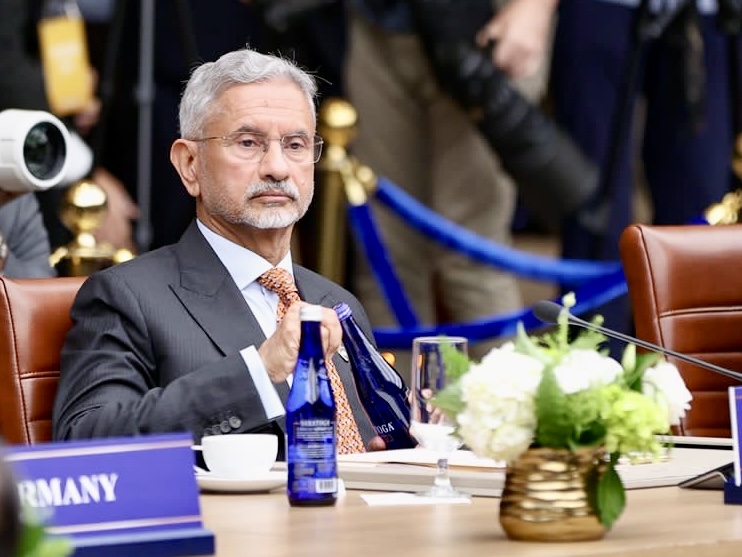
India has urged the G20 to push for diplomatic solutions to major conflicts, warning that wars are disrupting food supplies, energy markets and global supply chains, with developing economies bearing much of the cost. External Affairs Minister S Jaishankar also outlined New Delhi’s engagement with Russia, Ukraine, Europe and the United States to protect civilian shipping and restore grain exports through the Black Sea.
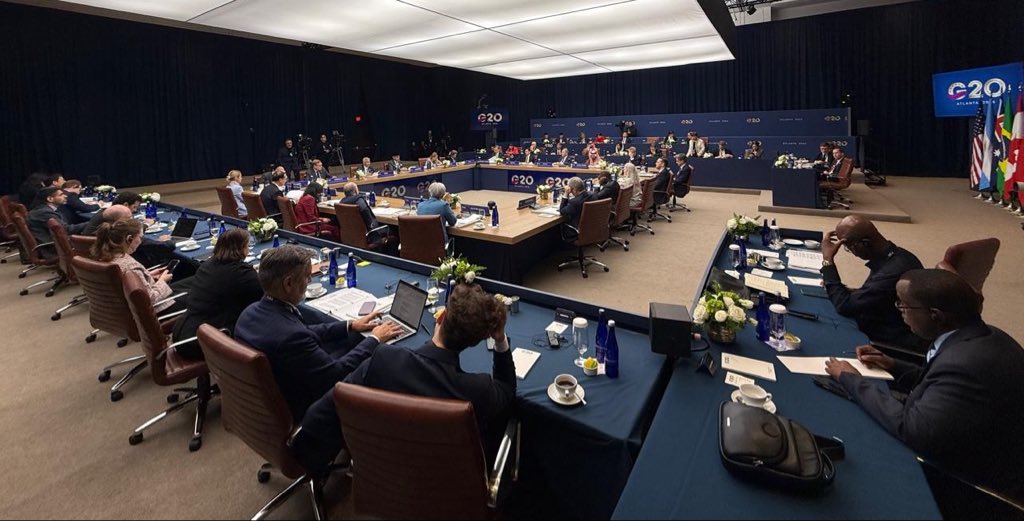
Speaking to Indian journalists after the G20 Foreign Ministers’ Meeting in Atlanta, Jaishankar said conflicts were creating consequences far beyond the countries directly involved and called for greater international cooperation to address their economic impact.
“Endless wars must give way to end the war,” he said, stressing that military solutions were not the answer to major geopolitical crises.
Describing the meeting as productive and open, Jaishankar said discussions covered three broad areas: the geopolitical situation, energy and food security, and global supply chains. India had emphasised the need for diplomacy, secure supplies and diversified production networks.
On the Ukraine conflict, Jaishankar said India was engaging Russia, Ukraine and European countries on three key issues: protecting civilian ships and seafarers, restoring grain exports and preventing attacks on energy infrastructure.
“We’ve had discussions with Russia. We’ve had discussions with Europe,” he said.
India’s efforts were aimed at ensuring that civilian vessels and their crews were protected from attacks, while finding ways to resume grain shipments from Russia and Ukraine, both major suppliers to international markets.
Jaishankar said grain exports through the Black Sea had fallen sharply, creating concerns for developing countries that depend heavily on these supplies. Restoring the flow of grain was therefore a priority for the Global South.
Preventing attacks on energy infrastructure presented a more complicated challenge because countries had different interpretations of what should be protected.
“Non-attack on energy, non-attack on energy is probably the most complicated piece because it means different things to the different players,” he said, pointing to differences over whether the protection should cover refineries, electricity grids or fuel-carrying vessels.
India had raised the issue at several levels, including discussions between Prime Minister Narendra Modi and Russian President Vladimir Putin. Jaishankar said he had also visited Moscow and Kyiv and discussed the matter with Russian Foreign Minister Sergey Lavrov during the Atlanta meeting.
New Delhi remained in contact with Ukraine and was coordinating with Washington, which has its own peace mediation initiative. US Secretary of State Marco Rubio was broadly aware of India’s efforts, Jaishankar said, without disclosing details of the discussions.
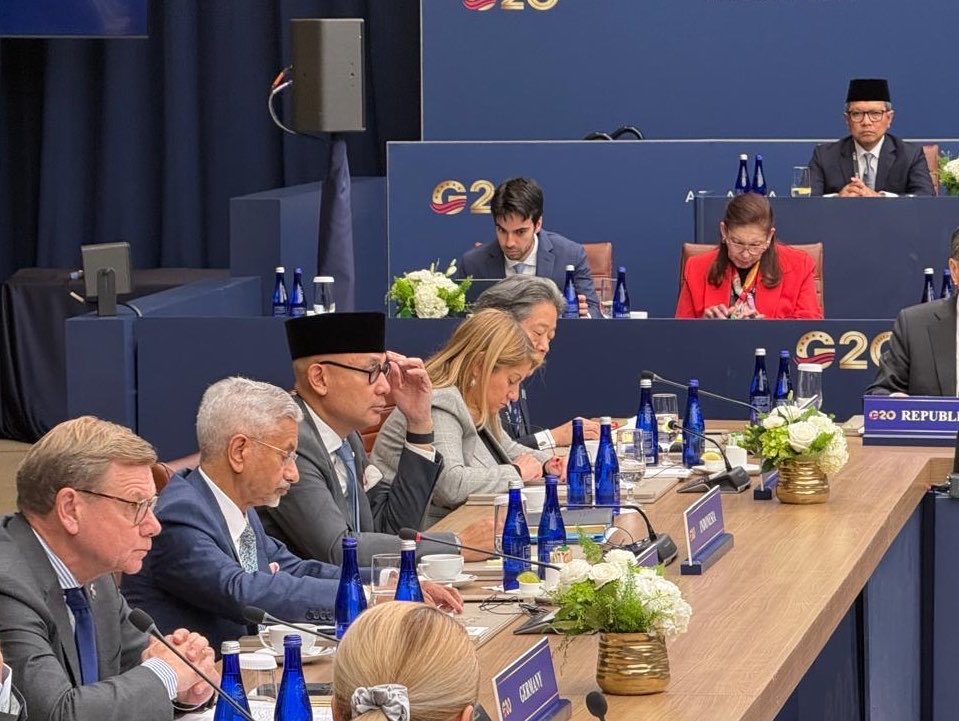
Energy security was another major concern at the G20 meeting. India warned against the politicisation of energy supplies and distortions in global markets, arguing that developing economies were particularly vulnerable to shortages and disruptions.
Food security discussions extended beyond grain shipments to fertiliser supplies, with ministers examining the impact of disruptions in the Black Sea, Gulf and Red Sea regions.
On global supply chains, India called for geographically diversified manufacturing and production networks to reduce excessive dependence on individual countries or regions.
Jaishankar cited the Covid-19 pandemic as an example of how concentrated supply chains could be disrupted, adding that geopolitical conflicts and climate-related events posed further risks.
He also cautioned against using supply chains as instruments of political pressure, arguing that multiple production centres would make international trade more resilient.
Alongside the formal sessions, Jaishankar held several bilateral and smaller-group discussions. He said there was an appreciation of India’s ability to maintain communication with different sides at a time of growing international polarisation.
On the absence of a consensus statement at the meeting, similar to the declaration adopted during India’s G20 presidency in 2023, Jaishankar said the process had not yet reached the leaders’ summit stage.
The G20 leaders’ summit is scheduled for December, and India hopes members will find common ground before then. He cited the BRICS grouping’s ability to reach agreement on a joint statement as an example of how consensus could be achieved despite differences.
Jaishankar also attended a meeting of Quad foreign ministers in Atlanta, the third such gathering this year after discussions in New Delhi and Manila. He said the ministers had made progress and hoped future engagement would help establish new priorities and expand the grouping’s agenda.
The Quad brings together India, the United States, Japan and Australia, while the G20 includes major advanced and emerging economies, the European Union and the African Union.