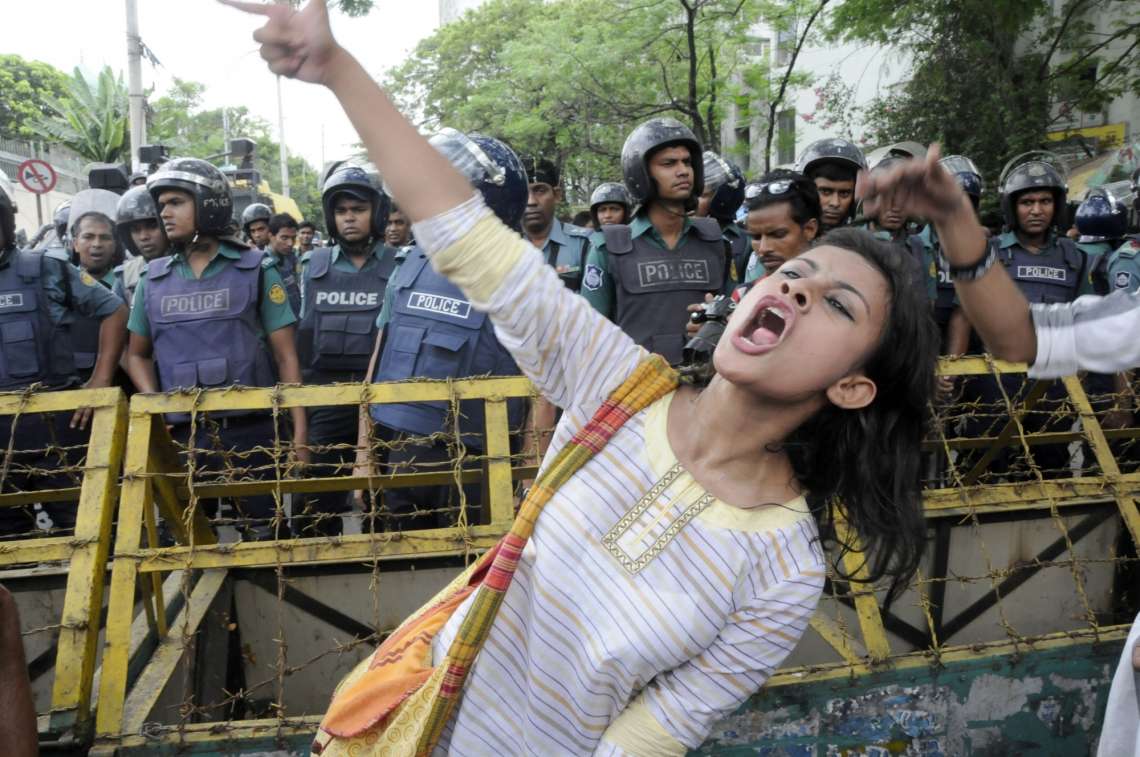
What is unfolding across the country’s higher education institutions raises serious questions about academic freedom, political retaliation and the right to dissent in a country still struggling with the consequences of a violent political upheaval…writes Dr Sakariya Kareem
Bangladesh’s public universities, long regarded as centres of political debate and student activism, are once again confronting allegations of political persecution.
This time, the targets are academics and students accused of maintaining links with former prime minister Sheikh Hasina and her Awami League, following the party’s dramatic fall from power in August 2024.
What is unfolding across the country’s higher education institutions raises serious questions about academic freedom, political retaliation and the right to dissent in a country still struggling with the consequences of a violent political upheaval.
An investigation by Human Rights Watch (HRW) has found that scores of university teachers and hundreds of students have faced dismissals, suspensions, restrictions on teaching, expulsions and other disciplinary measures over their alleged political affiliations or activities.
The findings point to a troubling pattern in which accusations of supporting the former government have increasingly become grounds for punitive action, sometimes without transparent investigations or meaningful opportunities for those accused to defend themselves.
The developments have placed Bangladesh’s universities at the centre of a wider debate over whether the political transition following Hasina’s removal has ended the culture of institutional control or merely changed the groups subjected to it.
Political allegiance becomes grounds for punishment
According to Human Rights Watch, academics at more than 20 public universities have faced disciplinary action over allegations that they supported Hasina’s Awami League government, participated in activities associated with the party or opposed the student-led movement that brought down her administration.
The sanctions include dismissals, temporary suspensions, restrictions on teaching responsibilities and exclusion from academic and administrative activities.
Some teachers have also faced allegations of supporting violence during the government’s crackdown on protesters in July and August 2024. Others have been accused of engaging in supposedly subversive political activities or discriminating against students who wore Islamic clothing.
The investigation also found that hundreds of students accused of belonging to or supporting the Awami League have faced expulsion or restrictions on their academic activities. In several cases, universities have withheld examination certificates or prevented students from returning to campuses.
Human Rights Watch interviewed more than a dozen affected academics, examined university correspondence and reviewed video footage and social media material.
Interviews with teachers and students also documented cases involving expulsions, cancelled examination certificates and restrictions on campus access.
The organisation warned that punishing people for their peaceful political beliefs, without following due process, violates internationally protected freedoms of expression and association.
Meenakshi Ganguly, deputy Asia director at Human Rights Watch, said Bangladesh had a long tradition of political debate within universities and that a government emerging from student protests should not repeat the repressive practices associated with previous administrations.
“Bangladesh needs to turn the page on the repression of the past, not repeat it whenever the ruling and opposition parties trade places,” she said.
More than 20 universities under scrutiny
The scale of the disciplinary measures extends well beyond Dhaka University.
Human Rights Watch found that more than 20 public universities have been affected, with Bangladesh Agricultural University in Mymensingh and Sher-e-Bangla Agricultural University in Dhaka among the institutions facing allegations of irregular disciplinary action.
At Dhaka University, the measures began in September 2024, shortly after the political transition. The newly appointed university authorities ordered 44 academics to stop working and restricted the teaching assignments of another 25.
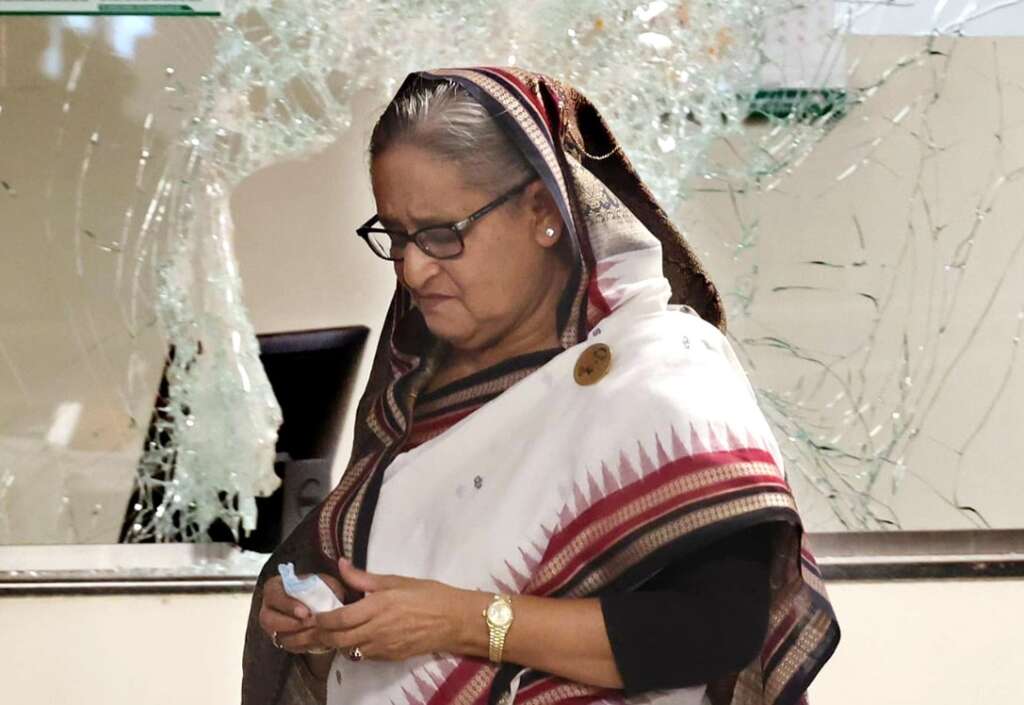
These decisions were initially taken without transparent or credible disciplinary investigations. Six academics were subsequently formally suspended following an inquiry committee’s findings, while investigations began against another 14 teachers.
The controversy continued into 2026. On August 31, Dhaka University’s Syndicate decided to suspend three professors and initiate tribunal proceedings against them over allegations relating to their conduct during the July 2024 uprising.
The suspended academics included Professor Mashiur Rahman of the Department of Sociology and Professors M Wahiduzzaman and Muhammed Mahbubur Rahman of the Institute of Education and Research.
The decisions prompted protests from the Dhaka University Teachers’ Association, which questioned whether the administration had followed the disciplinary procedures prescribed under the Dhaka University Order, 1973.
The teachers denied the allegations and accused the university authorities of political harassment and denying them a proper opportunity to defend themselves.
The developments underline how the controversy has continued under the elected government, rather than remaining confined to the immediate aftermath of Hasina’s departure.
At Bangladesh Agricultural University, authorities dismissed, suspended or removed 12 academics and demoted or restricted the activities of another 34 after establishing an investigation commission.
Human Rights Watch said the commission’s proceedings did not appear to comply with the university’s legally prescribed disciplinary procedures.
The situation at Sher-e-Bangla Agricultural University has followed a similar pattern.
Twelve academics were temporarily suspended, while another 10 were removed from academic activities following an inquiry process that affected teachers, who said they were not permitted to attend. Another 85 teachers were denied promotions.
The allegations of procedural irregularities are particularly significant because disciplinary action at public universities can have consequences extending beyond employment.
Restrictions on teaching, research and academic responsibilities can effectively remove individuals from professional life without a final determination of misconduct.
Over 400 academics under investigation
One of the most striking developments emerged in August 2026, when media reports revealed that at least 404 academics across 22 universities had been placed under investigation over their membership of a Telegram messaging group associated with the Awami League.
The investigations have raised concerns about whether university authorities are treating political association itself as evidence of wrongdoing.
A professor at a public university, whose identity Human Rights Watch withheld for security reasons, described the situation as an attempt to target academics who supported the Awami League but did not endorse the 2024 student movement.
The professor said teachers had been prevented from attending classes and conducting research, leaving them unable to carry out their professional responsibilities.
The distinction between political affiliation and direct involvement in criminal activity remains central to the controversy. Membership of a political party, support for a government or opposition to a protest movement does not automatically establish complicity in violence.
However, Bangladesh’s political transition has created an environment in which accusations of association with the former ruling party can carry serious professional consequences.
The scale of the Telegram-related investigations suggests that the scrutiny has extended to a substantial section of the country’s academic community.
Students face expulsions
The measures have also affected students, many of whom have faced disciplinary proceedings over alleged involvement in violence during the 2024 uprising.
In March 2025, Dhaka University temporarily suspended 126 students after a fact-finding committee reported that it had identified photographic, video or social media evidence suggesting their involvement in attacks on peaceful protesters. The university also withheld their examination certificates.
Police cases alleged that another 277 students affiliated with the Awami League had participated in the violence.
However, the university did not initiate formal disciplinary proceedings against this second group.
According to teachers and students interviewed by Human Rights Watch, several of those named stayed away from campus because they feared arrest.
Many of the accused students denied participating in the violence. HRW found that the university had not established a formal forum through which they could respond to the allegations.
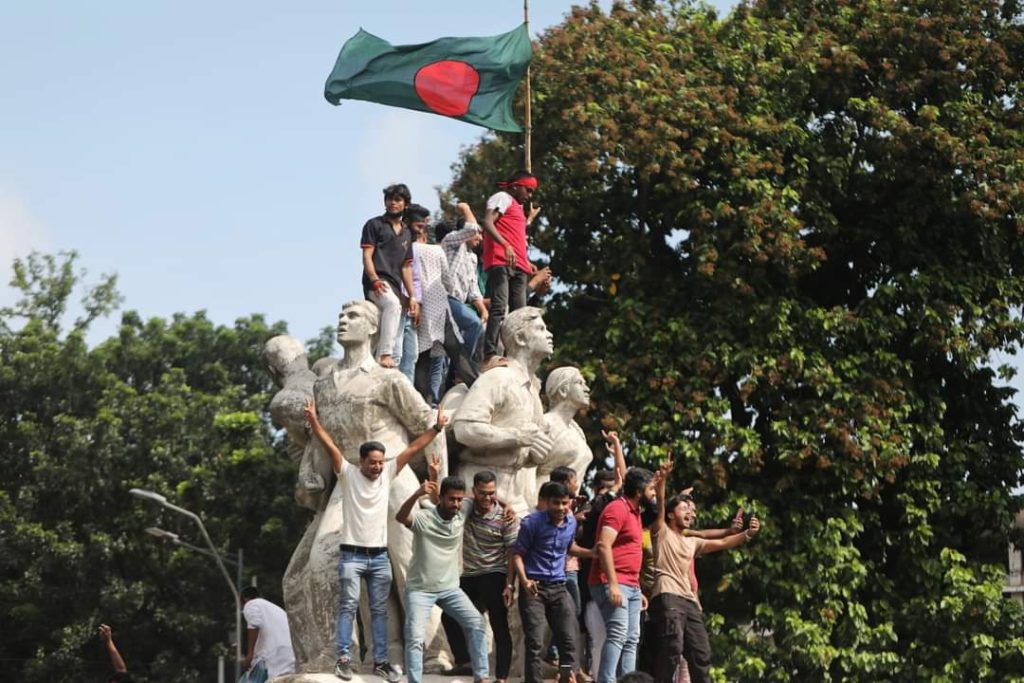
The withholding of examination certificates and restrictions on campus access carry consequences that can extend well beyond the immediate political dispute.
Students can lose opportunities to complete their education, apply for employment or pursue further academic qualifications.
The cases also raise questions about the distinction between accountability for documented violence and collective punishment based on political identity.
Allegations involving attacks on protesters require proper investigation, but disciplinary measures must still establish individual responsibility rather than presume guilt through party association.
Questions over evidence
The case of Professor Mashiur Rahman illustrates the concerns surrounding the evidence used against academics.
A member of Dhaka University’s sociology department, Rahman had been deputed as vice-chancellor of another university since 2017. The university authorities ordered him to stop all academic and administrative activities on September 25, 2024.
One allegation against him concerned a television discussion in July 2024, during which he was accused of directly opposing the student movement and describing it as illegal, baseless and irrational.
However, Human Rights Watch reviewed a recording of the programme and found no such remarks.
He also faced an allegation of inciting genocide during a meeting at the prime minister’s residence on August 3, 2024.
Rahman maintained that the meeting had been organised by the University Grants Commission and that all vice-chancellors were required to attend. He denied making the alleged statement and told HRW that the authorities had not provided evidence supporting the accusation.
On August 31, 2026, Dhaka University authorities recommended his permanent suspension. Rahman is appealing the decision.
The cases at Bangladesh Agricultural University have also attracted scrutiny over the evidence presented against individual teachers.
Professor Purba Islam of the Department of Pharmacology was suspended on August 4, 2025, over her alleged participation in a pro-Awami League march held on the university campus on August 4, 2024, a day before Hasina fled Bangladesh.
The university’s inquiry commission described the procession as a terrorist march and accused her of supporting the former government’s alleged repression and violence.
However, a video of the procession, posted on Facebook by the Bangladesh Agricultural University Journalists’ Association on August 4, 2024, and reviewed by Human Rights Watch, showed a group of people walking across the campus and chanting slogans.
The footage did not visibly establish that Islam had shouted slogans.
Professor Yahia Khandoker of the Department of Animal Breeding and Genetics was also suspended on August 4, 2025. The university accused him of maintaining a position in support of Hasina’s alleged mass killings.
Khandoker denied participating in the march, saying he had remained in Dhaka with his family throughout the protest period. The High Court subsequently stayed his suspension, although the Attorney General’s Office is challenging the order.
These cases highlight the importance of examining individual allegations through verifiable evidence, rather than relying on political labels or assumptions about institutional and party affiliations.
Institutional partisanship
Bangladesh’s political transition has been one of the most consequential developments in South Asia in recent years.
The student-led uprising of July and August 2024 brought an end to Hasina’s prolonged rule after a violent crackdown in which hundreds of people were killed.
Hasina resigned on August 5, 2024, and fled to India, while an interim administration led by Muhammad Yunus took charge three days later.
The interim government subsequently prohibited the activities of the Awami League and affiliated organisations in May 2025. The party’s registration was also suspended, preventing it from contesting the February 2026 parliamentary election.
The Bangladesh Nationalist Party (BNP), led by Tarique Rahman, won the election and formed the government on February 17, 2026. The Awami League remained excluded from the electoral contest.
However, the controversy over universities reflects a much older institutional problem.
For years, Bangladesh’s public higher education system has faced accusations of political interference, with appointments, promotions and disciplinary proceedings often influenced by the political affiliations of academics.
Under successive administrations, university structures have frequently reflected the interests of the party in power.
Academics associated with the ruling establishment have enjoyed institutional influence, while those perceived to support political opponents have faced professional disadvantages.
The allegations documented by Human Rights Watch suggest that this partisan environment has not disappeared following the change of government. Instead, academics associated with the previous ruling party are now facing allegations of exclusion and retaliation.
The political circumstances surrounding the cases are different from those under Hasina, particularly given the documented violence against protesters during the 2024 uprising.
Nevertheless, allegations of involvement in violence and questions about peaceful political affiliation require separate consideration.
Crimes against humanity cases
The controversy also exists alongside criminal proceedings against individuals accused of involvement in atrocities during Hasina’s rule.
Human Rights Watch noted that three academics had been convicted by Bangladesh’s International Crimes Tribunal on charges of crimes against humanity, with two in prison and another facing trial.
These proceedings concern allegations of serious criminal conduct and must be distinguished from administrative action against teachers for political affiliation or participation in peaceful political activities.
The distinction is important in a country where the 2024 crackdown left deep political and social divisions.
Accountability for violence cannot be equated with punishment for political beliefs, just as allegations of political persecution should not automatically invalidate legitimate investigations into serious offences.
The central question is whether universities are applying established disciplinary standards consistently or allowing the political circumstances surrounding the uprising to influence decisions against individual teachers and students.
Human Rights Watch has warned that retaliatory action against people who peacefully supported the previous government would undermine freedom of expression and assembly.
“Universities should be places where people are free to express their views, not places where support is enforced for the government of the day,” Ganguly said.
Bangladesh’s universities have historically served as important arenas of political debate, student mobilisation and intellectual dissent. The current allegations expose the continuing vulnerability of those institutions to changes in political power.
With hundreds of academics facing scrutiny and students confronting restrictions on their education, the controversy has become a significant test of whether the country’s post-Hasina political order can break with the institutional practices that marked earlier administrations.
The fall of one government and the rise of another have changed the political establishment in Bangladesh. The allegations emerging from public universities, however, suggest that the struggle to separate academic institutions from partisan politics remains unresolved.