At least 30 per cent of the population or 40 crore individuals, called the ‘missing middle’, are devoid of any financial protection for health…reports Asian Lite News
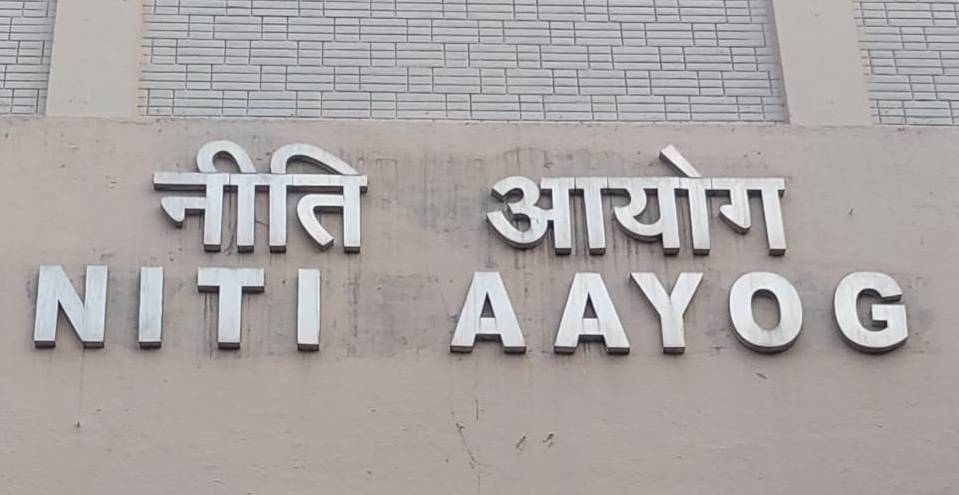
In its report ‘Health Insurance for India’s Missing Middle’, Niti Aayog has said that the expansion of health insurance or assurance coverage is a necessary step, and a pathway in India’s efforts to achieve Universal Health Coverage (UHC).
“Around 20 per cent of the population — 25 crore individuals are covered through social health insurance, and private voluntary health insurance. The remaining 30 per cent of the population is devoid of health insurance; the actual uncovered population is higher due to the existing coverage gaps in PM-JAY and overlap between schemes,” said the report.
As per the report, the ‘missing middle’ predominantly constitutes the self-employed in agriculture and non-agriculture informal sector in rural areas, and a broad array of informal occupations, semi-formal, and formal in the urban areas.
In the absence of a low-cost health insurance product, the ‘missing middle’ remains uncovered despite the ability to pay nominal premiums, said the report.
The report further suggests that a comprehensive product designed for this segment, which may be an improvement upon the existing Aarogya Sanjeevani plan and offering the patient cover, can expand the health insurance coverage.
ALSO READ: NITI Aayog finalises privatisation list
The Niti Aayog report says that most of the Indian health insurance schemes and products are not designed for the ‘missing middle’.
The private voluntary health insurance is designed for high income groups, which costs at least two to three times the affordable level for the ‘missing middle’. Affordable contributory products such as ESIC, and the government subsidised insurance, including Pradhan Mantri Jan Arogya Yojna (PM-JAY) are closed products. They are not available to the general population due to the risk of adverse selection, suggests the Niti Aayog Report.