September 10, 2021
2 mins read

UK data reform aims to boost innovation, economic growth

This can help deliver more agile, effective and efficient public services and further strengthen the UK’s position as a science and technology superpower, it said…reports Asian Lite News.

Under planned reforms announced by the Digital Secretary Oliver Dowden, the Information Commissioner’s Office (ICO) is set for an overhaul to drive greater innovation and growth in the UK’s data sector and better protect the public from major data threats.

One year on from the publication of the National Data Strategy, the government on Thursday launched a wide-ranging consultation on proposed changes to the UK’s data landscape.

As part of this, a new governance model is planned for the ICO, including an independent board and chief executive to mirror the governance structures of other regulators such as the Competition and Markets Authority (CMA), Financial Conduct Authority (FCA) and Ofcom.

This follows the selection of John Edwards as the government’s preferred candidate as the new Information Commissioner, who is currently serving as the New Zealand Privacy Commissioner.

The government said it wants to remove unnecessary barriers to responsible data use. This can help deliver more agile, effective and efficient public services and further strengthen the UK’s position as a science and technology superpower, it said.

A recent example is researchers from Moorfields Eye Hospital and the University College London Institute of Ophthalmology making a breakthrough in patient care using AI technology. The researchers successfully trained machine learning technology on thousands of historic de-personalised eye scans to identify signs of eye disease and recommend how patients should be referred for care.

This new way of using data has the potential to revolutionise the way professionals carry out eye tests. The government’s data reforms will provide clarity around the rules for the use of personal data for research purposes, laying the groundwork for more scientific and medical breakthroughs.

“Data is one of the most important resources in the world and we want our laws to be based on common sense, not box-ticking,” Digital Secretary Oliver Dowden said. “Now that we have left the EU, we have the freedom to create a new world-leading data regime that unleashes the power of data across the economy and society.”

“These reforms will keep people’s data safe and secure, while ushering in a new golden age of growth and innovation right across the UK, as we build back better from the pandemic,” he added.

The protection of people’s personal data will be at the heart of the planned data reform. Far from being a barrier to innovation or trade, regulatory certainty and high data protection standards allow businesses and consumers to thrive.

The consultation sets out plans to impose tougher penalties and fines for nuisance calls and text messages. These sanctions would be overseen by the ICO and build on government action in recent years that has included holding individual directors liable for nuisance calls made by their respective companies.

ALSO READ-UK, Switzerland ink deal to secure healthcare access

Previous Story

UK, Switzerland ink deal to secure healthcare access

Next Story

Shias demand share in Taliban Cabinet

Previous Story

UK, Switzerland ink deal to secure healthcare access

Next Story

Shias demand share in Taliban Cabinet

Latest from -Top News

Pakistan Risks Overstretching Itself in Yemen War

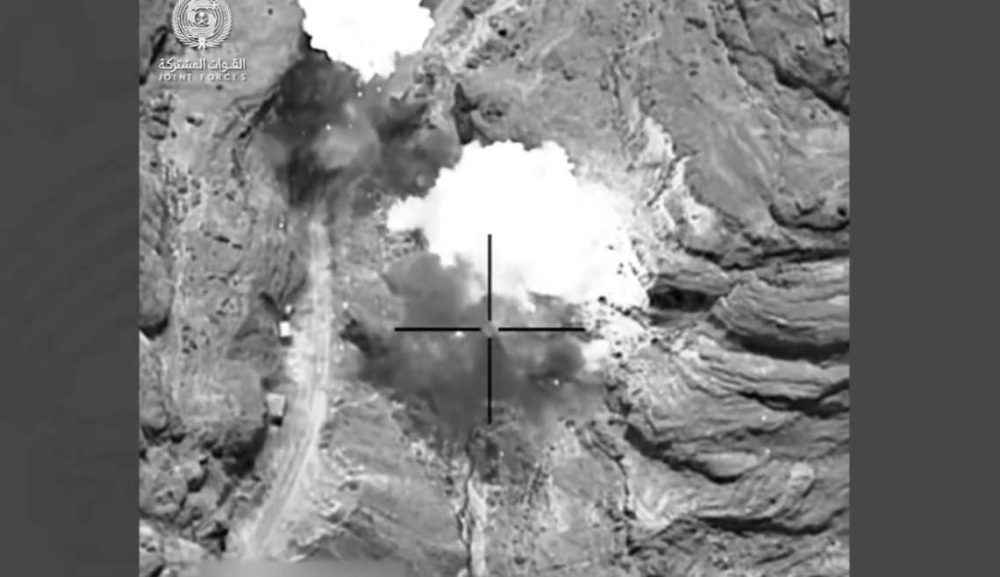
Pakistan’s expanding military role in Saudi Arabia amid the Yemen conflict could strain its defence resources and fragile finances…reports Asian Lite News Desk Pakistan’s military involvement in the war in Yemen may prove unsustainable because of mounting financial pressures and competing security demands, according to a new report. Islamabad’s growing military presence in Saudi Arabia risks stretching its defence resources while exposing the country to greater strategic and economic challenges. An article by Andrew Wilson in One World Outlook describes Pakistan’s involvement as a case of “fiscal and strategic overreach”, arguing that the country lacks the financial flexibility to sustain an expanded military commitment. Pakistan’s external finances depend heavily on an International Monetary Fund (IMF) programme, financial support from Gulf countries and remittances from Pakistani workers in the region. The report argues that deeper military involvement in the conflict could place additional pressure on these sources of financial stability. It also warns that deploying troops and military equipment abroad could weaken Pakistan’s capacity to address security challenges along its eastern border and deal with two domestic insurgencies. The move could also draw Islamabad into a conflict it has sought to approach cautiously. A Reuters report in May, citing Pakistani security and government sources, said Islamabad had deployed around 8,000 troops, a squadron of approximately 16 aircraft, mostly JF-17 fighter jets, two drone squadrons and a Chinese HQ-9 air-defence battery to Saudi Arabia. According to those sources, Riyadh was financing the deployment, with Pakistani personnel operating the equipment. The sources also said a confidential agreement contemplated the possibility of deploying up to 80,000 troops. Islamabad has not confirmed those figures, although it has acknowledged its military presence in Saudi Arabia, including the deployment of fighter jets at King Abdulaziz Air Base from April. The One World Outlook article argues that Saudi financial support can cover allowances and operating expenses but cannot easily replace military equipment needed elsewhere or resolve the political and strategic challenges of participating in the Yemen conflict. Pakistan’s defence budget is another concern. For the 2026-27 financial year, the federal government allocated PKR 3 trillion, or approximately $10.8 billion, to defence services. The allocation represents an 18 per cent increase from the original PKR 2.55 trillion provision and amounts to around 2.1 per cent of projected gross domestic product (GDP). Defence spending accounts for approximately 16 per cent of the federal government’s PKR 18.8 trillion expenditure. Military pensions are budgeted separately at PKR 822 billion, while debt servicing costs stand at approximately PKR 8 trillion, more than two-and-a-half times the defence allocation. The report argues that these competing financial obligations leave little room for additional military expenditure without placing further pressure on public finances. Pakistan’s reliance on IMF assistance also limits its fiscal flexibility. The country must meet the conditions attached to the programme, including a primary budget surplus target of 2 per cent of GDP and continued restraint on development spending. According to the article, these requirements make it difficult for Islamabad to finance an additional military commitment without compromising other budgetary priorities. Pakistan’s economic indicators offer limited reassurance. Economic growth for the 2025-26 financial year is estimated at between 3.6 and 3.7 per cent, while inflation reached approximately 10.3 per cent in September following an energy price shock. Foreign exchange reserves stood at around $21.5 billion at the end of September. Although this marks an improvement from the low levels recorded in 2023, the report notes that the reserves cover only a few months of imports. Financial assistance from Gulf partners remains central to Pakistan’s external stability. The article says Islamabad holds approximately $8 billion in Saudi deposits at its central bank. In July, the State Bank of Pakistan said Riyadh had extended the maturity of $5 billion in deposits to December 2028, easing the country’s immediate external financing requirements. A further $3 billion deposit was also extended in the spring. However, the article argues that these arrangements provide temporary relief rather than long-term financial independence, particularly as regional conflict threatens the stability of the Gulf economies on which Pakistan relies. The report concludes that Pakistan faces a difficult balance between supporting Saudi Arabia militarily and preserving the financial and military resources needed to address its domestic and regional challenges.
Go toTop

Don't Miss

Wintry weather causes school closures 

Earlier, there had been warnings for northern England and the

‘Bazball Needs Balance’

Willey said that while England’s aggressive ‘Bazball’ approach is exciting,