June 20, 2021
4 mins read

India must initiate smart moves to address Myanmar

The South-East Asia expert says that the Tatmadaw of the Myanmar military will not give up its power without extracting certain advantages…writes Rahul Kumar

The volatile situation in Myanmar, a pivotal neighbour that shares borders with India, China and South-East Asia is testing New Delhi’s capacity to safeguard its short and long-term interests, without falling into the trap of either populism or crass opportunism.

Can India play a constructive role in resolving the acute problems that Myanmar is facing after the February 1 military coup? The elected government led by Aung San Suu Kyi has been ousted. Despite the army’s iron fisted rule, the country totters on the brink of civil war. This current situation therefore bears ill of India’s core interests.

There is an argument that India should take a clear position, stand with the “democratic forces” and take on the military head-on. In a guest editorial, The Irrawaddy says that this is the right time for India to step in and help solve the Myanmar crisis. The editorial observes: “India’s ambiguous stand on the Myanmar coup has left many foreign policy analysts perplexed. Being the world’s largest democracy and a neighbour, it should stop procrastinating and initiate some smart diplomatic moves given that the military chief continues to maintain good relations with the government of Indian Prime Minister Narendra Modi.”
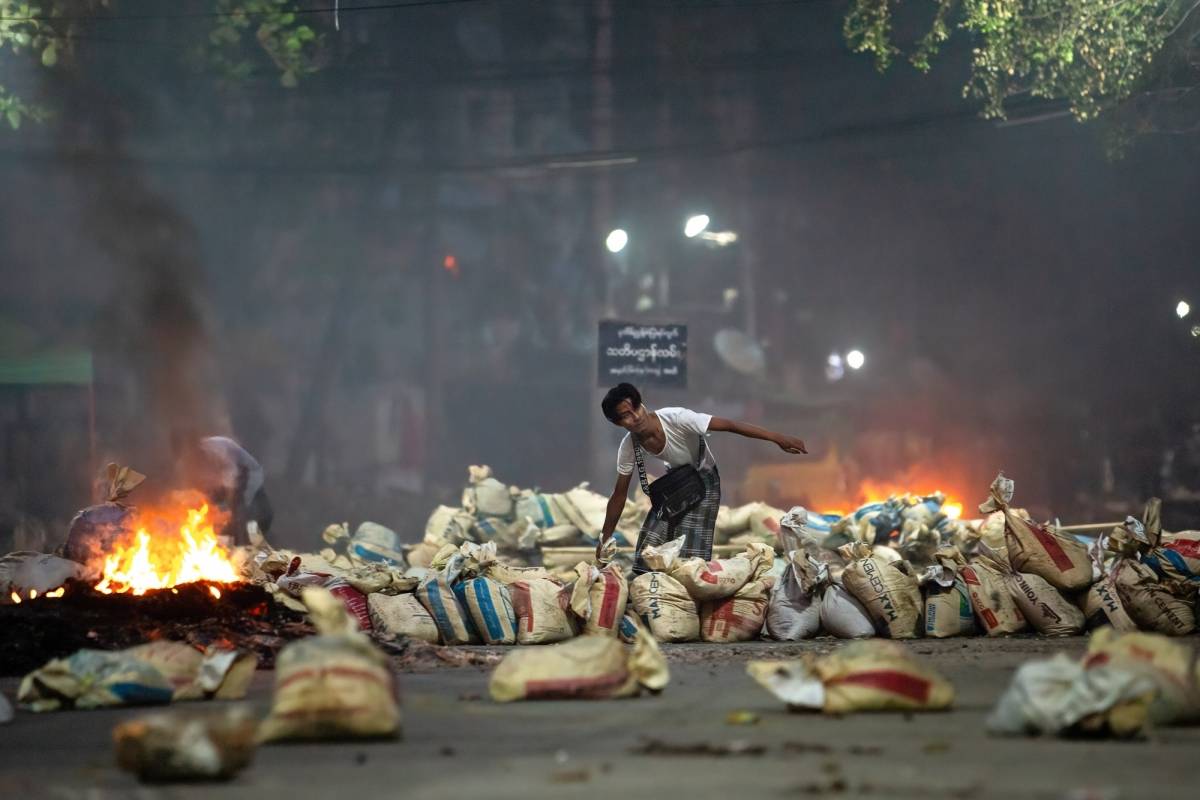
A demonstrator stacks bags on a street as a barricade during a demonstration against the military coup and the detention of civilian leaders in Myanmar(ians)

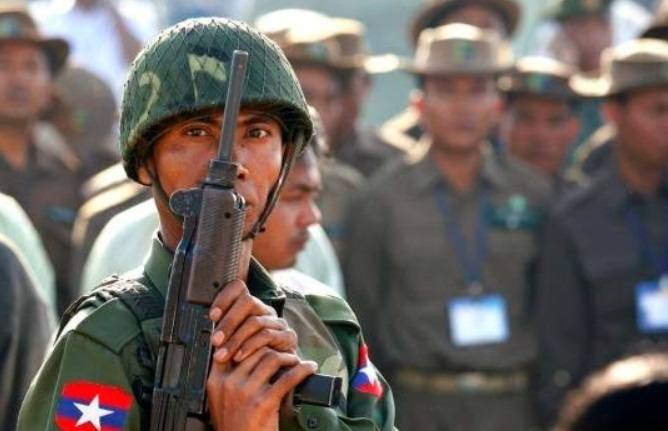
Highlighting the upward trend in relations between India and the Myanmar Army, called the Tatmadaw in Myanmarese, the article says that India had given a diesel submarine�the first for Myanmar�to the Navy; the Myanmarese forces have been cooperating with India in handing over the North-East rebels and the two forces have been holding military exercises and joint surveillance.

But can India take clear sides, and would that help? Or, instead, is there a creative third way where India neither sacrifices principle nor prudence in dealing with the situation? Some analysts are of the view that it may not be wise for India to go solo in its diplomatic engagement with Myanmar. Bonding with the 10-nation ASEAN and other stakeholders such as Japan and South Korea may be a better option.

ALSO READ: India abstains from vote on UNGA’s Myanmar resolution

“Despite good relations with both sides in Myanmar, India alone may not have that much leverage with its neighbour. Myanmar is a South-East country and its identity lies with the Association of Southeast Asian Nations (ASEAN). India can join hands with ASEAN, Japan and South Korea�all of who pull leverage in Myanmar�and persuade the army chief to give and take”, Prof. Baladas Ghoshal, former chairman of the Centre for South and Southeast Asian Studies, JNU, and former General Secretary at the Society for Indian Ocean Studies told India Narrative.

The South-East Asia expert says that the Tatmadaw of the Myanmar military will not give up its power without extracting certain advantages. “India and ASEAN will have to meet both parties. A compromise has to be worked out where the army accepts the elections and allows Suu Kyi to rule. The army itself will handle ministries like Defence, Interior and Border Affairs. After their compromise, the two sides will not touch the constitution.”

Strategically Myanmar occupies a vital position, and also the support of democracies like India, Japan, South Korea, which can help it transform its governance. Also, it has enormous resources and can learn from and replicate the experience of ASEAN nations to become “one of the tigers”.
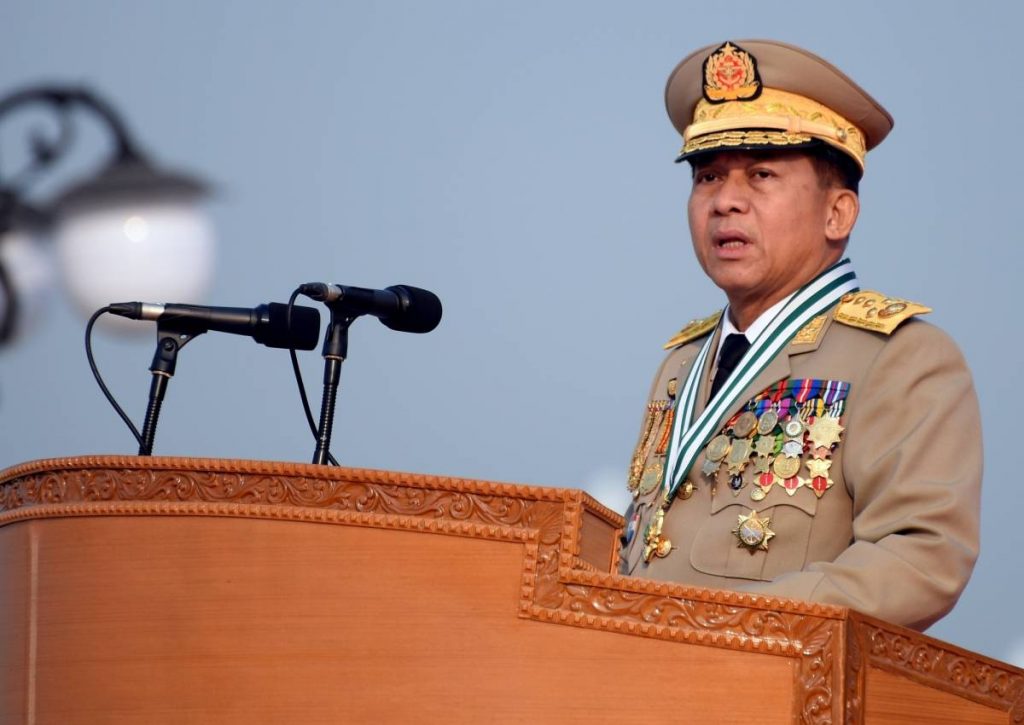
In a candid interview, Myanmar’s highly nationalistic army has admitted that it still cannot fully control the country more than three months after the coup. The Irrawaddy reported that Senior General Min Aung Hlaing told the Hong Kong-based Phoenix Television on May 20 that he had not expected such strong and continuous resistance from the pro-democracy group. The general admitted that he had “expected an emotional reaction” but not such a sustained anti-coup campaign.

The question before all the parties is�how to get out of this impasse?

ASEAN made an effort to resolve the Myanmar crisis after the world shone an unforgiving spotlight on the grouping. After an initial tepid response to the military coup, ASEAN envoys started talks with General Hlaing�the architect of the coup and have called for the release of political prisoners. However, ASEAN came in for condemnation for speaking only with the military and not the anti-coup National Unity Government (NUG).

“The only way out of the current situation is if India, Japan, South Korea and the ASEAN countries chip in together and persuade Myanmar’s warring parties to accept a compromise where both sides show flexibility and the resolution is Myanmar-owned”, says Ghoshal. The initiative will also dock well with India’s Act East policy, which has a deeper engagement with the ASEAN at its heart.

(This content is being carried under an arrangement with indianarrative.com)

ALSO READ: Azhar, Saeed, Lakhvi among India’s top 31 wanted terrorists
Previous Story

Azhar, Saeed, Lakhvi among India’s top 31 wanted terrorists
Next Story

‘Pak and transnational terror links matter of concern’

Previous Story

Azhar, Saeed, Lakhvi among India’s top 31 wanted terrorists
Next Story

‘Pak and transnational terror links matter of concern’

Latest from -Top News

Pakistan Risks Overstretching Itself in Yemen War

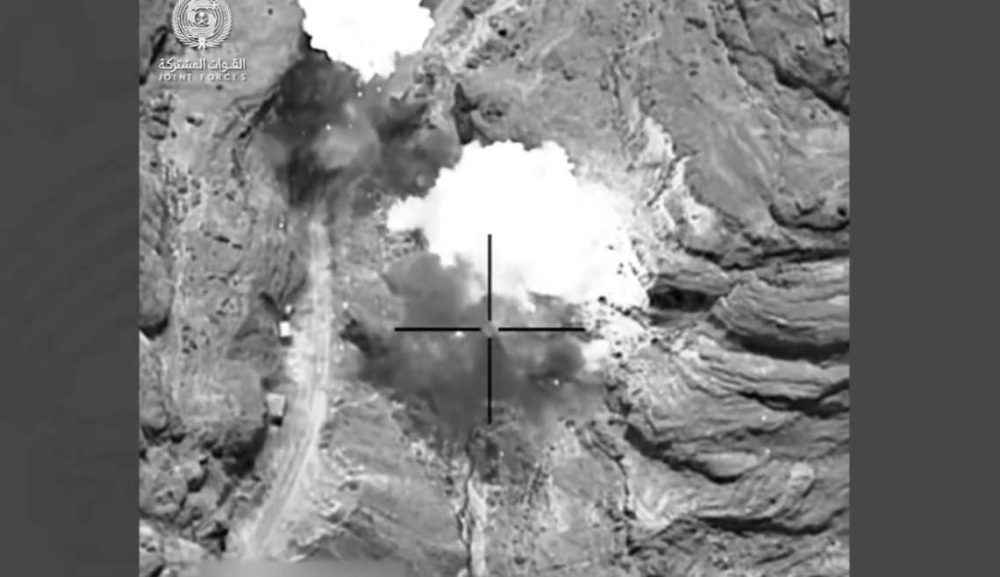
Pakistan’s expanding military role in Saudi Arabia amid the Yemen conflict could strain its defence resources and fragile finances…reports Asian Lite News Desk Pakistan’s military involvement in the war in Yemen may prove unsustainable because of mounting financial pressures and competing security demands, according to a new report. Islamabad’s growing military presence in Saudi Arabia risks stretching its defence resources while exposing the country to greater strategic and economic challenges. An article by Andrew Wilson in One World Outlook describes Pakistan’s involvement as a case of “fiscal and strategic overreach”, arguing that the country lacks the financial flexibility to sustain an expanded military commitment. Pakistan’s external finances depend heavily on an International Monetary Fund (IMF) programme, financial support from Gulf countries and remittances from Pakistani workers in the region. The report argues that deeper military involvement in the conflict could place additional pressure on these sources of financial stability. It also warns that deploying troops and military equipment abroad could weaken Pakistan’s capacity to address security challenges along its eastern border and deal with two domestic insurgencies. The move could also draw Islamabad into a conflict it has sought to approach cautiously. A Reuters report in May, citing Pakistani security and government sources, said Islamabad had deployed around 8,000 troops, a squadron of approximately 16 aircraft, mostly JF-17 fighter jets, two drone squadrons and a Chinese HQ-9 air-defence battery to Saudi Arabia. According to those sources, Riyadh was financing the deployment, with Pakistani personnel operating the equipment. The sources also said a confidential agreement contemplated the possibility of deploying up to 80,000 troops. Islamabad has not confirmed those figures, although it has acknowledged its military presence in Saudi Arabia, including the deployment of fighter jets at King Abdulaziz Air Base from April. The One World Outlook article argues that Saudi financial support can cover allowances and operating expenses but cannot easily replace military equipment needed elsewhere or resolve the political and strategic challenges of participating in the Yemen conflict. Pakistan’s defence budget is another concern. For the 2026-27 financial year, the federal government allocated PKR 3 trillion, or approximately $10.8 billion, to defence services. The allocation represents an 18 per cent increase from the original PKR 2.55 trillion provision and amounts to around 2.1 per cent of projected gross domestic product (GDP). Defence spending accounts for approximately 16 per cent of the federal government’s PKR 18.8 trillion expenditure. Military pensions are budgeted separately at PKR 822 billion, while debt servicing costs stand at approximately PKR 8 trillion, more than two-and-a-half times the defence allocation. The report argues that these competing financial obligations leave little room for additional military expenditure without placing further pressure on public finances. Pakistan’s reliance on IMF assistance also limits its fiscal flexibility. The country must meet the conditions attached to the programme, including a primary budget surplus target of 2 per cent of GDP and continued restraint on development spending. According to the article, these requirements make it difficult for Islamabad to finance an additional military commitment without compromising other budgetary priorities. Pakistan’s economic indicators offer limited reassurance. Economic growth for the 2025-26 financial year is estimated at between 3.6 and 3.7 per cent, while inflation reached approximately 10.3 per cent in September following an energy price shock. Foreign exchange reserves stood at around $21.5 billion at the end of September. Although this marks an improvement from the low levels recorded in 2023, the report notes that the reserves cover only a few months of imports. Financial assistance from Gulf partners remains central to Pakistan’s external stability. The article says Islamabad holds approximately $8 billion in Saudi deposits at its central bank. In July, the State Bank of Pakistan said Riyadh had extended the maturity of $5 billion in deposits to December 2028, easing the country’s immediate external financing requirements. A further $3 billion deposit was also extended in the spring. However, the article argues that these arrangements provide temporary relief rather than long-term financial independence, particularly as regional conflict threatens the stability of the Gulf economies on which Pakistan relies. The report concludes that Pakistan faces a difficult balance between supporting Saudi Arabia militarily and preserving the financial and military resources needed to address its domestic and regional challenges.
Go toTop

Don't Miss

Is India really shining?

The Kotak Securities Ltd in its report said no country

Indonesia Urges ASEAN Unity on Myanmar Issue

ASEAN assessed that there is no will from Myanmar’s junta