October 4, 2021
5 mins read

Boris eyes post-Covid economy as UK Conservatives meet

Prime Minister Boris Johnson says he’s ready to take “bold decisions” to rebuild the economy after the coronavirus pandemic, reports Asian Lite News

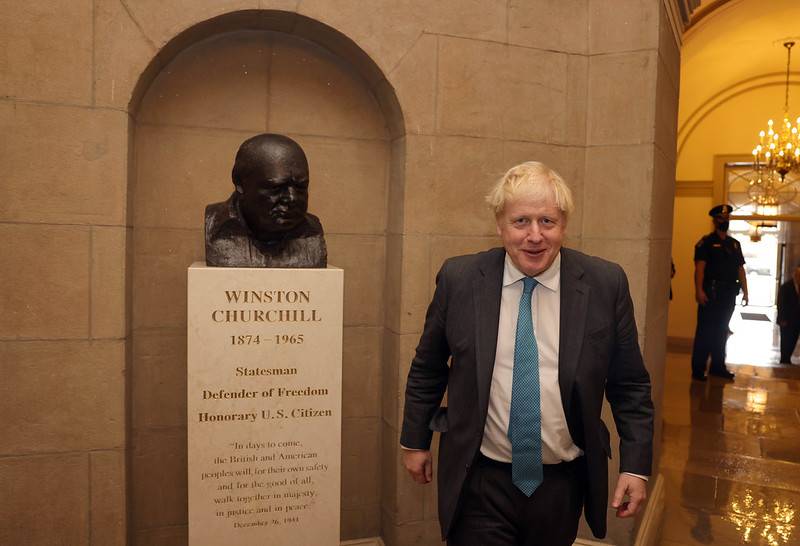
Prime Minister Boris Johnson said he was ready to take “bold decisions” to rebuild the economy after the coronavirus pandemic as his Conservative Party met Sunday for its first annual conference since 2019.

The Tory conference opened Sunday in the northwestern city of Manchester as a shortage of truck drivers to delivery fuel across Britain continues to cause empty pumps and long lines at many gas stations. Concerns about wider labor shortages in Britain, along with higher taxes, rising energy bills and a cut in welfare payouts beginning this week, are among other challenges facing Johnson.

Johnson argued that Britain’s economy is simply going through a post-Brexit “period of adjustment” after leaving the European Union, and said supply chain problems and shortages in food and fuel could continue until Christmas.

Despite the economic worries, opinion surveys suggest that Johnson and his Conservatives were polling ahead of the opposition Labour Party.

Before the conference, Johnson said he was ready to take the “big, bold decisions on the priorities people care about, like on social care, on supporting jobs, on climate change, tackling crime and leveling up.”

Asked about the truck driver shortage crisis, Johnson said it was a “chronic problem” associated with an over-reliance on migrant workers who were willing to work for low wages and poor conditions. He said he wouldn’t repeat that mistake.

“The way forward for our country is not to just pull the big lever marked uncontrolled immigration, and allow in huge numbers of people to do work,” he told the BBC.

Referring to the 2016 referendum that led to Britain’s exit from the EU, Johnson said: “When people voted for change in 2016 … they voted for the end of a broken model of the U.K. economy that relied on low wages and low skills and chronic low productivity. And we’re moving away from that.”

He maintained that the situation at gas stations is improving after more than a week of disruptions,  although retailers say drivers still can’t get gas at many pumps in the London area and southeast England.

Britain has long suffered from a shortage of truck drivers, but the problem has come to a head with the combination of Brexit, which ended workers’ freedom of movement from the EU to Britain, and the pandemic, which severely limited travel and halted training for new domestic drivers who weres upposed to replace those who left for their home countries due to Brexit.

Brexit and Covid-19 have also exacerbated existing labour shortages across a wide range of industries from hospitality to construction and the food industry.

Around 200 military personnel, including 100 drivers, will take to the roads starting Monday to help ease fuel supply shortages.

The Petrol Retailers Association has welcomed the move, but warned it would have a limited impact given the relatively small numbers involved. The organization’s chair, Brian Madderson, said Sunday that while the crisis was “virtually at an end” in Scotland and northern England, more than one in five stations in London and southeastern England were still out of fuel.

The government also said Friday it was extending an emergency visa program that seeks to bring in thousands of foreign truck drivers.

Marshalled by a large police deployment in Manchester, more than 2,000 protesters rallied against the Conservatives on the opening day of their conference Sunday.

Channelling Churchill

One anti-Brexit protest banner paraphrased a famous speech by Winston Churchill, Britain’s World War II leader – and Johnson’s political hero.

“Never has so much been destroyed for so many by so few #Brexit,” it read.

But anger persists in some quarters at his handling of the pandemic and a death toll of more than 136,000, as well as claims of cronyism benefiting Conservative donors for Covid contracts.

On Brexit, he has angered Brussels by threatening to shelve problematic new trading arrangements for Northern Ireland, and tensions are high with France over fishing rights.

Last week, opposition Labour leader Keir Starmer attacked Johnson as a Brexit-obsessed showman without a plan, even if his popularity remains relatively high with the public.

“We have a fuel crisis, a pay crisis, a goods crisis, and a cost of living crisis, all at the same time,” Starmer told his own party conference.

Women’s safety

Johnson meanwhile faces an outcry over the murder of Sarah Everard by London Metropolitan Police officer Wayne Couzens.

The 33-year-old marketing executive’s abduction in south London in March triggered nationwide anguish and debate about the safety of women and girls.

Couzens, 48, was on Thursday jailed for the rest of his life after falsely arresting Everard on the pretence she had broken coronavirus restrictions, before raping and murdering her.

Over the weekend, the Met confirmed that Couzens had been approved for armed patrols of parliament on five occasions last year.

The London force – Britain’s biggest – has been widely panned for advising women to flag down a passing bus if they are stopped by an officer they do not trust.

However, Johnson backed that advice in the BBC interview.

“My view is that the police do – overwhelmingly – a wonderful job,” he said, calling on “women of all ages to trust the police”. 

ALSO READ-Miliband says Boris is miles off UN climate success

READ MORE-Boris calls on rich nations to meet $100bn climate pledge

Previous Story

Floral tributes, peace march mark Gandhi Jayanti in London

Next Story

Tony Blair, King of Jordan, Czech PM figure in Pandora Papers

Previous Story

Floral tributes, peace march mark Gandhi Jayanti in London

Next Story

Tony Blair, King of Jordan, Czech PM figure in Pandora Papers

Latest from -Top News

Pakistan Risks Overstretching Itself in Yemen War

Pakistan’s expanding military role in Saudi Arabia amid the Yemen conflict could strain its defence resources and fragile finances…reports Asian Lite News Desk Pakistan’s military involvement in the war in Yemen may prove unsustainable because of mounting financial pressures and competing security demands, according to a new report. Islamabad’s growing military presence in Saudi Arabia risks stretching its defence resources while exposing the country to greater strategic and economic challenges. An article by Andrew Wilson in One World Outlook describes Pakistan’s involvement as a case of “fiscal and strategic overreach”, arguing that the country lacks the financial flexibility to sustain an expanded military commitment. Pakistan’s external finances depend heavily on an International Monetary Fund (IMF) programme, financial support from Gulf countries and remittances from Pakistani workers in the region. The report argues that deeper military involvement in the conflict could place additional pressure on these sources of financial stability. It also warns that deploying troops and military equipment abroad could weaken Pakistan’s capacity to address security challenges along its eastern border and deal with two domestic insurgencies. The move could also draw Islamabad into a conflict it has sought to approach cautiously. A Reuters report in May, citing Pakistani security and government sources, said Islamabad had deployed around 8,000 troops, a squadron of approximately 16 aircraft, mostly JF-17 fighter jets, two drone squadrons and a Chinese HQ-9 air-defence battery to Saudi Arabia. According to those sources, Riyadh was financing the deployment, with Pakistani personnel operating the equipment. The sources also said a confidential agreement contemplated the possibility of deploying up to 80,000 troops. Islamabad has not confirmed those figures, although it has acknowledged its military presence in Saudi Arabia, including the deployment of fighter jets at King Abdulaziz Air Base from April. The One World Outlook article argues that Saudi financial support can cover allowances and operating expenses but cannot easily replace military equipment needed elsewhere or resolve the political and strategic challenges of participating in the Yemen conflict. Pakistan’s defence budget is another concern. For the 2026-27 financial year, the federal government allocated PKR 3 trillion, or approximately $10.8 billion, to defence services. The allocation represents an 18 per cent increase from the original PKR 2.55 trillion provision and amounts to around 2.1 per cent of projected gross domestic product (GDP). Defence spending accounts for approximately 16 per cent of the federal government’s PKR 18.8 trillion expenditure. Military pensions are budgeted separately at PKR 822 billion, while debt servicing costs stand at approximately PKR 8 trillion, more than two-and-a-half times the defence allocation. The report argues that these competing financial obligations leave little room for additional military expenditure without placing further pressure on public finances. Pakistan’s reliance on IMF assistance also limits its fiscal flexibility. The country must meet the conditions attached to the programme, including a primary budget surplus target of 2 per cent of GDP and continued restraint on development spending. According to the article, these requirements make it difficult for Islamabad to finance an additional military commitment without compromising other budgetary priorities. Pakistan’s economic indicators offer limited reassurance. Economic growth for the 2025-26 financial year is estimated at between 3.6 and 3.7 per cent, while inflation reached approximately 10.3 per cent in September following an energy price shock. Foreign exchange reserves stood at around $21.5 billion at the end of September. Although this marks an improvement from the low levels recorded in 2023, the report notes that the reserves cover only a few months of imports. Financial assistance from Gulf partners remains central to Pakistan’s external stability. The article says Islamabad holds approximately $8 billion in Saudi deposits at its central bank. In July, the State Bank of Pakistan said Riyadh had extended the maturity of $5 billion in deposits to December 2028, easing the country’s immediate external financing requirements. A further $3 billion deposit was also extended in the spring. However, the article argues that these arrangements provide temporary relief rather than long-term financial independence, particularly as regional conflict threatens the stability of the Gulf economies on which Pakistan relies. The report concludes that Pakistan faces a difficult balance between supporting Saudi Arabia militarily and preserving the financial and military resources needed to address its domestic and regional challenges.
Go toTop

Don't Miss

Starmer Pledges ‘Country Before Party’ in UK Polls

Taking to X, the Labour Party leader said, “Every single

UK, US sanction senior Houthis  

The Houthi attacks have disrupted global shipping and stoked fears