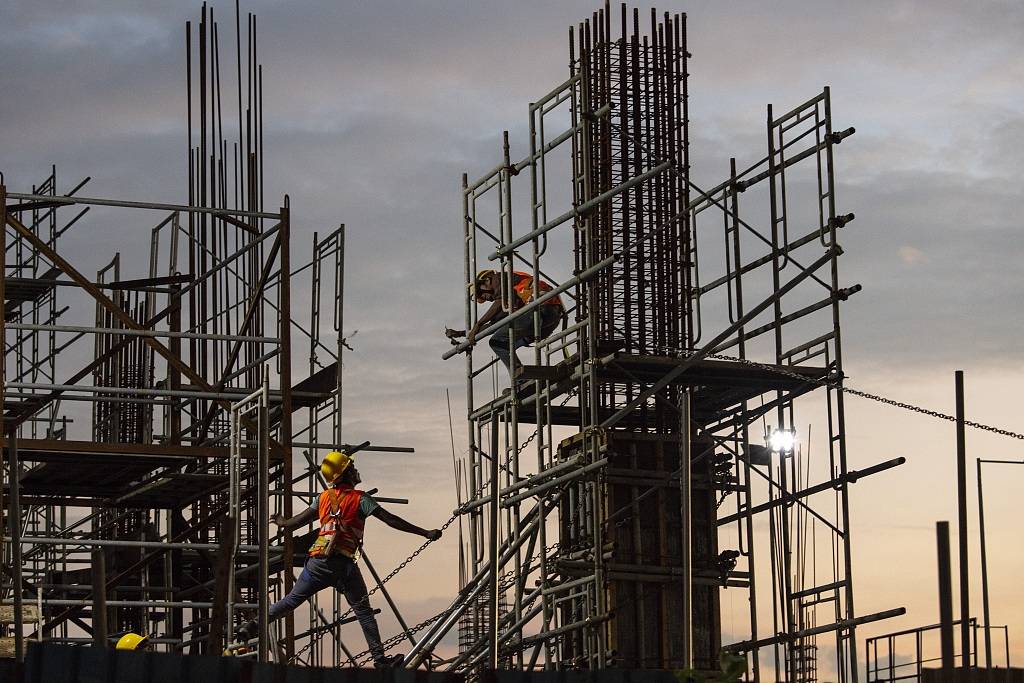
The Survey said that amidst initial Covid-19 restrictions, not only did construction of new houses slow down, but launch of new housing projects also got delayed and with the loss of income…reports Asian Lite News
Demand and supply of the residential housing sector was affected by Covid-19-induced restrictions, the Economic Survey 2021-22, tabled in the Parliament on Monday, said.
It revealed that the number of unsold residential units have also witnessed significant drops during the second wave of the pandemic.
According to the Survey, the decline in housing transactions have also been much less during the second wave of Covid than during the first wave.
“During first Covid-19 wave, housing transactions declined in almost all selected cities. However, during the second wave of Covid-19, the housing transactions in many cities such as Mumbai, Thane, Pune, Noida, Hyderabad, and Bengaluru increased relative to the pre-pandemic levels. In cities such as Gandhinagar, Ahmedabad, Chennai, Ranchi, Delhi and Kolkata, the housing transactions declined during the second Covid-19 wave over the pre-pandemic levels. However, this decline has been much less than the decline during the first Covid-19 wave,” it said.

The Survey said that amidst initial Covid-19 restrictions, not only did construction of new houses slow down, but launch of new housing projects also got delayed and with the loss of income, uncertainty about future income, and stay at home orders, home buyers delayed their housing purchases.
“After the initial Covid-19 induced restrictions were removed, transactions in housing properties increased significantly, possibly because of pent-up demand and improvement in affordability in response to measures taken by government during the pandemic, such as lower interest rates, reduction in circle rates, and cut in stamp duties, that made houses affordable to buyers,” it said.
It noted that several major banks, mortgage companies, and housing finance companies have significantly reduced their interest rates on home loans, that fueled the revival in housing demand.
“During second Covid-19 wave (April-June, 2021), transactions of housing properties were once again impacted adversely, but not as much as it was seen during the first Covid-19 wave (April-June, 2020),” it said.
The response of housing transactions to Covid-19 shock is much higher than the response of housing prices, it said, noting that this implies that shocks to housing sector adjust more through changes in transactions than prices.
As price response remains relatively lower than the response of transactions, therefore, transactions are better indicator to gauge sentiments in the housing market, the Survey said.

While house transactions mostly declined during the Covid-19 shocks, their prices did not fall in most of the selected cities, and some even increased.
The Survey also reveals that unlike the decline in quarterly housing transactions during first and second Covid-19 waves, the impact of the Covid-19 shock on the prices of residential properties was not uniform across the cities.
During the first wave, prices increased in cities such as Gandhinagar, Ahmedabad, Hyderabad, Thane, Mumbai, Kolkata, Pune, and Bengaluru over the pre-pandemic level, but decreased in Delhi, Noida and Ranchi.
Similar trends were also visible during the second Covid-19 wave over the pre-pandemic level.
The housing prices in cities such as Ahmedabad, Hyderabad, Gandhinagar and Ranchi continued to increase despite the Covid-19 shocks.
“Between two Covid-19 waves, from June 2020 to April 2021, housing transactions recovered swiftly, as quarterly purchases crossed even the pre-pandemic levels for all the selected cities. This boost in housing demand is possibly because of pent up demand and measures taken by the government to increase affordability. The number of unsold residential units have also witnessed significant drops during the second wave of the pandemic,” it said.