India is the world’s second-largest consumer and number one importer of vegetable oil, and it meets 55-60 per cent of its need through imports….reports Asian Lite News
Huge reliance on edible oil imports could compromise India’s national interest in the long run, said rating and research firm CareEdge in a report, adding that it has now become imperative for the country to become not only self-reliant but also self-sufficient to the best extent possible via ‘Atmanirbhar Bharat’ initiative.
In a report titled ‘India’s Bid to Reduce Imports and Become ‘Atmanirbhar’, it said self-sufficiency is economically prudent as well as strategically sensible.
“The recent geopolitical crisis (in Ukraine is) causing restrictions in the import of edible oils, such as sunflower oil, adverse measures taken by major edible oil-exporting countries relating to the export of palm oil, increasing diversion towards bio-fuels are major challenges to an edible oil-importing country like India,” the report said.
Thus, it is desirable to increase domestic oil seeds production to reduce import dependency in an uncertain geopolitical environment amid the increasing “de-globalization” trend across the world”, it added.
India is the world’s second-largest consumer and number one importer of vegetable oil, and it meets 55-60 per cent of its need through imports. Although the oilseed production in India has grown over the years, the production has lagged its consumption, resulting in continuous dependence on imports.
Accordingly, the shares of imported edible oil as a percentage of the total domestic edible oil consumption has increased from 52 per cent in FY14 to 63 per cent in FY16 before reducing to 55 per cent in FY21.
The import bill of vegetable oil witnessed an increase of around 21 per cent in 2020-21 over 2019-20, which further increased by 63 per cent in FY22 over FY21, despite a decline in the import volume, attributable to an increase in the prices of oil in the international market coupled with depreciation in Indian currency, the report mentioned.
“This led to the outflow of valuable foreign currency and ‘import of inflation’,” it opined.
Relatively low growth in the area under cultivation or acreage and a stagnant crop yield were the major reasons for stagnant edible oilseed output in the country.
On the other hand, world oil seeds production increased from 447 million tonne in FY12 to 607 million tonne in FY21, which is almost 1.5 times India’s growth.
“Subdued growth of oil seeds production in India (effectively low yield per ha) can also be attributed to the lower level of mechanisation of farming, as several studies suggest a direct correlation between farm mechanisation and crop productivity as the use of improved implements has the potential to increase productivity and reduce the cost of cultivation.”
Lately, to bridge the gap, the government of India launched National Mission on Edible Oils as a centrally-sponsored scheme, being implemented jointly by the central and state governments with a special focus in the northeast region and the Andaman and Nicobar Islands.
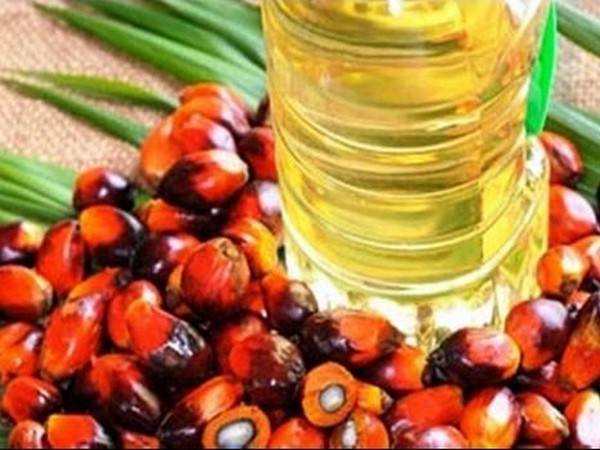
The Centre intends to cover an additional area of 6.5 lakh hectares for oil palm by the year 2025-26 and thereby reaching the target of 10 lakh hectares ultimately.
The production of crude palm oil is expected to increase to 11.20 lakh tonne by 2025-26 and to 28 lakh tonne by 2029-30, the research report further said. (ANI)