October 4, 2022
2 mins read

Bangladesh’s growing internet usage carries new risk of extremism

The surge in Internet usage and online communication during the Covid-19 pandemic has only helped the global terror outfits, which have used the medium to the fullest to spread their radical messages…writes MAHUA VENKATESH

Bangladesh is looking to tighten its security measures in the cyber space to address the hydra headed problem of radicalism. While the South Asian nation has not witnessed any major incidents of violence since the gruesome Holy Artisan Bakery incident in 2016, authorities said that threats are on the rise with the world opening up in the post Covid phase.

The surge in Internet usage and online communication during the Covid-19 pandemic has only helped the global terror outfits, which have used the medium to the fullest to spread their radical messages, finance their arms in different regions and even recruit.

Shafqat Munir, head of Bangladesh Centre for Terrorism Research and senior research fellow at Bangladesh Institute of Peace and Security Studies has recently said that there has been a fresh “recruitment and reconsolidation drive by these groups.”

The United States Institute of Peace (USIP) in a report published in June highlighted that despite the decline in the number of terrorist incidents since 2016, Islamist groups continue to operate, recruit, and carry out small-scale attacks while aspiring to perpetrate greater violence.

“Radical elements – not just in Bangladesh but even in India – continue to play an active role and their main aim is to destabilise the situation especially at this crucial juncture when the South Asian region needs better cooperation and connectivity to revive economic growth after being jolted by the (Covid) pandemic,” said Ishfaq Ilahi Choudhury, retired Air Force Officer in Bangladesh, who is now a geopolitical analyst.

Sources said that the countries in the region must have a joint action plan and information sharing mechanism to be able to address the issue.

Recently, Major General (Retd) ANM Muniruzzaman, President of Bangladesh Institute of Peace and Security Studies (BIPSS) has also underlined the need to put in place a well chalked out comprehensive strategy to fight extremist elements in the country.

“It is very important for us to remember that the absence of a successful terror attack does not mean the absence of terrorism, there is no substitute for vigilance and preparedness. We must be prepared at all times to counter the threat of terrorism and violent extremism. Society has a big role to play in this,” Dhaka-based Business Standard quoted Munir, head of Bangladesh Centre for Terrorism Research and senior research fellow at Bangladesh Institute of Peace and Security Studies as saying.

(The content is being carried under an arrangement with indianarrative.com)

ALSO READ: India, Bangladesh Envoys Celebrate Durga Puja in London

Previous Story

Its not at all traditional anymore

Next Story

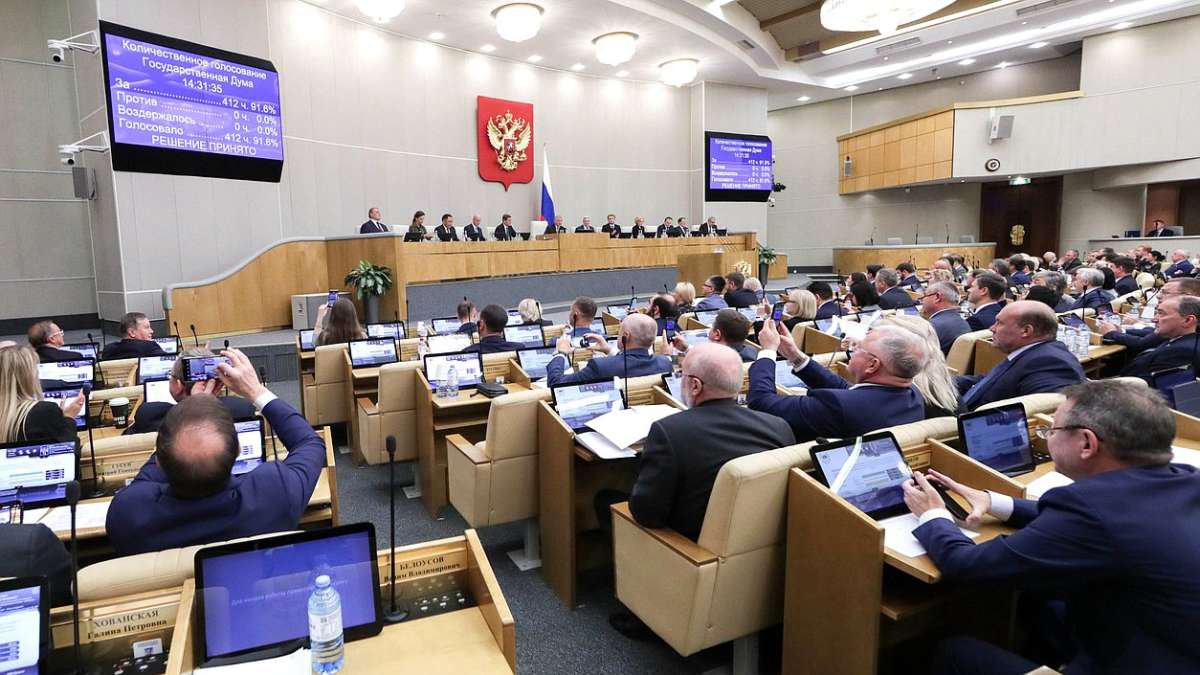
Russian lawmakers ratify annexation of 4 Ukrainian regions

Previous Story

Its not at all traditional anymore

Next Story

Russian lawmakers ratify annexation of 4 Ukrainian regions

Latest from -Top News

Nepal Floods Cause $1.66 Billion In Damage, Says World Bank

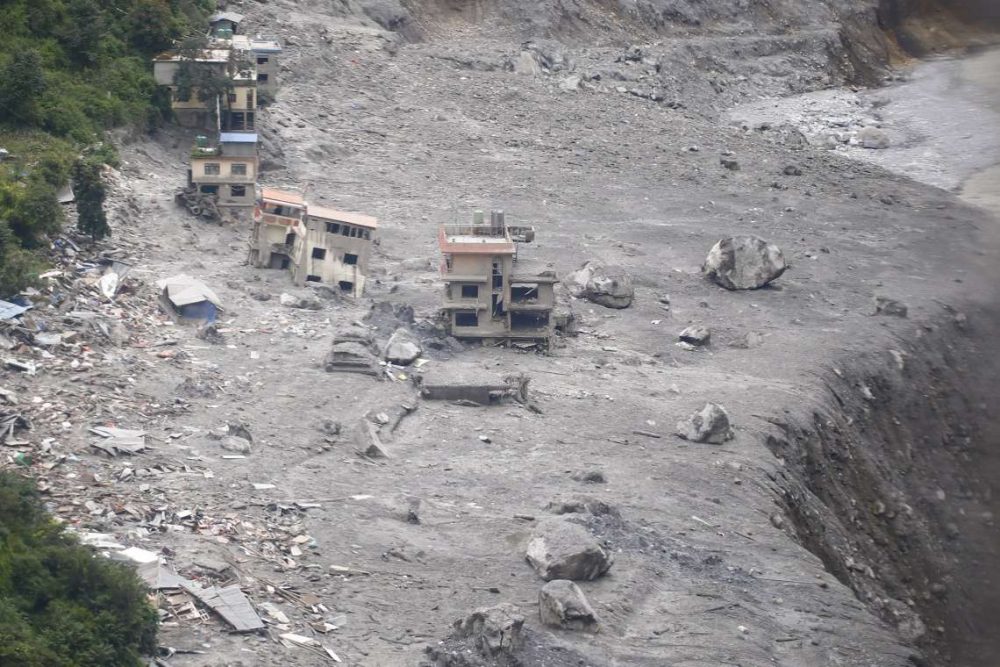
Nepal’s August 2026 floods caused an estimated US$1.66 billion in direct physical damage, with infrastructure accounting for 83 per cent of the total…reports Asian Lite News Desk Nepal’s devastating floods in August 2026 caused an estimated US$1.66 billion in direct physical damage, with infrastructure accounting for 83 per cent of the total, according to a World Bank report. The estimate, included in the World Bank’s Nepal Development Update unveiled this week, is close to the Nepal government’s preliminary Rapid Damage and Needs Assessment (RDNA), which put physical damage at US$1.81 billion. The government’s assessment also estimated losses beyond physical assets at US$883.32 million, taking the total economic effects of the disaster to approximately US$2.7 billion. The World Bank’s Global Rapid Post-Disaster Damage Estimation (GRADE) found that infrastructure suffered the greatest damage, estimated at US$1.38 billion, or 83 per cent of the total. Residential buildings accounted for US$185 million, or 11 per cent, while non-residential buildings sustained damage worth US$101 million, or 6 per cent. The floods along the Bhotekoshi and Trishuli rivers caused extensive damage to hydropower projects, solar energy facilities, electricity transmission infrastructure and transport networks. The energy sector, particularly hydropower, was among the worst affected. The August 2026 floods affected 12 hydropower projects and one solar project, involving 281.1 MW of operational capacity and 395.02 MW of capacity under construction. Damage to transmission lines and substations also disrupted the transmission of 149.6 MW of electricity to the national grid. The total affected capacity reached approximately 430.7 MW, equivalent to 10.6 per cent of Nepal’s installed hydropower and solar capacity at the end of fiscal year 2025-26, which concluded in mid-July. The disaster also severely damaged transport infrastructure along the 82-km Rasuwa trade corridor, which connects Kathmandu with the Rasuwagadhi border point with China. More than 55 km of the corridor was damaged, including 40 km that was completely destroyed. The floods also damaged 37 motorable bridges and 68 suspension bridges. The disaster resulted in significant human losses along the affected corridor and beyond. According to Nepal’s National Disaster Risk Reduction and Management Authority, 1,455 people had been confirmed dead, while 5,285 remained missing following the disaster. The World Bank report found that the physical damage was concentrated in three districts in central Nepal: Rasuwa, Nuwakot and Dhading. Rasuwa was the worst-affected district, accounting for US$1.07 billion, or 64 per cent, of the total direct damage. Nuwakot recorded an estimated US$551 million in damage, while Dhading suffered approximately US$39 million. “The findings highlight the concentration of physical damage in a small number of districts and the disproportionate impact on infrastructure, underscoring the scale of the reconstruction challenge facing the affected areas,” the World Bank said. The global development financier said the floods had demonstrated the scale and complexity of disaster risks in Nepal’s Himalayan environment. The event also showed how a single extreme weather event could trigger cascading impacts across sectors and geographical areas. The report said recovery efforts should extend beyond restoring infrastructure to its pre-disaster condition. While the principle of “Build Back Better” remained relevant, the World Bank stressed that rebuilding infrastructure to higher engineering standards in the same locations might not always be sufficient. “In some cases, simply rebuilding the same infrastructure in the same location to a higher engineering standard may not be sufficient. Nepal may need to build differently — based on a better understanding of risk, more careful decisions about location and design, greater redundancy in critical networks, stronger monitoring and early warning, and a more integrated approach to infrastructure development in the Himalayas,” the report said. The World Bank said Nepal’s recovery strategy should incorporate improved risk assessment, more informed infrastructure planning, stronger monitoring systems and better early warning mechanisms. The report emphasised that reconstruction should not only restore damaged assets but also reduce the impact of future disasters, particularly in the country’s vulnerable Himalayan regions.

Vaccine Delays Fuel Bangladesh Measles Outbreak

More than 32,000 suspected cases and over 250 deaths have been reported since mid-March, with children making up most of the fatalities….reports Asian Lite News Desk Bangladesh’s measles outbreak has intensified, with

Tsai: Stand With Taiwan, Strengthen The Indo-Pacific

The former president said stronger international partnerships would help Taiwan withstand mounting military, cyber and economic pressure while reinforcing democratic resilience….repots Asian Lite News Desk Former Taiwan President Tsai Ing-wen has called
Go toTop

Don't Miss

India Reminds World of Pakistan’s 1971 Crimes

The reminder of Pakistan’s atrocities in Bangladesh came as the

Proteas Triumph in New York T20 Drama

No team had ever successfully defended a total as low