February 13, 2022
3 mins read

China gives conditional nod to Pfizer Covid pill

According to the administration, patients should take the medicine as prescribed by the doctors and pay close attention to drug interactions….reports Asian Lite News

China’s drug regulator has granted conditional approval for the imports of Pfizer’s Paxlovid COVID-19 pill.

The pill is a small-molecule oral drug, a co-package of antiviral drugs nirmatrelvir tablets and ritonavir tablets, for adults who are experiencing mild to moderate COVID-19 symptoms and who are at a higher risk of becoming more seriously ill, the Xinhua news agency reported on Friday.

China’s National Medical Products Administration said the pill can be given to patients who, for instance, are in old age or have chronic renal diseases, diabetes, cardiovascular diseases, and chronic lung diseases.

According to the administration, patients should take the medicine as prescribed by the doctors and pay close attention to drug interactions.

The administrators asked the drug’s marketing authorization holder to continue its relevant research work, fulfill the conditions within the specified time and submit the following research results timely.
Profits from mass PCR testing

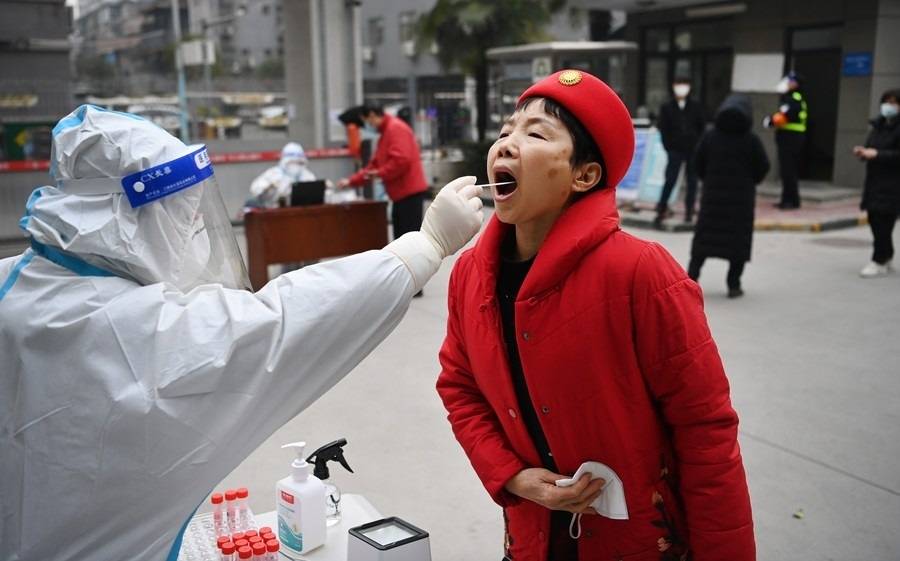
As the Chinese people continue to suffer from the current zero COVID policy, a report has emerged claiming the harsh policy measure was adopted in China is to make huge profits from mass PCR testing, mass vaccination, and vaccine research.

A purported audio clip of Huang Wansheng, a former scholar of Harvard Yenching Institute and a distinguished Professor at Tsinghua University, and a visiting professor at Xi’an Jiaotong University has surfaced online.

In this private conversation, he says half a year after the outbreak of COVID in July 2020, CPC leadership spent some USD 27,000 to buy a one-way air ticket for him to urgently recall him back to China, to lead a “Technological Epidemic Prevention Project” directed by Xi Jining himself.

Huang Wansheng said in the recording that one of the major motives of the current zero covid policy adopted by the CPC authorities is to make huge profits from mass PCR testing, mass vaccination, and vaccine research. For example, a company earned 670 billion yuan only by nucleic acid testing.

He quotes Li Ling, a professor at Peking University, that China generated a revenue of about USD 10.58 trillion in 2020 from pandemic control.

He says that many of the CCP’s top officials and their business representatives are engaged in the PCR testing industry. Therefore, Chinese authorities often order mass testing for an entire district or area when only one or two cases are identified, because the testing industry makes huge profits from such high-volume sales of the test kits.

Wansheng noted that the concentration of power leads to the concentration of interests. As a result, China’s medical resources are concentrated in large hospitals, which overburdens them. He believes that is one of the main reasons why China does not dare to lift its lockdown measures, as its fragile medical care system cannot handle a large number of patients.

He also said that the compulsory 3rd and 4th jab is also related to the interest groups behind it. When Huang Wansheng talked about this, someone next to him interjected: “This problem is huge. Health problems have become political problems.”

China’s unwavering insistence on stamping out any trace of the coronavirus with a zero-Omicron approach despite global criticism. (ANI)


ALSO READ: Uyghurs protest in Turkey against Imran’s clean chit to China

Previous Story

The Struggle and The Promise: Restoring India’s Potential

Next Story

His Majesty’s Head Hunters: Unveils the untold battle of Kohima

Previous Story

The Struggle and The Promise: Restoring India’s Potential

Next Story

His Majesty’s Head Hunters: Unveils the untold battle of Kohima

Latest from -Top News

Pakistan Risks Overstretching Itself in Yemen War

Pakistan’s expanding military role in Saudi Arabia amid the Yemen conflict could strain its defence resources and fragile finances…reports Asian Lite News Desk Pakistan’s military involvement in the war in Yemen may prove unsustainable because of mounting financial pressures and competing security demands, according to a new report. Islamabad’s growing military presence in Saudi Arabia risks stretching its defence resources while exposing the country to greater strategic and economic challenges. An article by Andrew Wilson in One World Outlook describes Pakistan’s involvement as a case of “fiscal and strategic overreach”, arguing that the country lacks the financial flexibility to sustain an expanded military commitment. Pakistan’s external finances depend heavily on an International Monetary Fund (IMF) programme, financial support from Gulf countries and remittances from Pakistani workers in the region. The report argues that deeper military involvement in the conflict could place additional pressure on these sources of financial stability. It also warns that deploying troops and military equipment abroad could weaken Pakistan’s capacity to address security challenges along its eastern border and deal with two domestic insurgencies. The move could also draw Islamabad into a conflict it has sought to approach cautiously. A Reuters report in May, citing Pakistani security and government sources, said Islamabad had deployed around 8,000 troops, a squadron of approximately 16 aircraft, mostly JF-17 fighter jets, two drone squadrons and a Chinese HQ-9 air-defence battery to Saudi Arabia. According to those sources, Riyadh was financing the deployment, with Pakistani personnel operating the equipment. The sources also said a confidential agreement contemplated the possibility of deploying up to 80,000 troops. Islamabad has not confirmed those figures, although it has acknowledged its military presence in Saudi Arabia, including the deployment of fighter jets at King Abdulaziz Air Base from April. The One World Outlook article argues that Saudi financial support can cover allowances and operating expenses but cannot easily replace military equipment needed elsewhere or resolve the political and strategic challenges of participating in the Yemen conflict. Pakistan’s defence budget is another concern. For the 2026-27 financial year, the federal government allocated PKR 3 trillion, or approximately $10.8 billion, to defence services. The allocation represents an 18 per cent increase from the original PKR 2.55 trillion provision and amounts to around 2.1 per cent of projected gross domestic product (GDP). Defence spending accounts for approximately 16 per cent of the federal government’s PKR 18.8 trillion expenditure. Military pensions are budgeted separately at PKR 822 billion, while debt servicing costs stand at approximately PKR 8 trillion, more than two-and-a-half times the defence allocation. The report argues that these competing financial obligations leave little room for additional military expenditure without placing further pressure on public finances. Pakistan’s reliance on IMF assistance also limits its fiscal flexibility. The country must meet the conditions attached to the programme, including a primary budget surplus target of 2 per cent of GDP and continued restraint on development spending. According to the article, these requirements make it difficult for Islamabad to finance an additional military commitment without compromising other budgetary priorities. Pakistan’s economic indicators offer limited reassurance. Economic growth for the 2025-26 financial year is estimated at between 3.6 and 3.7 per cent, while inflation reached approximately 10.3 per cent in September following an energy price shock. Foreign exchange reserves stood at around $21.5 billion at the end of September. Although this marks an improvement from the low levels recorded in 2023, the report notes that the reserves cover only a few months of imports. Financial assistance from Gulf partners remains central to Pakistan’s external stability. The article says Islamabad holds approximately $8 billion in Saudi deposits at its central bank. In July, the State Bank of Pakistan said Riyadh had extended the maturity of $5 billion in deposits to December 2028, easing the country’s immediate external financing requirements. A further $3 billion deposit was also extended in the spring. However, the article argues that these arrangements provide temporary relief rather than long-term financial independence, particularly as regional conflict threatens the stability of the Gulf economies on which Pakistan relies. The report concludes that Pakistan faces a difficult balance between supporting Saudi Arabia militarily and preserving the financial and military resources needed to address its domestic and regional challenges.

UK and Germany Ratify Kensington Treaty

Britain and Germany ratify the Kensington Treaty, agreeing new cooperation on AI, quantum research, defence and security while targeting investment, jobs and Russian hybrid threats…reports Asian Lite News Desk Britain and Germany

Economic tide is turning in Bangladesh

If there is one thing that can bring some comfort to the struggling Bangladeshi economy, it is good relations with India. Bangladesh should remember that Delhi’s backing, through easy supplies of essentials
Go toTop

Don't Miss

China’s Property Market on the cusp of collapse?

Evergrande, Country Garden … The property market in China has

Balochistan demands attention as Chinese presence expands

The situation in Balochistan is so grim that the suicide