April 6, 2022
3 mins read

Emirates ID replaces residency stickers for expats

The Federal Authority for Identity, Citizenship, Customs and Ports Security has announced the suspension of the issuance of the residence sticker for foreigners residing in the UAE as of April 11, 2022…reports Asian Lite News

The goal is to develop services provided to customers and enhance their happiness. The Emirates ID card issued to foreigners residing in the UAE will serve as an alternative to prove their residence.

The Authority pointed out that the cancellation decision came in implementation of the decision of the UAE Cabinet in support of the development of the services provided and the application of best practices and in order to achieve flexibility that aims to reduce the steps associated with the process of issuing and renewing the residence.

The residence and the identity card applications will be joined together in a new unified form that includes the issuance and renewal of the residence and identity card services in one application, instead of the previous separate applications, with the aim of improving and developing processes related to the customers’ journey, in embodiment of the UAE’s vision to provide world-class and high-quality services enhanced by technology.
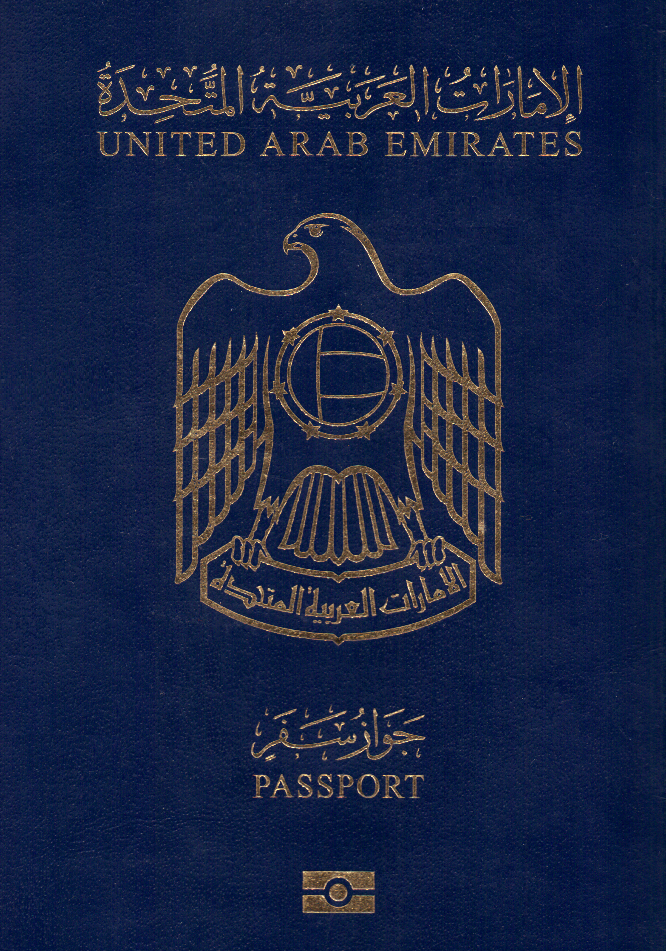
United_Arab_Emirates_Passport_Cover

The Authority also indicated that its smart application provides the possibility to obtain the electronic copy of the identity card in support of the flexibility of use upon request, stressing that the new generation of the Emirates ID card issued to foreigners residing in the UAE includes all the details mentioned previously in the residence sticker, which enhances the added value for the uses of the ID card in proving the personal identity of individuals through the presence of personal and professional data, the issuing entity and other readable data on the surface of the card and the implicit details enhanced through electronic linking techniques.

In detail, Major General Saeed Rakan Al Rashidi, Acting Director General of Residency and Foreigners Affairs, said that the decision to stop issuing residence stickers and adopting the Emirates ID card issued to a foreigner residing in the UAE to prove residency comes as an extension of the package of supporting decisions towards providing the best facilities to customers and raising the level of government services, noting that the previous model of the residence sticker will be available electronically only through the Authority’s smart application.

This step aims to enhance transitional flexibility towards using the identity card as an alternative during this period.

ALSO READ: Dubai Customs discusses more cooperation with Kuwaiti delegation

He also explained that the Authority has strengthened work with the relevant authorities at the aviation sector to enable holders of valid residence permits as well as visitors who are outside the UAE to come to the country, after verifying that entry criteria are met through the use of the passport reader available at the platforms of companies operating in the air transport sector at airports.

Al Rashidi confirmed that the Authority has developed all the necessary technical facilities to obtain individuals’ residency details through a printed form that can be applied for with the Authority’s stamp, through individuals’ accounts using the Authority’s application or through the smart services system via the website www.icp.gov.ae, which allows the possibility of printing the residence details form in just 3 steps.

Al Rashidi also added that the entry into force of the decision will stop the service of receiving and handing over a resident’s passport previously designated for the installation of the residence sticker. This allows achieving a complete smart transformation of the Authority’s residency services, which enhances the happiness of customers and adds qualitative flexibility in the issuance and renewal processes.

Previous Story

Chinese soldiers in eastern Ladakh shown learning Hindi

Next Story

Centre may table Criminal Procedure (Identification) Bill

Previous Story

Chinese soldiers in eastern Ladakh shown learning Hindi

Next Story

Centre may table Criminal Procedure (Identification) Bill

Latest from -Top News

Pakistan Risks Overstretching Itself in Yemen War

Pakistan’s expanding military role in Saudi Arabia amid the Yemen conflict could strain its defence resources and fragile finances…reports Asian Lite News Desk Pakistan’s military involvement in the war in Yemen may prove unsustainable because of mounting financial pressures and competing security demands, according to a new report. Islamabad’s growing military presence in Saudi Arabia risks stretching its defence resources while exposing the country to greater strategic and economic challenges. An article by Andrew Wilson in One World Outlook describes Pakistan’s involvement as a case of “fiscal and strategic overreach”, arguing that the country lacks the financial flexibility to sustain an expanded military commitment. Pakistan’s external finances depend heavily on an International Monetary Fund (IMF) programme, financial support from Gulf countries and remittances from Pakistani workers in the region. The report argues that deeper military involvement in the conflict could place additional pressure on these sources of financial stability. It also warns that deploying troops and military equipment abroad could weaken Pakistan’s capacity to address security challenges along its eastern border and deal with two domestic insurgencies. The move could also draw Islamabad into a conflict it has sought to approach cautiously. A Reuters report in May, citing Pakistani security and government sources, said Islamabad had deployed around 8,000 troops, a squadron of approximately 16 aircraft, mostly JF-17 fighter jets, two drone squadrons and a Chinese HQ-9 air-defence battery to Saudi Arabia. According to those sources, Riyadh was financing the deployment, with Pakistani personnel operating the equipment. The sources also said a confidential agreement contemplated the possibility of deploying up to 80,000 troops. Islamabad has not confirmed those figures, although it has acknowledged its military presence in Saudi Arabia, including the deployment of fighter jets at King Abdulaziz Air Base from April. The One World Outlook article argues that Saudi financial support can cover allowances and operating expenses but cannot easily replace military equipment needed elsewhere or resolve the political and strategic challenges of participating in the Yemen conflict. Pakistan’s defence budget is another concern. For the 2026-27 financial year, the federal government allocated PKR 3 trillion, or approximately $10.8 billion, to defence services. The allocation represents an 18 per cent increase from the original PKR 2.55 trillion provision and amounts to around 2.1 per cent of projected gross domestic product (GDP). Defence spending accounts for approximately 16 per cent of the federal government’s PKR 18.8 trillion expenditure. Military pensions are budgeted separately at PKR 822 billion, while debt servicing costs stand at approximately PKR 8 trillion, more than two-and-a-half times the defence allocation. The report argues that these competing financial obligations leave little room for additional military expenditure without placing further pressure on public finances. Pakistan’s reliance on IMF assistance also limits its fiscal flexibility. The country must meet the conditions attached to the programme, including a primary budget surplus target of 2 per cent of GDP and continued restraint on development spending. According to the article, these requirements make it difficult for Islamabad to finance an additional military commitment without compromising other budgetary priorities. Pakistan’s economic indicators offer limited reassurance. Economic growth for the 2025-26 financial year is estimated at between 3.6 and 3.7 per cent, while inflation reached approximately 10.3 per cent in September following an energy price shock. Foreign exchange reserves stood at around $21.5 billion at the end of September. Although this marks an improvement from the low levels recorded in 2023, the report notes that the reserves cover only a few months of imports. Financial assistance from Gulf partners remains central to Pakistan’s external stability. The article says Islamabad holds approximately $8 billion in Saudi deposits at its central bank. In July, the State Bank of Pakistan said Riyadh had extended the maturity of $5 billion in deposits to December 2028, easing the country’s immediate external financing requirements. A further $3 billion deposit was also extended in the spring. However, the article argues that these arrangements provide temporary relief rather than long-term financial independence, particularly as regional conflict threatens the stability of the Gulf economies on which Pakistan relies. The report concludes that Pakistan faces a difficult balance between supporting Saudi Arabia militarily and preserving the financial and military resources needed to address its domestic and regional challenges.

UK and Germany Ratify Kensington Treaty

Britain and Germany ratify the Kensington Treaty, agreeing new cooperation on AI, quantum research, defence and security while targeting investment, jobs and Russian hybrid threats…reports Asian Lite News Desk Britain and Germany

Economic tide is turning in Bangladesh

If there is one thing that can bring some comfort to the struggling Bangladeshi economy, it is good relations with India. Bangladesh should remember that Delhi’s backing, through easy supplies of essentials
Go toTop

Don't Miss

UAE to head UN panel on outer space

Omran Sharaf, who heads the Emirates Mars Mission (EMM), will

UAE to invest $1 billion in Pakistani companies

The move aims to explore new investment opportunities and areas